


 |
市场调查报告书
商品编码
1904993
全球国防惯性测量单元市场:2026-2036Global Defense Inertial Measurement Unit Market 2026-2036 |
||||||

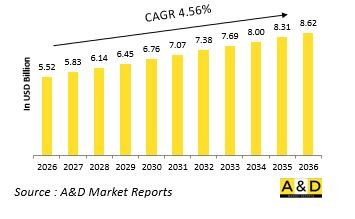
全球国防惯性测量单元 (IMU) 市场预计在 2026 年达到 55.2 亿美元,预计到 2036 年将达到 86.2 亿美元,2026 年至 2036 年的复合年增长率 (CAGR) 为 4.56%。
国防惯性测量单元 (IMU) 市场简介:
全球国防惯性测量单元 (IMU) 市场涵盖了关键感测器,这些感测器在 GPS 等外部参考讯号失效时,为军事平台提供自主导航、稳定和导引能力。不可用或发生故障。惯性测量单元 (IMU) 由加速度计、陀螺仪以及有时还有磁力计组成,用于测量线性加速度、角旋转以及相对于地球磁场的方位。这些系统是潜艇导航、飞弹和弹药导引、武器系统和感测器稳定以及飞机和无人机控制的基础。由于干扰、欺骗和物理障碍等原因,军事行动越来越多地在 GPS 讯号受限的环境中进行,因此高精度、无漂移的惯性导航技术的重要性呈指数级增长。 IMU 技术的应用范围非常广泛,从用于炮弹的战术系统到用于弹道飞弹潜舰的战略导航系统,其性能特征根据具体的任务需求和平台限制进行客製化。
技术对国防惯性测量单元市场的影响:
IMU 技术的发展动力来自于小型化、精度提高以及各性能类别成本的降低。微机电系统 (MEMS) 技术彻底革新了战术惯性测量单元 (IMU),实现了用于导引武器和小型无人系统的紧凑、低成本且坚固耐用的感测器的批量生产。光纤陀螺仪 (FOG) 和环形雷射陀螺仪 (RLG) 由于偏置稳定性提高和尺寸缩小,在策略和导航应用领域持续发展。新兴的基于量子技术的惯性感测技术透过测量原子特性而非机械运动,有望将精度提高几个数量级。系统单晶片 (SoC) 设计整合了多种感测器类型和处理电子装置,可在单一封装内提供完整的惯性导航解决方案。先进的校准和校正演算法利用人工智慧即时建模和校正感测器误差。这些进步正在拓展 IMU 的应用范围,同时提升其在尺寸、重量和功耗受限的部署环境中的效能。
国防惯性测量单元市场的主要驱动因素:
电子战能力的广泛应用会干扰或降低GPS讯号,从而催生了对替代导航解决方案的根本性需求,惯性系统成为GPS的主要备份或替代方案。从炮弹到巡航飞弹,不断扩充的导引武器库需要可大规模生产、经济高效且在整个飞行过程中保持足够精度的惯性测量单元。空中、陆地和海上自主系统的发展依赖可靠的惯性测量数据来进行位置推算。移动车辆上武器、感测器和通讯设备的平台稳定性要求推动了对高频宽姿态测量系统的需求。高超音速武器的研发要求惯性测量单元技术能够在恶劣的振动和热环境下保持精度并可靠运作。此外,战略威慑力量的现代化需要不断提高潜舰和飞弹的导航精度,从而持续推动对高性能惯性系统的需求,而成本则不成问题。
国防惯性测量单元市场区域趋势:
各区域的惯性测量单元 (IMU) 能力与其武器研发计画和战略自主目标密切相关。北美在所有 IMU 技术类别中都拥有全面的研发能力,尤其在战略级系统和 MEMS 量产方面具有优势。欧洲的研发重点是透过多国合作,为航空航天应用开发高性能光纤陀螺仪 (FOG) 和雷射惯性陀螺仪 (RLG) 系统。亚太地区发展迅速,中国、日本和韩国正在开发从 MEMS 到战略级系统的完整国产 IMU 生态系统。以色列在用于精确导引武器的战术级 IMU 方面积累了丰富的经验。俄罗斯在保持其机械陀螺仪技术传统优势的同时,也正在开发现代化的固态陀螺仪替代方案。高性能惯性技术的出口限制构成了一定的障碍,这促使那些寻求战略武器自主的地区进行本土研发。然而,商用MEMS的广泛应用正在降低全球高性能战术系统的进入门槛。
国防惯性测量单元重大项目:
2025年10月,Paras国防与航太技术有限公司与以色列Cielo惯性解决方案公司签署了一份战略谅解备忘录,共同开发、生产和销售先进的惯性测量单元(IMU)、基于光纤陀螺仪(FOG)的传感器和集成导航系统。该合作计画旨在为印度陆军、海军、空军和国防研究与发展组织(DRDO)提供平台解决方案,包括无人机(UAV)、飞弹和装甲车辆等需要在无GPS环境下进行精确惯性导航的设备。该合约强调技术转让,本地化率超过70%,符合 "自力更生印度" (Aatmanirbhar Bharat)的目标。该合约将透过抵消贸易进行间接评估,并将支援包括IdeaForge无人机在内的高空作战行动。预计Paras公司位于班加罗尔的工厂将于2026年中期开始生产,并有可能出口到友好国家。这将填补该国惯性测量单元(IMU)供应的关键缺口,该国传统上依赖从赛峰集团和霍尼韦尔公司进口IMU,从而增强其在边境监视和精确打击方面的战术优势。
目录
市场定义
市场区隔
按平台
按地区
按最终使用者
第十章:年度市场展望
本章详细概述了未来十年的市场展望,包括不断变化的趋势、技术应用概况和市场吸引力。
市场技术
本部分探讨了预计将影响该市场的十大技术,以及这些技术可能对整体市场产生的影响。
全球市场预测
以上各部分详细阐述了该市场未来十年的市场预测。
区域市场趋势与预测
本部分涵盖区域市场趋势、驱动因素、限制因素和挑战,以及政治、经济、社会和技术因素。此外,本部分也提供了详细的区域市场预测和情境分析。最终的区域分析包括主要公司概况、供应商格局和公司基准分析。
北美
驱动因素、限制因素与挑战
PEST分析
市场预测与情境分析
主要公司
供应商层级结构
公司标竿分析
欧洲
中东
亚太地区
南美洲
国家分析
本章涵盖该市场的主要国防项目以及最新的新闻和专利申请。此外,也提供各国未来十年的市场预测和情境分析。
美国
国防项目
最新消息
专利
当前市场技术成熟度
市场预测与情境分析
加拿大
义大利
法国
德国
荷兰
比利时
西班牙
瑞典
希腊
澳洲
南非
印度
中国
俄罗斯
南非韩国
日本
马来西亚
新加坡
巴西
机会矩阵
机会矩阵帮助读者了解该市场中高机会细分领域。
专家意见
以下是我们专家对该市场未来前景的意见总结。
结论
关于航空与国防市场报告
The Global Defense Inertial Measurement Unit market is estimated at USD 5.52 billion in 2026, projected to grow to USD 8.62 billion by 2036 at a Compound Annual Growth Rate (CAGR) of 4.56% over the forecast period 2026-2036.
Introduction to Defense Inertial Measurement Unit Market:
The Global Defense Inertial Measurement Unit (IMU) Market encompasses the critical sensors that provide autonomous navigation, stabilization, and guidance capabilities for military platforms when external references like GPS are unavailable or compromised. IMUs consist of accelerometers, gyroscopes, and sometimes magnetometers that measure linear acceleration, angular rotation, and orientation relative to the Earth's magnetic field. These systems form the foundation for navigation in submarines, guidance for missiles and munitions, stabilization for weapon systems and sensors, and control for aircraft and unmanned vehicles. As military operations increasingly occur in GPS-denied environments-whether due to jamming, spoofing, or physical obstruction-the importance of precise, drift-free inertial navigation has grown exponentially. IMU technology spans from tactical-grade systems for artillery shells to strategic-grade navigation for ballistic missile submarines, with performance characteristics precisely matched to mission requirements and platform constraints.
Technology Impact in Defense Inertial Measurement Unit Market:
Technological evolution in IMUs centers on miniaturization, accuracy improvement, and cost reduction across performance categories. Micro-electromechanical systems (MEMS) technology has revolutionized tactical-grade IMUs, enabling mass production of small, affordable, rugged sensors for guided munitions and small unmanned systems. Fiber-optic gyroscopes (FOGs) and ring laser gyroscopes (RLGs) continue advancing in strategic and navigation-grade applications, with improved bias stability and reduced size. Emerging quantum-based inertial sensing promises orders-of-magnitude improvement in accuracy by measuring atomic properties rather than mechanical motion. System-on-chip designs integrate multiple sensor types with processing electronics to create complete inertial navigation solutions in single packages. Advanced calibration and compensation algorithms use artificial intelligence to model and correct sensor errors in real time. These advancements expand IMU applications while improving performance in size, weight, and power constrained installations.
Key Drivers in Defense Inertial Measurement Unit Market:
The proliferation of electronic warfare capabilities that can deny or degrade GPS signals creates fundamental demand for alternative navigation solutions, with inertial systems serving as the primary GPS backup or replacement. The expansion of guided munitions inventories-from artillery shells to cruise missiles-requires mass-producible, cost-effective IMUs that maintain sufficient accuracy throughout flight. Autonomous system development across air, ground, and maritime domains depends on reliable inertial sensing for dead reckoning between position fixes. Platform stabilization requirements for weapons, sensors, and communications equipment on moving vehicles drive demand for high-bandwidth attitude measurement systems. Hypersonic weapons development pushes IMU technology to operate reliably under extreme vibration and thermal conditions while maintaining precision. Additionally, modernization of strategic deterrent forces necessitates continuous improvement in submarine and missile navigation accuracy, sustaining demand for the highest performance inertial systems regardless of cost.
Regional Trends in Defense Inertial Measurement Unit Market:
Regional IMU capabilities correlate closely with indigenous weapons development programs and strategic autonomy objectives. North America maintains comprehensive capability across all IMU technology categories, with particular strength in strategic-grade systems and MEMS mass production. European development emphasizes high-performance FOG and RLG systems for aerospace applications, often through multinational collaborations. The Asia-Pacific region shows rapid advancement, with China, Japan, and South Korea developing complete indigenous IMU ecosystems from MEMS to strategic grade. Israel has cultivated specialized expertise in tactical-grade IMUs for precision munitions. Russia maintains legacy strength in mechanical gyro technology while developing modern solid-state alternatives. Export controls on high-performance inertial technology create barriers that encourage local development in regions seeking strategic weapons autonomy, though commercial MEMS availability has lowered barriers to capable tactical systems worldwide.
Key Defense Inertial Measurement Unit Program:
Paras Defence and Space Technologies Limited signed a strategic MoU in October 2025 with Israel's Cielo Inertial Solutions to co-develop, produce, and market advanced Inertial Measurement Units (IMUs), Fiber Optic Gyro (FOG)-based sensors, and integrated navigation systems. This partnership targets Indian Army, Navy, Air Force, and DRDO platforms, including UAVs, missiles, and armored vehicles requiring precise inertial navigation amid GPS-denied environments. The deal emphasizes technology transfer for 70%+ localization, aligning with Aatmanirbhar Bharat goals. Valued indirectly through offsets, it supports high-altitude ops like those in ideaForge drones. Production begins at Paras' Bengaluru facility by mid-2026, with exports eyed for friendly nations. This fills a critical gap in domestic IMU supply, previously reliant on imports from Safran and Honeywell, enhancing tactical edge in border surveillance and precision strikes.
Table of Contents
Market Definition
Market Segmentation
By Platform
By Region
By End - User
10 Year Market Outlook
The 10-year market outlook would give a detailed overview of changing dynamics, technology adoption overviews and the overall market attractiveness is covered in this chapter.
Market Technologies
This segment covers the top 10 technologies that is expected to impact this market and the possible implications these technologies would have on the overall market.
Global Market Forecast
The 10-year market forecast of this market is covered in detailed across the segments which are mentioned above.
Regional Market Trends & Forecast
The regional market trends, drivers, restraints and Challenges of this market, the Political, Economic, Social and Technology aspects are covered in this segment. The market forecast and scenario analysis across regions are also covered in detailed in this segment. The last part of the regional analysis includes profiling of the key companies, supplier landscape and company benchmarking.
North America
Drivers, Restraints and Challenges
PEST
Market Forecast & Scenario Analysis
Key Companies
Supplier Tier Landscape
Company Benchmarking
Europe
Middle East
APAC
South America
Country Analysis
This chapter deals with the key defense programs in this market, it also covers the latest news and patents which have been filed in this market. Country level 10 year market forecast and scenario analysis are also covered in this chapter.
US
Defense Programs
Latest News
Patents
Current levels of technology maturation in this market
Market Forecast & Scenario Analysis
Canada
Italy
France
Germany
Netherlands
Belgium
Spain
Sweden
Greece
Australia
South Africa
India
China
Russia
South Korea
Japan
Malaysia
Singapore
Brazil
Opportunity Matrix
The opportunity matrix helps the readers understand the high opportunity segments in this market.
Expert Opinions
Hear from our experts their opinion of the possible outlook for this market.
Conclusions
About Aviation and Defense Market Reports
List of Tables
- Table 1: 10 Year Market Outlook, 2025-2035
- Table 2: Drivers, Impact Analysis, North America
- Table 3: Restraints, Impact Analysis, North America
- Table 4: Challenges, Impact Analysis, North America
- Table 5: Drivers, Impact Analysis, Europe
- Table 6: Restraints, Impact Analysis, Europe
- Table 7: Challenges, Impact Analysis, Europe
- Table 8: Drivers, Impact Analysis, Middle East
- Table 9: Restraints, Impact Analysis, Middle East
- Table 10: Challenges, Impact Analysis, Middle East
- Table 11: Drivers, Impact Analysis, APAC
- Table 12: Restraints, Impact Analysis, APAC
- Table 13: Challenges, Impact Analysis, APAC
- Table 14: Drivers, Impact Analysis, South America
- Table 15: Restraints, Impact Analysis, South America
- Table 16: Challenges, Impact Analysis, South America
- Table 17: Scenario Analysis, Scenario 1, By Region, 2025-2035
- Table 18: Scenario Analysis, Scenario 1, By End User, 2025-2035
- Table 19: Scenario Analysis, Scenario 1, By Platform, 2025-2035
- Table 20: Scenario Analysis, Scenario 2, By Region, 2025-2035
- Table 21: Scenario Analysis, Scenario 2, By End User, 2025-2035
- Table 22: Scenario Analysis, Scenario 2, By Platform, 2025-2035
List of Figures
- Figure 1: Global Defense Inertial Measurement Unit Market Forecast, 2025-2035
- Figure 2: Global Defense Inertial Measurement Unit Market Forecast, By Region, 2025-2035
- Figure 3: Global Defense Inertial Measurement Unit Market Forecast, By End User, 2025-2035
- Figure 4: Global Defense Inertial Measurement Unit Market Forecast, By Platform, 2025-2035
- Figure 5: North America, Defense Inertial Measurement Unit Market, Market Forecast, 2025-2035
- Figure 6: Europe, Defense Inertial Measurement Unit Market, Market Forecast, 2025-2035
- Figure 7: Middle East, Defense Inertial Measurement Unit Market, Market Forecast, 2025-2035
- Figure 8: APAC, Defense Inertial Measurement Unit Market, Market Forecast, 2025-2035
- Figure 9: South America, Defense Inertial Measurement Unit Market, Market Forecast, 2025-2035
- Figure 10: United States, Defense Inertial Measurement Unit Market, Technology Maturation, 2025-2035
- Figure 11: United States, Defense Inertial Measurement Unit Market, Market Forecast, 2025-2035
- Figure 12: Canada, Defense Inertial Measurement Unit Market, Technology Maturation, 2025-2035
- Figure 13: Canada, Defense Inertial Measurement Unit Market, Market Forecast, 2025-2035
- Figure 14: Italy, Defense Inertial Measurement Unit Market, Technology Maturation, 2025-2035
- Figure 15: Italy, Defense Inertial Measurement Unit Market, Market Forecast, 2025-2035
- Figure 16: France, Defense Inertial Measurement Unit Market, Technology Maturation, 2025-2035
- Figure 17: France, Defense Inertial Measurement Unit Market, Market Forecast, 2025-2035
- Figure 18: Germany, Defense Inertial Measurement Unit Market, Technology Maturation, 2025-2035
- Figure 19: Germany, Defense Inertial Measurement Unit Market, Market Forecast, 2025-2035
- Figure 20: Netherland, Defense Inertial Measurement Unit Market, Technology Maturation, 2025-2035
- Figure 21: Netherland, Defense Inertial Measurement Unit Market, Market Forecast, 2025-2035
- Figure 22: Belgium, Defense Inertial Measurement Unit Market, Technology Maturation, 2025-2035
- Figure 23: Belgium, Defense Inertial Measurement Unit Market, Market Forecast, 2025-2035
- Figure 24: Spain, Defense Inertial Measurement Unit Market, Technology Maturation, 2025-2035
- Figure 25: Spain, Defense Inertial Measurement Unit Market, Market Forecast, 2025-2035
- Figure 26: Sweden, Defense Inertial Measurement Unit Market, Technology Maturation, 2025-2035
- Figure 27: Sweden, Defense Inertial Measurement Unit Market, Market Forecast, 2025-2035
- Figure 28: Brazil, Defense Inertial Measurement Unit Market, Technology Maturation, 2025-2035
- Figure 29: Brazil, Defense Inertial Measurement Unit Market, Market Forecast, 2025-2035
- Figure 30: Australia, Defense Inertial Measurement Unit Market, Technology Maturation, 2025-2035
- Figure 31: Australia, Defense Inertial Measurement Unit Market, Market Forecast, 2025-2035
- Figure 32: India, Defense Inertial Measurement Unit Market, Technology Maturation, 2025-2035
- Figure 33: India, Defense Inertial Measurement Unit Market, Market Forecast, 2025-2035
- Figure 34: China, Defense Inertial Measurement Unit Market, Technology Maturation, 2025-2035
- Figure 35: China, Defense Inertial Measurement Unit Market, Market Forecast, 2025-2035
- Figure 36: Saudi Arabia, Defense Inertial Measurement Unit Market, Technology Maturation, 2025-2035
- Figure 37: Saudi Arabia, Defense Inertial Measurement Unit Market, Market Forecast, 2025-2035
- Figure 38: South Korea, Defense Inertial Measurement Unit Market, Technology Maturation, 2025-2035
- Figure 39: South Korea, Defense Inertial Measurement Unit Market, Market Forecast, 2025-2035
- Figure 40: Japan, Defense Inertial Measurement Unit Market, Technology Maturation, 2025-2035
- Figure 41: Japan, Defense Inertial Measurement Unit Market, Market Forecast, 2025-2035
- Figure 42: Malaysia, Defense Inertial Measurement Unit Market, Technology Maturation, 2025-2035
- Figure 43: Malaysia, Defense Inertial Measurement Unit Market, Market Forecast, 2025-2035
- Figure 44: Singapore, Defense Inertial Measurement Unit Market, Technology Maturation, 2025-2035
- Figure 45: Singapore, Defense Inertial Measurement Unit Market, Market Forecast, 2025-2035
- Figure 46: United Kingdom, Defense Inertial Measurement Unit Market, Technology Maturation, 2025-2035
- Figure 47: United Kingdom, Defense Inertial Measurement Unit Market, Market Forecast, 2025-2035
- Figure 48: Opportunity Analysis, Defense Inertial Measurement Unit Market, By Region (Cumulative Market), 2025-2035
- Figure 49: Opportunity Analysis, Defense Inertial Measurement Unit Market, By Region (CAGR), 2025-2035
- Figure 50: Opportunity Analysis, Defense Inertial Measurement Unit Market, By End User (Cumulative Market), 2025-2035
- Figure 51: Opportunity Analysis, Defense Inertial Measurement Unit Market, By End User (CAGR), 2025-2035
- Figure 52: Opportunity Analysis, Defense Inertial Measurement Unit Market, By Platform (Cumulative Market), 2025-2035
- Figure 53: Opportunity Analysis, Defense Inertial Measurement Unit Market, By Platform (CAGR), 2025-2035
- Figure 54: Scenario Analysis, Defense Inertial Measurement Unit Market, Cumulative Market, 2025-2035
- Figure 55: Scenario Analysis, Defense Inertial Measurement Unit Market, Global Market, 2025-2035
- Figure 56: Scenario 1, Defense Inertial Measurement Unit Market, Total Market, 2025-2035
- Figure 57: Scenario 1, Defense Inertial Measurement Unit Market, By Region, 2025-2035
- Figure 58: Scenario 1, Defense Inertial Measurement Unit Market, By End User, 2025-2035
- Figure 59: Scenario 1, Defense Inertial Measurement Unit Market, By Platform, 2025-2035
- Figure 60: Scenario 2, Defense Inertial Measurement Unit Market, Total Market, 2025-2035
- Figure 61: Scenario 2, Defense Inertial Measurement Unit Market, By Region, 2025-2035
- Figure 62: Scenario 2, Defense Inertial Measurement Unit Market, By End User, 2025-2035
- Figure 63: Scenario 2, Defense Inertial Measurement Unit Market, By Platform, 2025-2035
- Figure 64: Company Benchmark, Defense Inertial Measurement Unit Market, 2025-2035


