


 |
市场调查报告书
商品编码
1927663
全球轻型护卫舰市场(2026-2036)Global Corvettes Market 2026-2036 |
||||||

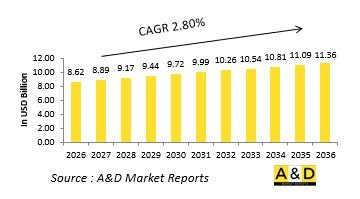
据估计,2026年全球轻型护卫舰市场规模为86.2亿美元,预计到2036年将达到113.6亿美元,2026年至2036年的复合年增长率为2.80%。
轻型护卫舰简介
轻型护卫舰是一种用途广泛的海军舰艇,专为近岸水域的多用途作战而设计。与护卫舰和驱逐舰相比,它们体积更小、机动性更强,兼具火力、速度和作战灵活性。 轻型护卫舰主要用于反水面作战、反潜作战、监视、侦察和海上安全行动。轻型护卫舰配备飞弹系统、鱼雷、舰炮和电子战设备等多种武器,能够支援大型舰队作战,应对各种威胁。其紧凑的尺寸使其能够快速部署、高效维护,并在大型舰艇难以通行的浅水和狭窄水域中作业。现代轻型护卫舰采用模组化设计,可快速改装以执行特种作战任务,例如扫雷、两栖支援和无人机作战。它们兼具防御和进攻能力,既能与大型舰艇协同作战,又能提供近岸防御和区域威慑。随着海上威胁的演变,轻型护卫舰在海军战略规划中扮演着日益重要的角色,展现了现代海军作战的作战灵活性、快速反应和成本效益。对轻型护卫舰的投资反映了美国在应对新的安全挑战的同时,致力于维护海军机动性、投射力量、保障海上贸易航道安全的更广泛承诺。
科技对全球轻型护卫舰的影响
科技进步显着提升了轻型护卫舰的性能,提高了作战效率、战斗效能和生存能力。现代推进系统实现了更快的航速、更远的航程和更安静的航行,增强了隐蔽性和战术灵活性。先进感测器、雷达、声吶和电子战系统的整合使轻型护卫舰能够精确地探测、追踪和同时打击多个目标。模组化战舱和灵活的武器配置使轻型护卫舰能够适应各种作战任务,包括反潜作战、水面作战和侦察。网路化的通讯和指挥系统增强了态势感知能力,使轻型护卫舰能够与大型舰队、无人平台和空中侦察机无缝协作。导航、目标捕获和损管的自动化减轻了船员的工作负荷,同时提高了反应速度和可靠性。轻质复合材料和耐腐蚀合金等材料创新提高了船体耐久性,减少了维护工作,并支援高速航行。隐身技术和特征管理降低了被侦测到的可能性,提高了在敌对环境中的生存能力。持续的技术升级使轻型护卫舰能够保持应对新威胁、整合下一代武器以及适应不断演变的海军战略的能力。整体而言,科技提升了轻型护卫舰在现代海上防御中的作战多功能性、力量投射能力和战略意义。
轻型护卫舰的关键驱动因素
多种因素正在推动轻型护卫舰在全球范围内的研发和部署。对能够在近岸和浅水区作战的灵活、快速反应海军平台的需求,推动了对这些小型作战舰艇的投资。现代海上威胁,包括非对称攻击、海盗行为和领土争端,要求舰艇能够执行各种作战、监视和侦察行动。预算限制和成本效益的考虑,使得轻型护卫舰比更大、更昂贵的水面作战舰艇更具优势,从而在性能和经济性之间取得了平衡。 模组化设计、推进系统、感测器和武器系统的进步使轻型护卫舰能够满足多样化的作战需求,同时保持未来升级的灵活性。海军现代化和舰队扩充计画也刺激了市场需求,尤其是在那些寻求加强近岸防御和海上安全的地区。轻型护卫舰透过融入网路化海军作战系统以及与无人系统、直升机和大型水面舰艇的互通性,提升了其战术价值。地缘政治竞争、新兴安全挑战以及对快速部署和力量投射的日益重视,进一步推动了采购计画的发展。作战需求、技术进步、成本考量和战略重点的综合作用,使轻型护卫舰成为现代海军战略的关键资产,确保其在现代海上防御战略中持续发挥重要作用。 本报告分析了全球轻型护卫舰市场,深入探讨了影响该市场的技术、未来十年的市场预测以及区域发展趋势。
目录
科尔维特市场报告定义
科尔维特市场细分
按类型
按地区
依等级
未来十年科尔维特市场分析
科尔维特市场技术
全球科尔维特市场预测
区域科尔维特市场趋势及预测
北美
驱动因素、限制因素与挑战
PEST分析
市场预测及情境分析
主要公司
供应商层级市场概况
公司标竿分析
欧洲
中东
亚太地区
南美洲
科尔维特市场国家分析
美国
/p>国防项目
最新消息
专利
当前市场技术成熟度
市场预测与情境分析
加拿大
义大利
法国
德国
荷兰
比利时
西班牙
瑞典
希腊
澳洲
南非
印度
中国
俄罗斯
南非韩国
日本
马来西亚
新加坡
巴西
科尔维特市场机会矩阵
专家对柯尔维特市场报告的意见
结论
关于航空和国防市场报告
The Global Corvettes market is estimated at USD 8.62 billion in 2026, projected to grow to USD 11.36 billion by 2036 at a Compound Annual Growth Rate (CAGR) of 2.80% over the forecast period 2026-2036.

Introduction to Corvettes
Corvettes are versatile naval warships designed for multi-role operations in coastal and littoral waters. Smaller and more maneuverable than frigates and destroyers, corvettes provide a balance of firepower, speed, and operational flexibility. They are deployed for anti-surface warfare, anti-submarine missions, surveillance, reconnaissance, and maritime security. Corvettes are equipped with a combination of missile systems, torpedoes, naval guns, and electronic warfare equipment, allowing them to engage diverse threats while supporting larger fleet operations. Their compact size enables rapid deployment, efficient maintenance, and operations in shallow or congested waters where larger vessels may be limited. Modern corvettes are built with modular designs, allowing them to be quickly adapted for specialized missions such as mine countermeasures, amphibious support, or unmanned vehicle operations. They serve both defensive and offensive roles, complementing larger naval assets while providing national coastal protection and regional presence. As maritime threats evolve, corvettes play an increasingly important role in strategic naval planning, demonstrating operational versatility, quick-response capabilities, and cost-effectiveness in modern naval warfare. Investment in corvettes reflects a broader effort to maintain naval agility, project power, and secure maritime trade routes while adapting to emerging security challenges.
Technology Impact in Global Corvettes
Advances in technology have significantly enhanced the capabilities of corvettes, improving operational efficiency, combat effectiveness, and survivability. Modern propulsion systems enable higher speeds, longer range, and quieter operation, enhancing stealth and tactical flexibility. Integration of advanced sensors, radar, sonar, and electronic warfare suites allows corvettes to detect, track, and engage multiple targets simultaneously with precision. Modular mission bays and flexible weapon configurations enable adaptation to various roles, including anti-submarine warfare, surface engagements, and reconnaissance. Networked communication and command systems enhance situational awareness, enabling corvettes to operate seamlessly with larger fleets, unmanned platforms, and aerial reconnaissance. Automation in navigation, targeting, and damage control reduces crew workload while improving reaction times and reliability. Materials innovation, such as lightweight composites and corrosion-resistant alloys, improves hull durability, reduces maintenance, and supports higher speed operations. Stealth technology and signature management reduce detectability, increasing survivability in hostile environments. Continuous technological upgrades ensure that corvettes remain capable of addressing emerging threats, integrating next-generation weapons, and adapting to evolving naval strategies. Overall, technology strengthens corvettes' operational versatility, force projection, and strategic relevance in modern maritime defense.
Key Drivers in Corvettes
Several factors drive the development and deployment of corvettes globally. The need for flexible, rapid-response naval platforms capable of operating in coastal and shallow waters motivates investment in these smaller warships. Modern maritime threats, including asymmetric attacks, piracy, and territorial disputes, require vessels that can perform a range of combat, surveillance, and reconnaissance missions. Budget constraints and cost-effectiveness favor corvettes over larger, more expensive surface combatants, offering a balance between capability and affordability. Advances in modular design, propulsion, sensors, and weapon systems allow corvettes to meet diverse operational needs while remaining adaptable for future upgrades. Naval modernization programs and fleet expansion initiatives also stimulate demand, particularly in regions seeking to strengthen coastal defense and maritime security. The integration of corvettes into networked naval operations, along with interoperability with unmanned systems, helicopters, and larger surface vessels, enhances their tactical value. Geopolitical competition, emerging security challenges, and the emphasis on rapid deployment and force projection further drive acquisition programs. Together, operational requirements, technological advancements, cost considerations, and strategic priorities establish corvettes as critical assets in modern naval doctrine, ensuring their continued relevance in contemporary maritime defense strategies.
Regional Trends in Corvettes
Regional trends in corvette development and deployment are shaped by strategic priorities, naval capabilities, and maritime threat perceptions. North America emphasizes advanced multi-role designs with high-speed propulsion, integrated sensors, and networked combat systems to enhance fleet coordination and operational flexibility. European nations focus on interoperability, modular configurations, and multi-mission platforms that can operate within joint defense frameworks, balancing performance with cost efficiency. The Asia-Pacific region exhibits rapid growth in corvette fleets, driven by territorial disputes, coastal security needs, and investment in domestic shipbuilding capabilities. Middle Eastern countries prioritize corvettes for maritime defense, surveillance, and strategic deterrence, often sourcing technology through international partnerships. African and South American nations focus on cost-effective, versatile platforms capable of patrolling territorial waters, countering piracy, and supporting maritime security operations. Across regions, trends include integration of unmanned systems, advanced radar and sonar suites, and electronic warfare technologies to maintain operational superiority. Fleet modernization, regional naval exercises, and increasing emphasis on littoral defense further influence corvette design, procurement, and deployment strategies. Regional variation in defense spending, industrial infrastructure, and security requirements ensures that corvettes remain a flexible and essential component of naval operations worldwide.
Key Corvettes Program:
Defence public sector undertaking Garden Reach Shipbuilders and Engineers secured the contract to build the Indian Navy's Next Generation Corvettes after emerging as the lowest bidder in the competitive tendering process. At the same time, an export order worth approximately ₹180 crore from Bangladesh has been cancelled. GRSE is currently executing multiple naval construction programs for the Indian Navy, including four Next Generation Offshore Patrol Vessels, three Advanced Guided Missile Frigates, and eight Anti-Submarine Warfare Shallow Water Crafts, with one vessel already delivered. In addition, the shipyard is constructing four Large Survey Vessels, two of which have been handed over to the Navy.
Table of Contents
Corvettes Market - Table of Contents
Corvettes Market Report Definition
Corvettes Market Segmentation
By Type
By Region
By Class
Corvettes Market Analysis for next 10 Years
The 10-year corvettes market analysis would give a detailed overview of corvettes market growth, changing dynamics, technology adoption overviews and the overall market attractiveness is covered in this chapter.
Market Technologies of Corvettes Market
This segment covers the top 10 technologies that is expected to impact this market and the possible implications these technologies would have on the overall market.
Global Corvettes Market Forecast
The 10-year corvettes market forecast of this market is covered in detailed across the segments which are mentioned above.
Regional Corvettes Market Trends & Forecast
The regional corvettes market trends, drivers, restraints and Challenges of this market, the Political, Economic, Social and Technology aspects are covered in this segment. The market forecast and scenario analysis across regions are also covered in detailed in this segment. The last part of the regional analysis includes profiling of the key companies, supplier landscape and company benchmarking. The current market size is estimated based on the normal scenario.
North America
Drivers, Restraints and Challenges
PEST
Market Forecast & Scenario Analysis
Key Companies
Supplier Tier Landscape
Company Benchmarking
Europe
Middle East
APAC
South America
Country Analysis of Corvettes Market
This chapter deals with the key defense programs in this market, it also covers the latest news and patents which have been filed in this market. Country level 10 year market forecast and scenario analysis are also covered in this chapter.
US
Defense Programs
Latest News
Patents
Current levels of technology maturation in this market
Market Forecast & Scenario Analysis
Canada
Italy
France
Germany
Netherlands
Belgium
Spain
Sweden
Greece
Australia
South Africa
India
China
Russia
South Korea
Japan
Malaysia
Singapore
Brazil
Opportunity Matrix for Corvettes Market
The opportunity matrix helps the readers understand the high opportunity segments in this market.
Expert Opinions on Corvettes Market Report
Hear from our experts their opinion of the possible analysis for this market.
Conclusions
About Aviation and Defense Market Reports
List of Tables
- Table 1: 10 Year Market Outlook, 2026-2036
- Table 2: Drivers, Impact Analysis, North America
- Table 3: Restraints, Impact Analysis, North America
- Table 4: Challenges, Impact Analysis, North America
- Table 5: Drivers, Impact Analysis, Europe
- Table 6: Restraints, Impact Analysis, Europe
- Table 7: Challenges, Impact Analysis, Europe
- Table 8: Drivers, Impact Analysis, Middle East
- Table 9: Restraints, Impact Analysis, Middle East
- Table 10: Challenges, Impact Analysis, Middle East
- Table 11: Drivers, Impact Analysis, APAC
- Table 12: Restraints, Impact Analysis, APAC
- Table 13: Challenges, Impact Analysis, APAC
- Table 14: Drivers, Impact Analysis, South America
- Table 15: Restraints, Impact Analysis, South America
- Table 16: Challenges, Impact Analysis, South America
- Table 17: Scenario Analysis, Scenario 1, By Region, 2026-2036
- Table 18: Scenario Analysis, Scenario 1, By Type, 2026-2036
- Table 19: Scenario Analysis, Scenario 1, By Class, 2026-2036
- Table 20: Scenario Analysis, Scenario 2, By Region, 2026-2036
- Table 21: Scenario Analysis, Scenario 2, By Type, 2026-2036
- Table 22: Scenario Analysis, Scenario 2, By Class, 2026-2036
List of Figures
- Figure 1: Global Corvettes Market Forecast, 2026-2036
- Figure 2: Global Corvettes Market Forecast, By Region, 2026-2036
- Figure 3: Global Corvettes Market Forecast, By Type, 2026-2036
- Figure 4: Global Corvettes Market Forecast, By Class, 2026-2036
- Figure 5: North America, Corvettes Market, Market Forecast, 2026-2036
- Figure 6: Europe, Corvettes Market, Market Forecast, 2026-2036
- Figure 7: Middle East, Corvettes Market, Market Forecast, 2026-2036
- Figure 8: APAC, Corvettes Market, Market Forecast, 2026-2036
- Figure 9: South America, Corvettes Market, Market Forecast, 2026-2036
- Figure 10: United States, Corvettes Market, Technology Maturation, 2026-2036
- Figure 11: United States, Corvettes Market, Market Forecast, 2026-2036
- Figure 12: Canada, Corvettes Market, Technology Maturation, 2026-2036
- Figure 13: Canada, Corvettes Market, Market Forecast, 2026-2036
- Figure 14: Italy, Corvettes Market, Technology Maturation, 2026-2036
- Figure 15: Italy, Corvettes Market, Market Forecast, 2026-2036
- Figure 16: France, Corvettes Market, Technology Maturation, 2026-2036
- Figure 17: France, Corvettes Market, Market Forecast, 2026-2036
- Figure 18: Germany, Corvettes Market, Technology Maturation, 2026-2036
- Figure 19: Germany, Corvettes Market, Market Forecast, 2026-2036
- Figure 20: Netherlands, Corvettes Market, Technology Maturation, 2026-2036
- Figure 21: Netherlands, Corvettes Market, Market Forecast, 2026-2036
- Figure 22: Belgium, Corvettes Market, Technology Maturation, 2026-2036
- Figure 23: Belgium, Corvettes Market, Market Forecast, 2026-2036
- Figure 24: Spain, Corvettes Market, Technology Maturation, 2026-2036
- Figure 25: Spain, Corvettes Market, Market Forecast, 2026-2036
- Figure 26: Sweden, Corvettes Market, Technology Maturation, 2026-2036
- Figure 27: Sweden, Corvettes Market, Market Forecast, 2026-2036
- Figure 28: Brazil, Corvettes Market, Technology Maturation, 2026-2036
- Figure 29: Brazil, Corvettes Market, Market Forecast, 2026-2036
- Figure 30: Australia, Corvettes Market, Technology Maturation, 2026-2036
- Figure 31: Australia, Corvettes Market, Market Forecast, 2026-2036
- Figure 32: India, Corvettes Market, Technology Maturation, 2026-2036
- Figure 33: India, Corvettes Market, Market Forecast, 2026-2036
- Figure 34: China, Corvettes Market, Technology Maturation, 2026-2036
- Figure 35: China, Corvettes Market, Market Forecast, 2026-2036
- Figure 36: Saudi Arabia, Corvettes Market, Technology Maturation, 2026-2036
- Figure 37: Saudi Arabia, Corvettes Market, Market Forecast, 2026-2036
- Figure 38: South Korea, Corvettes Market, Technology Maturation, 2026-2036
- Figure 39: South Korea, Corvettes Market, Market Forecast, 2026-2036
- Figure 40: Japan, Corvettes Market, Technology Maturation, 2026-2036
- Figure 41: Japan, Corvettes Market, Market Forecast, 2026-2036
- Figure 42: Malaysia, Corvettes Market, Technology Maturation, 2026-2036
- Figure 43: Malaysia, Corvettes Market, Market Forecast, 2026-2036
- Figure 44: Singapore, Corvettes Market, Technology Maturation, 2026-2036
- Figure 45: Singapore, Corvettes Market, Market Forecast, 2026-2036
- Figure 46: United Kingdom, Corvettes Market, Technology Maturation, 2026-2036
- Figure 47: United Kingdom, Corvettes Market, Market Forecast, 2026-2036
- Figure 48: Opportunity Analysis, Corvettes Market, By Region (Cumulative Market), 2026-2036
- Figure 49: Opportunity Analysis, Corvettes Market, By Region (CAGR), 2026-2036
- Figure 50: Opportunity Analysis, Corvettes Market, By Type (Cumulative Market), 2026-2036
- Figure 51: Opportunity Analysis, Corvettes Market, By Type (CAGR), 2026-2036
- Figure 52: Opportunity Analysis, Corvettes Market, By Class (Cumulative Market), 2026-2036
- Figure 53: Opportunity Analysis, Corvettes Market, By Class (CAGR), 2026-2036
- Figure 54: Scenario Analysis, Corvettes Market, Cumulative Market, 2026-2036
- Figure 55: Scenario Analysis, Corvettes Market, Global Market, 2026-2036
- Figure 56: Scenario 1, Corvettes Market, Total Market, 2026-2036
- Figure 57: Scenario 1, Corvettes Market, By Region, 2026-2036
- Figure 58: Scenario 1, Corvettes Market, By Type, 2026-2036
- Figure 59: Scenario 1, Corvettes Market, By Class, 2026-2036
- Figure 60: Scenario 2, Corvettes Market, Total Market, 2026-2036
- Figure 61: Scenario 2, Corvettes Market, By Region, 2026-2036
- Figure 62: Scenario 2, Corvettes Market, By Type, 2026-2036
- Figure 63: Scenario 2, Corvettes Market, By Class, 2026-2036
- Figure 64: Company Benchmark, Corvettes Market, 2026-2036

