


 |
市场调查报告书
商品编码
1930531
全球辅助动力装置 (APU) 市场 (2026-2036)Global Auxiliary Power Unit Market 2026-2036 |
||||||

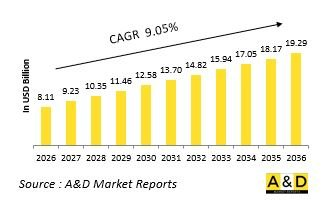
据估计,2026 年全球辅助动力装置 (APU) 市场规模为 81.1 亿美元,预计到 2036 年将达到 192.9 亿美元,2026 年至 2036 年的复合年增长率 (CAGR) 为 9.05%。
引言
辅助动力装置 (APU) 在现代航空航天和国防平台中发挥着至关重要的作用,当主发动机关闭或以有限功率运行时,APU 可为关键系统提供独立的机载电源。这些系统对于军用飞机、直升机、装甲车辆、船舰以及某些无人平台至关重要,它们能够确保航空电子设备、环境控制系统、作战电子设备和通讯系统的可靠运作。随着国防平台日益复杂,辅助动力装置(APU)在保障作战准备方面发挥关键作用,尤其是在地面、待命和前缘部署行动中。武装部队越来越依赖这些系统来减少对外部电源的依赖,并提高在恶劣环境中的自主作战能力。现代国防战略强调快速部署和持续作战,这进一步增加了对紧凑、高效和可靠的辅助动力解决方案的需求。随着平台整合更多电子和感测器系统,APU 正成为确保作战确定性和生存能力的关键。它们的作用远不止于提供便利;它们支援直接影响陆、空、海作战效能和作战弹性的关键功能。
科技对辅助动力装置 (APU) 的影响
技术进步正在重塑辅助动力装置 (APU),以满足人们对效率、可靠性和环保性能日益增长的期望。涡轮机设计和能量转换效率的创新在保持稳定功率输出的同时降低了燃料消耗。材料工程的进步使 APU 能够在更高的温度下运行,从而提高耐久性并减少维护需求。数位控制系统实现了更精确的功率管理、即时监控和预测性维护,提高了运行可用性。降噪技术和先进的废气处理系统变得越来越重要,尤其对于在敏感或隐蔽环境中运作的平台。电气化趋势也在影响 APU 的发展,混合动力和电动辅助动力装置配置正在涌现,以支援下一代平台。紧凑型设计有助于降低系统重量和空间需求,进而提高平台的整体效率。与平台健康管理系统的整合加强了 APU 与主系统之间的协作,从而提高了全生命週期性能。这些技术发展使得辅助动力装置 (APU) 在提升国防平台的作战效率和永续性方面发挥了至关重要的作用。
辅助动力装置 (APU) 的关键驱动因素
对先进辅助动力装置 (APU) 的需求受到多种作战和战略因素的驱动。对电子密集型作战系统的日益依赖需要稳定、独立的电源供应。随着军队优先考虑降低后勤负荷,机载发电能力对于在偏远和前沿地区进行的作战行动至关重要。飞机和地面系统的平台现代化专案为升级辅助动力解决方案创造了机会,这些方案可以提高效率并降低生命週期成本。任务间更快的周转时间需求进一步凸显了可靠辅助动力系统的重要性。环境和监管方面的考虑也在影响发展重点,推动减排和降低声学特征。能够进行无人作战的平台的成长正在推动对紧凑型、自主发电解决方案的需求。此外,各国军队都在寻求提高作战韧性,增加对增强平台独立性和作战连续性的系统的投资。这些驱动因素确保了辅助动力装置 (APU) 在国防应用中持续的重要性。
本报告探讨并分析了全球辅助动力装置 (APU) 市场,提供了影响该市场的技术资讯、10 年预测以及区域趋势。
目录
辅助动力装置 (APU) 市场定义
辅助动力装置 (APU) 市场区隔
按地区
依飞机类型
依飞机尺寸
10 年市场展望
辅助动力装置 (APU) 市场技术
全球辅助动力装置 (APU) 市场预测
区域市场趋势与预测
北美
驱动因素、限制因素与挑战
PEST分析
市场预测与情境分析
主要公司
供应商等级
公司基准分析
欧洲
中东
亚太地区
南美洲
国家分析
美国
国防项目
最新资讯
专利
当前市场技术成熟度
市场预测与情境分析
加拿大
义大利
法国
德国
荷兰
比利时
西班牙
瑞典丹麦
希腊
澳洲
南非
印度
中国
俄罗斯
韩国
日本
马来西亚
新加坡
巴西
机会矩阵
专家意见
结论
关于航空和国防市场报告
The Global Auxiliary Power Unit market is estimated at USD 8.11 billion in 2026, projected to grow to USD 19.29 billion by 2036 at a Compound Annual Growth Rate (CAGR) of 9.05% over the forecast period 2026-2036.

Introduction
Auxiliary power units play a vital role in modern aerospace and defense platforms by providing independent onboard power for critical systems when primary engines are inactive or operating under limited capacity. These systems are essential across military aircraft, helicopters, armored vehicles, naval vessels, and certain unmanned platforms, enabling reliable operation of avionics, environmental controls, mission electronics, and communication systems. The growing complexity of defense platforms has elevated the importance of auxiliary power units as enablers of operational readiness, particularly during ground operations, standby missions, and forward deployments. Armed forces increasingly rely on these systems to reduce dependency on external power sources and improve autonomy in austere environments. Modern defense strategies emphasize rapid deployment and sustained operations, which further reinforces the need for compact, efficient, and highly reliable auxiliary power solutions. As platforms incorporate more electronic and sensor-based systems, auxiliary power units are becoming integral to mission assurance and survivability. Their role extends beyond convenience, supporting critical functions that directly impact mission effectiveness and operational flexibility across land, air, and sea domains.
Technology Impact in Auxiliary Power Units
Technological advancements are reshaping auxiliary power units to meet rising efficiency, reliability, and environmental performance expectations. Innovations in turbine design and energy conversion efficiency have reduced fuel consumption while maintaining consistent power output. Advances in materials engineering allow auxiliary power units to operate at higher temperatures with improved durability and reduced maintenance requirements. Digital control systems enable more precise power management, real-time monitoring, and predictive maintenance, enhancing operational availability. Noise reduction technologies and improved exhaust treatment systems are increasingly important, particularly for platforms operating in sensitive or covert environments. Electrification trends are also influencing auxiliary power unit development, with hybrid and electric-assisted configurations emerging to support next-generation platforms. Compact design approaches help reduce system weight and space requirements, contributing to overall platform efficiency. Integration with platform health management systems allows better coordination between auxiliary power units and primary systems, improving lifecycle performance. These technological developments position auxiliary power units as critical contributors to operational efficiency and sustainability in defense platforms.
Key Drivers in Auxiliary Power Units
The demand for advanced auxiliary power units is driven by multiple operational and strategic factors. Increasing reliance on electronically intensive mission systems requires consistent and independent power availability. Military forces prioritize reduced logistical footprints, making onboard power generation essential for operations in remote or forward areas. Platform modernization programs across aviation and ground systems are creating opportunities for upgraded auxiliary power solutions that offer improved efficiency and lower lifecycle costs. The need for rapid turnaround times between missions further emphasizes the importance of reliable auxiliary power systems. Environmental and regulatory considerations are also shaping development priorities, encouraging lower emissions and reduced acoustic signatures. Growth in unmanned and optionally manned platforms increases demand for compact and autonomous power generation solutions. Additionally, armed forces seek greater operational resilience, driving investment in systems that enhance platform independence and mission continuity. Together, these drivers ensure sustained relevance for auxiliary power units across defense applications.
Regional Trends in Auxiliary Power Units
Regional defense priorities influence the development and deployment of auxiliary power units worldwide. North America emphasizes advanced digital control and efficiency improvements aligned with next-generation aircraft programs. European defense organizations focus on environmentally responsible designs and interoperability across multinational platforms. Asia-Pacific countries prioritize auxiliary power units that support expanding air fleets and diverse operating environments. Middle Eastern forces emphasize durability and thermal resilience to support operations in extreme climates. African defense modernization efforts focus on reliability and ease of maintenance to ensure sustained operational readiness. Across regions, there is a growing emphasis on local assembly, maintenance capabilities, and technology partnerships to strengthen supply chain security. These regional trends reflect how auxiliary power unit development aligns with broader defense modernization and operational strategies.
Key Defense Auxiliary Power Unit Program:
In September 2025, RTX's Pratt & Whitney partnered with Czech manufacturer PBS Group to develop next-generation auxiliary power units for military and commercial aircraft. The collaboration focuses on enhanced performance, fuel efficiency, and reduced emissions for future aviation platforms. Separately, Pratt & Whitney secured a 15-year maintenance agreement with Singapore Airlines for APS5000 APU fleet support, ensuring optimal operational readiness through customized servicing solutions. These contracts reflect growing defense and commercial aviation demand for advanced, reliable power generation systems during ground operations and emergency scenarios.
Table of Contents
Auxiliary Power Unit Market - Table of Contents
Auxiliary Power Unit Market Definition
Auxiliary Power Unit Market Segmentation
By Region
By Aircraft Type
By Aircraft Size
10 Year Market Outlook
The 10-year market outlook would give a detailed overview of changing dynamics, technology adoption overviews and the overall market attractiveness is covered in this chapter.
Auxiliary Power Unit Market Technologies
This segment covers the top 10 technologies that is expected to impact this market and the possible implications these technologies would have on the overall market.
Global Auxiliary Power Unit Market Forecast
The 10-year market forecast of this market is covered in detailed across the segments which are mentioned above.
Regional Market Trends & Forecast
The regional market trends, drivers, restraints and Challenges of this market, the Political, Economic, Social and Technology aspects are covered in this segment. The market forecast and scenario analysis across regions are also covered in detailed in this segment. The last part of the regional analysis includes profiling of the key companies, supplier landscape and company benchmarking.
North America
Drivers, Restraints and Challenges
PEST
Market Forecast & Scenario Analysis
Key Companies
Supplier Tier Landscape
Company Benchmarking
Europe
Middle East
APAC
South America
Country Analysis
This chapter deals with the key defense programs in this market, it also covers the latest news and patents which have been filed in this market. Country level 10 year market forecast and scenario analysis are also covered in this chapter.
US
Defense Programs
Latest News
Patents
Current levels of technology maturation in this market
Market Forecast & Scenario Analysis
Canada
Italy
France
Germany
Netherlands
Belgium
Spain
Sweden
Greece
Australia
South Africa
India
China
Russia
South Korea
Japan
Malaysia
Singapore
Brazil
Opportunity Matrix
The opportunity matrix helps the readers understand the high opportunity segments in this market.
Expert Opinions
Hear from our experts their opinion of the possible outlook for this market.
Conclusions
About Aviation and Defense Market Reports
List of Tables
- Table 1: 10 Year Market Outlook, 2026-2036
- Table 2: Drivers, Impact Analysis, North America
- Table 3: Restraints, Impact Analysis, North America
- Table 4: Challenges, Impact Analysis, North America
- Table 5: Drivers, Impact Analysis, Europe
- Table 6: Restraints, Impact Analysis, Europe
- Table 7: Challenges, Impact Analysis, Europe
- Table 8: Drivers, Impact Analysis, Middle East
- Table 9: Restraints, Impact Analysis, Middle East
- Table 10: Challenges, Impact Analysis, Middle East
- Table 11: Drivers, Impact Analysis, APAC
- Table 12: Restraints, Impact Analysis, APAC
- Table 13: Challenges, Impact Analysis, APAC
- Table 14: Drivers, Impact Analysis, South America
- Table 15: Restraints, Impact Analysis, South America
- Table 16: Challenges, Impact Analysis, South America
- Table 17: Scenario Analysis, Scenario 1, By Region, 2026-2036
- Table 18: Scenario Analysis, Scenario 1, By Aircraft Type, 2026-2036
- Table 19: Scenario Analysis, Scenario 1, By Aircraft Size, 2026-2036
- Table 20: Scenario Analysis, Scenario 2, By Region, 2026-2036
- Table 21: Scenario Analysis, Scenario 2, By Aircraft Type, 2026-2036
- Table 22: Scenario Analysis, Scenario 2, By Aircraft Size, 2026-2036
List of Figures
- Figure 1: Global Auxiliary Power Unit Market Forecast, 2026-2036
- Figure 2: Global Auxiliary Power Unit Market Forecast, By Region, 2026-2036
- Figure 3: Global Auxiliary Power Unit Market Forecast, By Aircraft Type, 2026-2036
- Figure 4: Global Auxiliary Power Unit Market Forecast, By Aircraft Size, 2026-2036
- Figure 5: North America, Auxiliary Power Unit Market, Market Forecast, 2026-2036
- Figure 6: Europe, Auxiliary Power Unit Market, Market Forecast, 2026-2036
- Figure 7: Middle East, Auxiliary Power Unit Market, Market Forecast, 2026-2036
- Figure 8: APAC, Auxiliary Power Unit Market, Market Forecast, 2026-2036
- Figure 9: South America, Auxiliary Power Unit Market, Market Forecast, 2026-2036
- Figure 10: United States, Auxiliary Power Unit Market, Technology Maturation, 2026-2036
- Figure 11: United States, Auxiliary Power Unit Market, Market Forecast, 2026-2036
- Figure 12: Canada, Auxiliary Power Unit Market, Technology Maturation, 2026-2036
- Figure 13: Canada, Auxiliary Power Unit Market, Market Forecast, 2026-2036
- Figure 14: Italy, Auxiliary Power Unit Market, Technology Maturation, 2026-2036
- Figure 15: Italy, Auxiliary Power Unit Market, Market Forecast, 2026-2036
- Figure 16: France, Auxiliary Power Unit Market, Technology Maturation, 2026-2036
- Figure 17: France, Auxiliary Power Unit Market, Market Forecast, 2026-2036
- Figure 18: Germany, Auxiliary Power Unit Market, Technology Maturation, 2026-2036
- Figure 19: Germany, Auxiliary Power Unit Market, Market Forecast, 2026-2036
- Figure 20: Netherlands, Auxiliary Power Unit Market, Technology Maturation, 2026-2036
- Figure 21: Netherlands, Auxiliary Power Unit Market, Market Forecast, 2026-2036
- Figure 22: Belgium, Auxiliary Power Unit Market, Technology Maturation, 2026-2036
- Figure 23: Belgium, Auxiliary Power Unit Market, Market Forecast, 2026-2036
- Figure 24: Spain, Auxiliary Power Unit Market, Technology Maturation, 2026-2036
- Figure 25: Spain, Auxiliary Power Unit Market, Market Forecast, 2026-2036
- Figure 26: Sweden, Auxiliary Power Unit Market, Technology Maturation, 2026-2036
- Figure 27: Sweden, Auxiliary Power Unit Market, Market Forecast, 2026-2036
- Figure 28: Brazil, Auxiliary Power Unit Market, Technology Maturation, 2026-2036
- Figure 29: Brazil, Auxiliary Power Unit Market, Market Forecast, 2026-2036
- Figure 30: Australia, Auxiliary Power Unit Market, Technology Maturation, 2026-2036
- Figure 31: Australia, Auxiliary Power Unit Market, Market Forecast, 2026-2036
- Figure 32: India, Auxiliary Power Unit Market, Technology Maturation, 2026-2036
- Figure 33: India, Auxiliary Power Unit Market, Market Forecast, 2026-2036
- Figure 34: China, Auxiliary Power Unit Market, Technology Maturation, 2026-2036
- Figure 35: China, Auxiliary Power Unit Market, Market Forecast, 2026-2036
- Figure 36: Saudi Arabia, Auxiliary Power Unit Market, Technology Maturation, 2026-2036
- Figure 37: Saudi Arabia, Auxiliary Power Unit Market, Market Forecast, 2026-2036
- Figure 38: South Korea, Auxiliary Power Unit Market, Technology Maturation, 2026-2036
- Figure 39: South Korea, Auxiliary Power Unit Market, Market Forecast, 2026-2036
- Figure 40: Japan, Auxiliary Power Unit Market, Technology Maturation, 2026-2036
- Figure 41: Japan, Auxiliary Power Unit Market, Market Forecast, 2026-2036
- Figure 42: Malaysia, Auxiliary Power Unit Market, Technology Maturation, 2026-2036
- Figure 43: Malaysia, Auxiliary Power Unit Market, Market Forecast, 2026-2036
- Figure 44: Singapore, Auxiliary Power Unit Market, Technology Maturation, 2026-2036
- Figure 45: Singapore, Auxiliary Power Unit Market, Market Forecast, 2026-2036
- Figure 46: United Kingdom, Auxiliary Power Unit Market, Technology Maturation, 2026-2036
- Figure 47: United Kingdom, Auxiliary Power Unit Market, Market Forecast, 2026-2036
- Figure 48: Opportunity Analysis, Auxiliary Power Unit Market, By Region (Cumulative Market), 2026-2036
- Figure 49: Opportunity Analysis, Auxiliary Power Unit Market, By Region (CAGR), 2026-2036
- Figure 50: Opportunity Analysis, Auxiliary Power Unit Market, By Aircraft Type (Cumulative Market), 2026-2036
- Figure 51: Opportunity Analysis, Auxiliary Power Unit Market, By Aircraft Type (CAGR), 2026-2036
- Figure 52: Opportunity Analysis, Auxiliary Power Unit Market, By Aircraft Size (Cumulative Market), 2026-2036
- Figure 53: Opportunity Analysis, Auxiliary Power Unit Market, By Aircraft Size (CAGR), 2026-2036
- Figure 54: Scenario Analysis, Auxiliary Power Unit Market, Cumulative Market, 2026-2036
- Figure 55: Scenario Analysis, Auxiliary Power Unit Market, Global Market, 2026-2036
- Figure 56: Scenario 1, Auxiliary Power Unit Market, Total Market, 2026-2036
- Figure 57: Scenario 1, Auxiliary Power Unit Market, By Region, 2026-2036
- Figure 58: Scenario 1, Auxiliary Power Unit Market, By Aircraft Type, 2026-2036
- Figure 59: Scenario 1, Auxiliary Power Unit Market, By Aircraft Size, 2026-2036
- Figure 60: Scenario 2, Auxiliary Power Unit Market, Total Market, 2026-2036
- Figure 61: Scenario 2, Auxiliary Power Unit Market, By Region, 2026-2036
- Figure 62: Scenario 2, Auxiliary Power Unit Market, By Aircraft Type, 2026-2036
- Figure 63: Scenario 2, Auxiliary Power Unit Market, By Aircraft Size, 2026-2036
- Figure 64: Company Benchmark, Auxiliary Power Unit Market, 2026-2036


