


 |
市场调查报告书
商品编码
1930540
全球反舰飞弹市场:2026-2036Global Anti Ship Missiles Market 2026-2036 |
||||||

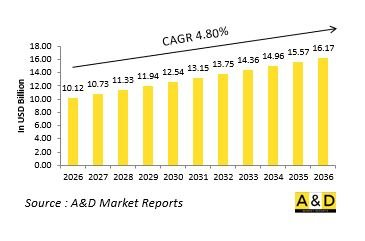
据估计,2026年全球反舰飞弹市场规模为101.2亿美元,预计到2036年将达到161.7亿美元,2026年至2036年的复合年增长率(CAGR)为4.80%。
引言
反舰飞弹是海上作战能力的核心组成部分,旨在干扰敌方在战略海路和沿海地区的行动自由。这些系统使海军部队能够将力量投射到视距之外,并对水面舰队构成强大的威慑。随着海上竞争加剧和海军行动扩展到争议沿海地区,反舰飞弹的重要性日益凸显。反舰飞弹部署在多种平台上,包括水面舰艇、潜舰、飞机、岸防炮兵阵地和陆基移动发射平台。这种灵活性使国防部队能够建立多层次的海上防御体系,并使敌方作战计画更加复杂。现代海军战术理论强调海上拒止和出入控制,将反舰飞弹定位为实现非对称优势的关键手段。其作用不仅限于高强度衝突,还包括威慑巡逻和战略讯号传递。随着海军平台日益网路化和感测器驱动,反舰飞弹正被整合到各种海上监视和目标指示系统中。其持续发展反映了对精确打击能力和海上领域优势的日益重视。
科技对反舰飞弹的影响
技术进步正在重新定义反舰飞弹系统的效能和生存能力。改良的导引头技术增强了在复杂海域环境中识别目标的能力。先进的导引演算法使飞弹能够调整飞行轨迹以规避防御。改良的推进系统在保持机动性的同时,延长了作战半径。低可观测性设计技术降低了末段被侦测到的可能性。网路化目标捕获能够根据即时感测器输入进行中段修正。改进的电子对抗措施提高了抗干扰和抗欺骗能力。弹头设计的创新优化了对现代舰艇防御系统的打击效能。与多域感测器网路的整合提高了目标捕获精度。这些技术发展确保反舰飞弹即使在防御日益严密的海域环境中,仍构成切实的威胁。
反舰飞弹的关键驱动因素
对反舰飞弹的需求受到不断变化的海上安全格局和不断演进的海军战略的驱动。保护领海和专属经济区的需要促使海军持续投资于近岸防御能力。海军现代化计划强调分散式杀伤力和远程打击选项。对海上航道保护和力量投射的日益重视进一步提升了水面攻击系统的重要性。预算效率的考量使得飞弹威慑优先于大规模舰队扩张。与盟国海军的互通性也影响系统的发展。拒止存取策略的兴起进一步推动了对先进飞弹解决方案的需求。这些因素共同维持了反舰飞弹能力的战略重要性。
反舰飞弹的区域趋势
区域海上优先事项对反舰飞弹的采用和部署有显着影响。北美海军高度重视与航母打击群的整合以及多域海上作战。欧洲海军则强调近岸防御和联合海上安全倡议。亚太地区优先考虑在拥挤水域实施海上拒止和岛屿防御战略。中东国家致力于保护战略水道和关键基础设施。非洲沿海国家正在加速探索飞弹能力,以增强海上安全和威慑力。整个地区的本土发展和技术合作正在不断扩展。这些趋势凸显了反舰飞弹在现代海军战略中的核心作用。
主要国防反舰飞弹计画:
洛克希德·马丁公司于2025年7月获得美国国防部一份价值95亿美元的合同,用于大规模采购AGM-158C远程反舰导弹和联合空对地防区外导弹。该合约包括在2033年前生产22-26批联合空对地防区外飞弹和9-12批远程反舰飞弹,并额外拨款43亿美元用于远程反舰飞弹的紧急生产。这些隐藏的精确导引飞弹为美国及其盟国空军提供了远程打击能力,使其能够在敌方防空系统之外打击高价值海上目标。
目录
反舰飞弹市场 - 目录
反舰飞弹市场报告定义
反舰飞弹市场区隔
按平台
按地区
按类型
未来十年反舰飞弹市场分析
本章透过对未来十年反舰飞弹市场的分析,详细概述了反舰飞弹市场的成长、发展趋势、技术应用概况以及市场吸引力。
反舰飞弹市场技术概况
本部分涵盖预计将影响该市场的十大技术及其对整体市场的潜在影响。
全球反舰飞弹市场预测
以上各部分详细阐述了该市场未来十年的反舰飞弹市场预测。
区域反舰飞弹市场趋势及预测
本部分涵盖区域反舰飞弹市场的趋势、驱动因素、限制因素和挑战,以及政治、经济、社会和技术因素。此外,还包含详细的区域市场预测和情境分析。区域分析的最后一部分包括主要公司概况、供应商格局和公司基准分析。
北美
驱动因素、限制因素与挑战
PEST分析
市场预测与情境分析
主要公司
供应商层级结构
公司标竿分析
欧洲
中东
亚太地区
南美洲
反舰飞弹市场国家分析
本章涵盖该市场的主要国防项目以及最新的新闻和专利申请。此外,本章也提供未来十年各国的市场预测和情境分析。
美国
国防项目
最新消息
专利
当前市场技术成熟度
市场预测与情境分析
加拿大
义大利
法国
德国
荷兰
比利时
西班牙
瑞典
德国
澳洲
南非
印度
中国
俄罗斯
南非
韩国日本
马来西亚
新加坡
巴西
反舰飞弹市场机会矩阵
机会矩阵帮助读者了解该市场中高机会细分领域。
专家对反舰飞弹市场报告的意见
本报告总结了我们专家对该市场未来前景的意见。
结论
关于航空与国防市场报告
The Global Anti-Ship Missiles market is estimated at USD 10.12 billion in 2026, projected to grow to USD 16.17 billion by 2036 at a Compound Annual Growth Rate (CAGR) of 4.80% over the forecast period 2026-2036.

Introduction
Anti ship missiles are a central element of maritime combat capability, designed to deny adversaries freedom of movement across strategic sea lanes and coastal regions. These systems enable naval forces to project power beyond visual range and impose significant deterrence against surface fleets. Their importance has increased as maritime competition intensifies and naval operations extend into contested littoral zones. Anti ship missiles are deployed across a wide range of platforms, including surface vessels, submarines, aircraft, coastal batteries, and mobile land-based launchers. This flexibility allows defense forces to establish layered maritime defense architectures that complicate adversary planning. Modern naval doctrine emphasizes sea denial and access control, positioning anti ship missiles as key instruments of asymmetric advantage. Their role extends beyond high-intensity conflict to include deterrence patrols and strategic signaling. As naval platforms become more networked and sensor-driven, anti ship missiles are increasingly integrated into broader maritime surveillance and targeting ecosystems. Their continued evolution reflects the growing emphasis on precision engagement and control of maritime domains.
Technology Impact in Anti Ship Missiles
Technological advancements are redefining the effectiveness and survivability of anti ship missile systems. Improvements in seeker technology enhance target discrimination in cluttered maritime environments. Advanced guidance algorithms allow missiles to adapt flight profiles and evade defensive systems. Propulsion enhancements extend operational reach while maintaining maneuverability. Low-observable design techniques reduce detectability during terminal phases. Network-enabled targeting allows mid-course updates based on real-time sensor inputs. Improved electronic counter-countermeasures increase resistance to jamming and deception. Warhead design innovations optimize impact effectiveness against modern ship defenses. Integration with multi-domain sensor networks enhances targeting accuracy. These technological developments ensure anti ship missiles remain credible threats in increasingly defended maritime environments.
Key Drivers in Anti Ship Missiles
The demand for anti ship missiles is driven by shifting maritime security dynamics and evolving naval doctrines. The need to protect territorial waters and exclusive maritime zones sustains investment in coastal defense capabilities. Naval modernization programs emphasize distributed lethality and long-range strike options. Increased emphasis on sea lane protection and power projection reinforces the importance of surface strike systems. Budget efficiency considerations favor missile-based deterrence compared to large fleet expansion. Interoperability with allied naval forces also influences system development. The rise of anti-access strategies further drives demand for advanced missile solutions. These drivers collectively sustain the strategic relevance of anti ship missile capabilities.
Regional Trends in Anti Ship Missiles
Regional maritime priorities strongly influence anti ship missile adoption and deployment. North American naval forces focus on integration with carrier strike groups and multi-domain maritime operations. European navies emphasize coastal defense and joint maritime security initiatives. Asia-Pacific regions prioritize sea denial and island defense strategies in congested waters. Middle Eastern forces focus on protecting strategic waterways and critical infrastructure. African coastal states increasingly explore missile capabilities to enhance maritime security and deterrence. Across regions, domestic development and technology partnerships are expanding. These trends highlight the central role of anti ship missiles in modern naval strategy.
Key Defense Anti-Ship Missiles Program:
Lockheed Martin received a $9.5 billion Pentagon contract in July 2025 covering large-lot procurement of AGM-158C Long Range Anti-Ship Missiles and Joint Air-to-Surface Standoff Missiles. The award includes production lots 22-26 for JASSM and lots 9-12 for LRASM through 2033, with additional $4.3 billion allocated specifically for LRASM surge production. These stealthy, precision-guided missiles provide U.S. and allied air forces with stand-off capability to neutralize high-value maritime targets while operating outside enemy air defense envelopes.
Table of Contents
Anti Ship Missiles Market - Table of Contents
Anti Ship Missiles Market Report Definition
Anti Ship Missiles Market Segmentation
By Platform
By Region
By Type
Anti Ship Missiles Market Analysis for next 10 years
The 10-year anti ship missiles market analysis would give a detailed overview of anti ship missiles market growth, changing dynamics, technology adoption overviews and the overall market attractiveness is covered in this chapter.
Market Technologies of Anti Ship Missiles Market
This segment covers the top 10 technologies that is expected to impact this market and the possible implications these technologies would have on the overall market.
Global Anti Ship Missiles Market Forecast
The 10-year anti ship missiles market forecast of this market is covered in detailed across the segments which are mentioned above.
Regional Anti Ship Missiles Market Trends & Forecast
The regional anti ship missiles market trends, drivers, restraints and Challenges of this market, the Political, Economic, Social and Technology aspects are covered in this segment. The market forecast and scenario analysis across regions are also covered in detailed in this segment. The last part of the regional analysis includes profiling of the key companies, supplier landscape and company benchmarking.
North America
Drivers, Restraints and Challenges
PEST
Market Forecast & Scenario Analysis
Key Companies
Supplier Tier Landscape
Company Benchmarking
Europe
Middle East
APAC
South America
Country Analysis of Anti Ship Missiles Market
This chapter deals with the key defense programs in this market, it also covers the latest news and patents which have been filed in this market. Country level 10 year market forecast and scenario analysis are also covered in this chapter.
US
Defense Programs
Latest News
Patents
Current levels of technology maturation in this market
Market Forecast & Scenario Analysis
Canada
Italy
France
Germany
Netherlands
Belgium
Spain
Sweden
Greece
Australia
South Africa
India
China
Russia
South Korea
Japan
Malaysia
Singapore
Brazil
Opportunity Matrix of Anti Ship Missiles Market
The opportunity matrix helps the readers understand the high opportunity segments in this market.
Expert Opinions on Anti Ship Missiles Market Report
Hear from our experts their opinion of the possible outlook for this market.
Conclusions
About Aviation and Defense Market Report
List of Tables
- Table 1: 10 Year Market Outlook, 2026-2036
- Table 2: Drivers, Impact Analysis, North America
- Table 3: Restraints, Impact Analysis, North America
- Table 4: Challenges, Impact Analysis, North America
- Table 5: Drivers, Impact Analysis, Europe
- Table 6: Restraints, Impact Analysis, Europe
- Table 7: Challenges, Impact Analysis, Europe
- Table 8: Drivers, Impact Analysis, Middle East
- Table 9: Restraints, Impact Analysis, Middle East
- Table 10: Challenges, Impact Analysis, Middle East
- Table 11: Drivers, Impact Analysis, APAC
- Table 12: Restraints, Impact Analysis, APAC
- Table 13: Challenges, Impact Analysis, APAC
- Table 14: Drivers, Impact Analysis, South America
- Table 15: Restraints, Impact Analysis, South America
- Table 16: Challenges, Impact Analysis, South America
- Table 17: Scenario Analysis, Scenario 1, By Region, 2026-2036
- Table 18: Scenario Analysis, Scenario 1, By Platform, 2026-2036
- Table 19: Scenario Analysis, Scenario 1, By Type, 2026-2036
- Table 20: Scenario Analysis, Scenario 2, By Region, 2026-2036
- Table 21: Scenario Analysis, Scenario 2, By Platform, 2026-2036
- Table 22: Scenario Analysis, Scenario 2, By Type, 2026-2036
List of Figures
- Figure 1: Global Anti Ship Missiles Market Forecast, 2026-2036
- Figure 2: Global Anti Ship Missiles Market Forecast, By Platform, 2026-2036
- Figure 3: Global Anti Ship Missiles Market Forecast, By Region, 2026-2036
- Figure 4: Global Anti Ship Missiles Market Forecast, By Type, 2026-2036
- Figure 5: North America, Anti Ship Missiles Market, Market Forecast, 2026-2036
- Figure 6: Europe, Anti Ship Missiles Market, Market Forecast, 2026-2036
- Figure 7: Middle East, Anti Ship Missiles Market, Market Forecast, 2026-2036
- Figure 8: APAC, Anti Ship Missiles Market, Market Forecast, 2026-2036
- Figure 9: South America, Anti Ship Missiles Market, Market Forecast, 2026-2036
- Figure 10: United States, Anti Ship Missiles Market, Technology Maturation, 2026-2036
- Figure 11: United States, Anti Ship Missiles Market, Market Forecast, 2026-2036
- Figure 12: Canada, Anti Ship Missiles Market, Technology Maturation, 2026-2036
- Figure 13: Canada, Anti Ship Missiles Market, Market Forecast, 2026-2036
- Figure 14: Italy, Anti Ship Missiles Market, Technology Maturation, 2026-2036
- Figure 15: Italy, Anti Ship Missiles Market, Market Forecast, 2026-2036
- Figure 16: France, Anti Ship Missiles Market, Technology Maturation, 2026-2036
- Figure 17: France, Anti Ship Missiles Market, Market Forecast, 2026-2036
- Figure 18: Germany, Anti Ship Missiles Market, Technology Maturation, 2026-2036
- Figure 19: Germany, Anti Ship Missiles Market, Market Forecast, 2026-2036
- Figure 20: Netherlands, Anti Ship Missiles Market, Technology Maturation, 2026-2036
- Figure 21: Netherlands, Anti Ship Missiles Market, Market Forecast, 2026-2036
- Figure 22: Belgium, Anti Ship Missiles Market, Technology Maturation, 2026-2036
- Figure 23: Belgium, Anti Ship Missiles Market, Market Forecast, 2026-2036
- Figure 24: Spain, Anti Ship Missiles Market, Technology Maturation, 2026-2036
- Figure 25: Spain, Anti Ship Missiles Market, Market Forecast, 2026-2036
- Figure 26: Sweden, Anti Ship Missiles Market, Technology Maturation, 2026-2036
- Figure 27: Sweden, Anti Ship Missiles Market, Market Forecast, 2026-2036
- Figure 28: Brazil, Anti Ship Missiles Market, Technology Maturation, 2026-2036
- Figure 29: Brazil, Anti Ship Missiles Market, Market Forecast, 2026-2036
- Figure 30: Australia, Anti Ship Missiles Market, Technology Maturation, 2026-2036
- Figure 31: Australia, Anti Ship Missiles Market, Market Forecast, 2026-2036
- Figure 32: India, Anti Ship Missiles Market, Technology Maturation, 2026-2036
- Figure 33: India, Anti Ship Missiles Market, Market Forecast, 2026-2036
- Figure 34: China, Anti Ship Missiles Market, Technology Maturation, 2026-2036
- Figure 35: China, Anti Ship Missiles Market, Market Forecast, 2026-2036
- Figure 36: Saudi Arabia, Anti Ship Missiles Market, Technology Maturation, 2026-2036
- Figure 37: Saudi Arabia, Anti Ship Missiles Market, Market Forecast, 2026-2036
- Figure 38: South Korea, Anti Ship Missiles Market, Technology Maturation, 2026-2036
- Figure 39: South Korea, Anti Ship Missiles Market, Market Forecast, 2026-2036
- Figure 40: Japan, Anti Ship Missiles Market, Technology Maturation, 2026-2036
- Figure 41: Japan, Anti Ship Missiles Market, Market Forecast, 2026-2036
- Figure 42: Malaysia, Anti Ship Missiles Market, Technology Maturation, 2026-2036
- Figure 43: Malaysia, Anti Ship Missiles Market, Market Forecast, 2026-2036
- Figure 44: Singapore, Anti Ship Missiles Market, Technology Maturation, 2026-2036
- Figure 45: Singapore, Anti Ship Missiles Market, Market Forecast, 2026-2036
- Figure 46: United Kingdom, Anti Ship Missiles Market, Technology Maturation, 2026-2036
- Figure 47: United Kingdom, Anti Ship Missiles Market, Market Forecast, 2026-2036
- Figure 48: Opportunity Analysis, Anti Ship Missiles Market, By Region (Cumulative Market), 2026-2036
- Figure 49: Opportunity Analysis, Anti Ship Missiles Market, By Region (CAGR), 2026-2036
- Figure 50: Opportunity Analysis, Anti Ship Missiles Market, By Platform (Cumulative Market), 2026-2036
- Figure 51: Opportunity Analysis, Anti Ship Missiles Market, By Platform (CAGR), 2026-2036
- Figure 52: Opportunity Analysis, Anti Ship Missiles Market, By Type (Cumulative Market), 2026-2036
- Figure 53: Opportunity Analysis, Anti Ship Missiles Market, By Type (CAGR), 2026-2036
- Figure 54: Scenario Analysis, Anti Ship Missiles Market, Cumulative Market, 2026-2036
- Figure 55: Scenario Analysis, Anti Ship Missiles Market, Global Market, 2026-2036
- Figure 56: Scenario 1, Anti Ship Missiles Market, Total Market, 2026-2036
- Figure 57: Scenario 1, Anti Ship Missiles Market, By Region, 2026-2036
- Figure 58: Scenario 1, Anti Ship Missiles Market, By Platform, 2026-2036
- Figure 59: Scenario 1, Anti Ship Missiles Market, By Type, 2026-2036
- Figure 60: Scenario 2, Anti Ship Missiles Market, Total Market, 2026-2036
- Figure 61: Scenario 2, Anti Ship Missiles Market, By Region, 2026-2036
- Figure 62: Scenario 2, Anti Ship Missiles Market, By Platform, 2026-2036
- Figure 63: Scenario 2, Anti Ship Missiles Market, By Type, 2026-2036
- Figure 64: Company Benchmark, Anti Ship Missiles Market, 2026-2036

