


 |
市场调查报告书
商品编码
1936053
全球国防喷射燃料启动器 (JFS) 市场 (2026-2036)Global Defense Jet Fuel Starters (JFS) Market 2026-2036 |
||||||

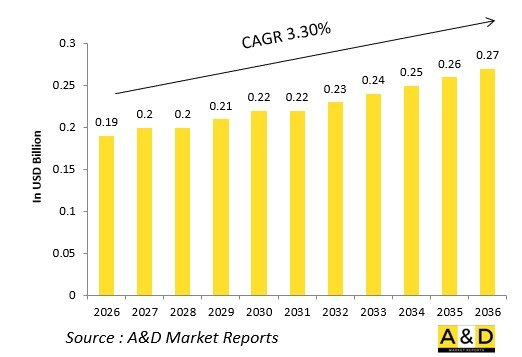
全球国防喷射燃料启动器 (JFS) 市场预计在 2026 年达到 1.9 亿美元,预计到 2036 年将达到 2.7 亿美元,2026 年至 2036 年的复合年增长率 (CAGR) 为 3.30%。
引言
全球国防喷射燃料启动器 (JFS) 市场使用独立的燃气发生器,透过涡轮压缩机组件燃烧喷射燃料 A,从而驱动主引擎点火。单轴JFS将核心引擎从零转速加速至自推进转速,然后透过离合器与辅助驱动装置分离。
市场正朝着 "更电气化" 的架构发展,这需要与混合动力推进系统相容的轻型启动器。核心技术包括气浮式涡轮、可变进气导叶以及与FADEC联动的顺序控制,以实现无缝切换。模组化大修支援现场维护。
地缘政治紧急需求正在推动发展,优先考虑能够耐受污染燃料和极端气候的JFS。开放式架构支援跨引擎系列的整合。供应链专注于高温密封件和单晶叶片。竞争对手包括霍尼韦尔、普惠和赛峰集团,它们在电动辅助版本方面处于领先地位。
国防喷射燃料启动器 (JFS) 技术的影响
电助力 JFS 启动器在热启动时,透过高扭力马达在初始转速提升后直接切换至燃料燃烧,显着缩短了启动时间。可变几何压缩机可防止在各种环境条件下(从极寒到沙漠环境)出现喘振。
陶瓷轴承完全取代了油路系统,无需扫气帮浦即可实现干式马达运转。内建的健康监测系统分析排气温度和振动特性,可在涡轮叶片失效前预测其损坏情况。增材製造的叶轮优化了气流,同时最大限度地减少了惯性质量。
全权限数位引擎控制 (FADEC) 融合控制系统协调启动器分离与主引擎点火,防止热气回流。混合动力设计整合了启动发电机,可实现无缝模式切换。与双轴设计相比,单轴简化设计减少了零件数量。
数位孪生技术验证了在战斗损伤进气条件下的启动范围。燃料雾化环形燃烧器能够可靠地点燃合成燃料混合物。这些进步使得从前沿跑道自主起飞成为可能。
国防喷射燃料启动器 (JFS) 的关键驱动因素
"更电气化" 引擎的普及推动了对整合式启动发电机的需求,以取代外部 JFS,从而促进了混合动力设计的发展。第六代无人平台需要具备无需地面支援的空中启动能力。
永续性强调模组化转子,允许互换燃料盒。出口项目要求对各种煤油燃料具有广泛的耐受性。紧急发射要求在冷浸状态下也能在一分钟内启动。
预算考量倾向于采用具有军用级硬化性能的商用衍生产品。供应的稳定性可以弥补涡轮叶片材料的限制。互通性使得联盟引擎可以使用通用的驱动底座。
定向能武器需要兆瓦级的启动能力,因此喷射燃料启动器(JFS)是一种能够独立运作的启动装置。
本报告分析了全球国防喷射燃料启动器(JFS)市场,深入探讨了影响该市场的技术、未来十年的预测以及区域趋势。
目录
国防喷射燃料启动器 (JFS) 市场报告定义
国防喷射燃料启动器 (JFS) 市场区隔
依平台
依启动器类型
依点火方式
未来十年国防喷射燃料启动器 (JFS) 市场分析
国防喷射燃料启动器 (JFS) 市场技术
全球国防喷射燃料启动器 (JFS) 市场预测
区域国防喷射燃料启动器 (JFS) 市场趋势及预测
北美
驱动因素、限制因素及挑战
PEST分析
市场预测与情境分析
主要公司
供应商层级概览
公司标竿分析
欧洲
中东
亚太地区
南美洲
国防喷射燃料启动器 (JFS) 市场国家分析
美国
国防项目
最新资讯
专利
当前市场技术成熟度
市场预测与情境分析
加拿大
义大利
法国
德国
荷兰
比利时
西班牙
瑞典
希腊
澳洲
南非
印度
中国
俄罗斯
韩国
日本
马来西亚
新加坡
巴西
国防喷射燃料启动器 (JFS) 市场机会矩阵
国防喷射燃料启动器 (JFS) 市场专家意见
结论
关于航空与国防市场报告
The Global Defense Jet Fuel Starters (JFS) Market is estimated at USD 0.19 billion in 2026, projected to grow to USD 0.27 billion by 2036 at a Compound Annual Growth Rate (CAGR) of 3.30% over the forecast period 2026-2036.
Introduction
The global Defense Jet Fuel Starters (JFS) market powers main engine ignition via self-contained gas generators burning Jet-A through turbine-compressor assemblies. Single-shaft JFS accelerate cores from zero to self-sustaining RPM, then disengage via clutches for accessory drive.
Market evolution tracks more-electric architectures requiring lightweight starters compatible with hybrid propulsion. Core technologies include air-bearing turbines, variable inlet guide vanes, and FADEC-linked sequencing for seamless transitions. Modular overhauls enable field-level maintenance.
Geopolitical demands for scramble readiness drive development, prioritizing JFS tolerant of contaminated fuels and extreme climates. Open architectures support integration across engine families. Supply chains focus on high-temperature seals and single-crystal blades. Competition features Honeywell, Pratt & Whitney, and Safran pioneering electric-assist variants.
Technology Impact in Defense Jet Fuel Starters (JFS)
Electric boost JFS employ high-torque motors for initial spool-up, then transition to fuel combustion, slashing startup times during hot restarts. Variable geometry compressors prevent surge across ambient conditions from arctic to desert.
Ceramic bearings eliminate oil systems entirely, enabling dry motoring without scavenge pumps. Embedded health monitoring analyzes exhaust gas temps and vibration signatures, predicting turbine blade distress before failure. Additive manufactured impellers optimize airflow while minimizing inertia.
FADEC fusion sequences starter disengagement with main engine light-off, preventing hot gas reingestion. Hybrid designs integrate with integrated starter generators for seamless mode transitions. Single-shaft simplification reduces parts count versus twin-spool architectures.
Digital twins validate startup envelopes under battle-damaged inlet conditions. Fuel-atomizing can-annular combustors ignite reliably with synthetic blends. These advancements enable autonomous operations from forward strips.
Key Drivers in Defense Jet Fuel Starters (JFS)
More-electric engines demand integrated starter-generators replacing discrete JFS, driving hybrid designs. Sixth-generation unmanned platforms require air-start capability without ground support.
Sustainment prioritizes modular rotors enabling cartridge swaps. Export programs need wide-cut fuel tolerance across kerosene variants. Scramble readiness mandates sub-minute startups from cold soak.
Budget favors commercial derivatives with mil-spec hardening. Supply resilience counters turbine blade material constraints. Interoperability enables common drive pads across coalition engines.
Directed-energy weapons demand megawatt-class starter capacity. These position JFS as self-reliance enablers.
Regional Trends in Defense Jet Fuel Starters (JFS)
North America dominates F-35 sustainment, pioneering electric-hybrid starters for STOVL scrambles.
Europe upgrades Rafale/Typhoon JFS for dispersed basing with synthetic fuels.
Asia-Pacific surges with indigenous programs-India's Tejas, China's J-20-prioritizing high-altitude cold starts.
Middle East adapts fuel controls for sand-contaminated kerosene.
Russia hardens starters for Su-57 arctic deployments.
South Korea integrates KF-21 exports with common cartridges.
Trends favor electric integration; Asia-Pacific captures growth.
Key Defense Jet Fuel Starters (JFS) Programs
F135 JFS powers STOVL lift fan spin-up and main engine light-off sequencing.
NGAD hybrid starter integrates with variable cycle core transitions.
EJ200 upgrades enable rapid dry cranking for intercept missions.
Kaveri equips Tejas with indigenous air-bearing turbine.
F119 JFS sustains stealth missions from carrier catapults.
Rafale M88 starter handles STOBAR shipboard hot restarts.
Su-57 AL-41F1 integrates with 3D thrust vectoring spool-up.
T-50 FADEC-controlled startup prevents hot gas reingestion.
Table of Contents
Defense Jet Fuel Starters Market - Table of Contents
Defense Jet Fuel Starters Market Report Definition
Defense Jet Fuel Starters Market Segmentation
By Platform
By Starter Type
By Ignition
Defense Jet Fuel Starters Market Analysis for next 10 Years
The 10-year Defense Jet Fuel Starters market analysis would give a detailed overview of Defense Jet Fuel Starters market growth, changing dynamics, technology adoption overviews and the overall market attractiveness is covered in this chapter.
Market Technologies of Defense Jet Fuel Starters Market
This segment covers the top 10 technologies that is expected to impact this market and the possible implications these technologies would have on the overall market.
Global Defense Jet Fuel Starters Market Forecast
The 10-year Defense Jet Fuel Starters market forecast of this market is covered in detailed across the segments which are mentioned above.
Regional Defense Jet Fuel Starters Market Trends & Forecast
The regional counter drone market trends, drivers, restraints and Challenges of this market, the Political, Economic, Social and Technology aspects are covered in this segment. The market forecast and scenario analysis across regions are also covered in detailed in this segment. The last part of the regional analysis includes profiling of the key companies, supplier landscape and company benchmarking. The current market size is estimated based on the normal scenario.
North America
Drivers, Restraints and Challenges
PEST
Market Forecast & Scenario Analysis
Key Companies
Supplier Tier Landscape
Company Benchmarking
Europe
Middle East
APAC
South America
Country Analysis of Defense Jet Fuel Starters Market
This chapter deals with the key defense programs in this market, it also covers the latest news and patents which have been filed in this market. Country level 10 year market forecast and scenario analysis are also covered in this chapter.
US
Defense Programs
Latest News
Patents
Current levels of technology maturation in this market
Market Forecast & Scenario Analysis
Canada
Italy
France
Germany
Netherlands
Belgium
Spain
Sweden
Greece
Australia
South Africa
India
China
Russia
South Korea
Japan
Malaysia
Singapore
Brazil
Opportunity Matrix for Defense Jet Fuel Starters Market
The opportunity matrix helps the readers understand the high opportunity segments in this market.
Expert Opinions on Defense Jet Fuel Starters Market Report
Hear from our experts their opinion of the possible analysis for this market.
Conclusions
About Aviation and Defense Market Reports
List of Tables
- Table 1: 10 Year Market Outlook, 2026-2036
- Table 2: Drivers, Impact Analysis, North America
- Table 3: Restraints, Impact Analysis, North America
- Table 4: Challenges, Impact Analysis, North America
- Table 5: Drivers, Impact Analysis, Europe
- Table 6: Restraints, Impact Analysis, Europe
- Table 7: Challenges, Impact Analysis, Europe
- Table 8: Drivers, Impact Analysis, Middle East
- Table 9: Restraints, Impact Analysis, Middle East
- Table 10: Challenges, Impact Analysis, Middle East
- Table 11: Drivers, Impact Analysis, APAC
- Table 12: Restraints, Impact Analysis, APAC
- Table 13: Challenges, Impact Analysis, APAC
- Table 14: Drivers, Impact Analysis, South America
- Table 15: Restraints, Impact Analysis, South America
- Table 16: Challenges, Impact Analysis, South America
- Table 17: Scenario Analysis, Scenario 1, By Starter Type, 2026-2036
- Table 18: Scenario Analysis, Scenario 1, By Platform, 2026-2036
- Table 19: Scenario Analysis, Scenario 1, By Ignition, 2026-2036
- Table 20: Scenario Analysis, Scenario 2, By Starter Type, 2026-2036
- Table 21: Scenario Analysis, Scenario 2, By Platform, 2026-2036
- Table 22: Scenario Analysis, Scenario 2, By Ignition, 2026-2036
List of Figures
- Figure 1: Global Defense Jet Fuel Starters Market Forecast, 2026-2036
- Figure 2: Global Defense Jet Fuel Starters Market Forecast, By Starter Type, 2026-2036
- Figure 3: Global Defense Jet Fuel Starters Market Forecast, By Platform, 2026-2036
- Figure 4: Global Defense Jet Fuel Starters Market Forecast, By Ignition, 2026-2036
- Figure 5: North America, Defense Jet Fuel Starters Market, Forecast, 2026-2036
- Figure 6: Europe, Defense Jet Fuel Starters Market, Forecast, 2026-2036
- Figure 7: Middle East, Defense Jet Fuel Starters Market, Forecast, 2026-2036
- Figure 8: APAC, Defense Jet Fuel Starters Market, Forecast, 2026-2036
- Figure 9: South America, Defense Jet Fuel Starters Market, Forecast, 2026-2036
- Figure 10: United States, Defense Jet Fuel Starters Market, Technology Maturation, 2026-2036
- Figure 11: United States, Defense Jet Fuel Starters Market, Forecast, 2026-2036
- Figure 12: Canada, Defense Jet Fuel Starters Market, Technology Maturation, 2026-2036
- Figure 13: Canada, Defense Jet Fuel Starters Market, Forecast, 2026-2036
- Figure 14: Italy, Defense Jet Fuel Starters Market, Technology Maturation, 2026-2036
- Figure 15: Italy, Defense Jet Fuel Starters Market, Market Forecast, 2026-2036
- Figure 16: France, Defense Jet Fuel Starters Market, Technology Maturation, 2026-2036
- Figure 17: France, Defense Jet Fuel Starters Market, Market Forecast, 2026-2036
- Figure 18: Germany, Defense Jet Fuel Starters Market, Technology Maturation, 2026-2036
- Figure 19: Germany, Defense Jet Fuel Starters Market, Market Forecast, 2026-2036
- Figure 20: Netherlands, Defense Jet Fuel Starters Market, Technology Maturation, 2026-2036
- Figure 21: Netherlands, Defense Jet Fuel Starters Market, Market Forecast, 2026-2036
- Figure 22: Belgium, Defense Jet Fuel Starters Market, Technology Maturation, 2026-2036
- Figure 23: Belgium, Defense Jet Fuel Starters Market, Market Forecast, 2026-2036
- Figure 24: Spain, Defense Jet Fuel Starters Market, Technology Maturation, 2026-2036
- Figure 25: Spain, Defense Jet Fuel Starters Market, Market Forecast, 2026-2036
- Figure 26: Sweden, Defense Jet Fuel Starters Market, Technology Maturation, 2026-2036
- Figure 27: Sweden, Defense Jet Fuel Starters Market, Market Forecast, 2026-2036
- Figure 28: Brazil, Defense Jet Fuel Starters Market, Technology Maturation, 2026-2036
- Figure 29: Brazil, Defense Jet Fuel Starters Market, Market Forecast, 2026-2036
- Figure 30: Australia, Defense Jet Fuel Starters Market, Technology Maturation, 2026-2036
- Figure 31: Australia, Defense Jet Fuel Starters Market, Market Forecast, 2026-2036
- Figure 32: India, Defense Jet Fuel Starters Market, Technology Maturation, 2026-2036
- Figure 33: India, Defense Jet Fuel Starters Market, Market Forecast, 2026-2036
- Figure 34: China, Defense Jet Fuel Starters Market, Technology Maturation, 2026-2036
- Figure 35: China, Defense Jet Fuel Starters Market, Market Forecast, 2026-2036
- Figure 36: Saudi Arabia, Defense Jet Fuel Starters Market, Technology Maturation, 2026-2036
- Figure 37: Saudi Arabia, Defense Jet Fuel Starters Market, Market Forecast, 2026-2036
- Figure 38: South Korea, Defense Jet Fuel Starters Market, Technology Maturation, 2026-2036
- Figure 39: South Korea, Defense Jet Fuel Starters Market, Market Forecast, 2026-2036
- Figure 40: Japan, Defense Jet Fuel Starters Market, Technology Maturation, 2026-2036
- Figure 41: Japan, Defense Jet Fuel Starters Market, Market Forecast, 2026-2036
- Figure 42: Malaysia, Defense Jet Fuel Starters Market, Technology Maturation, 2026-2036
- Figure 43: Malaysia, Defense Jet Fuel Starters Market, Market Forecast, 2026-2036
- Figure 44: Singapore, Defense Jet Fuel Starters Market, Technology Maturation, 2026-2036
- Figure 45: Singapore, Defense Jet Fuel Starters Market, Market Forecast, 2026-2036
- Figure 46: United Kingdom, Defense Jet Fuel Starters Market, Technology Maturation, 2026-2036
- Figure 47: United Kingdom, Defense Jet Fuel Starters Market, Market Forecast, 2026-2036
- Figure 48: Opportunity Analysis, Defense Jet Fuel Starters Market, By Starter Type (Cumulative Market), 2026-2036
- Figure 49: Opportunity Analysis, Defense Jet Fuel Starters Market, By Starter Type (CAGR), 2026-2036
- Figure 50: Opportunity Analysis, Defense Jet Fuel Starters Market, By (Cumulative Market), 2026-2036
- Figure 51: Opportunity Analysis, Defense Jet Fuel Starters Market, By Platform(CAGR), 2026-2036
- Figure 52: Opportunity Analysis, Defense Jet Fuel Starters Market, By Ignition (Cumulative Market), 2026-2036
- Figure 53: Opportunity Analysis, Defense Jet Fuel Starters Market, By Ignition (CAGR), 2026-2036
- Figure 54: Scenario Analysis, Defense Jet Fuel Starters Market, Cumulative Market, 2026-2036
- Figure 55: Scenario Analysis, Defense Jet Fuel Starters Market, Global Market, 2026-2036
- Figure 56: Scenario 1, Defense Jet Fuel Starters Market, Total Market, 2026-2036
- Figure 57: Scenario 1, Defense Jet Fuel Starters Market, By Starter Type, 2026-2036
- Figure 58: Scenario 1, Defense Jet Fuel Starters Market, By Platform, 2026-2036
- Figure 59: Scenario 1, Defense Jet Fuel Starters Market, By Ignition, 2026-2036
- Figure 60: Scenario 2, Defense Jet Fuel Starters Market, Total Market, 2026-2036
- Figure 61: Scenario 2, Defense Jet Fuel Starters Market, By Starter Type, 2026-2036
- Figure 62: Scenario 2, Defense Jet Fuel Starters Market, By Platform, 2026-2036
- Figure 63: Scenario 2, Defense Jet Fuel Starters Market, By Ignition, 2026-2036
- Figure 64: Company Benchmark, Defense Jet Fuel Starters Market, 2026-2036

 2026年全球喷射机燃料市场报告
 军用喷射机燃料市场-全球产业规模、份额、趋势、机会和预测:按燃料类型、地区和竞争格局划分,2021-2031年
 喷射机燃料市场规模、份额及成长分析(按飞机类型、燃油类型、应用、最终用户和地区划分)-2026-2033年产业预测
 喷射机燃料市场:喷射机燃料类型、分销管道、燃料类型和应用划分 - 全球预测(2025-2032年)
 全球航空燃油添加剂市场研究报告 - 产业分析、规模、份额、成长、趋势及预测(2025 年至 2033 年)
 电子煤油市场机会、成长动力、产业趋势分析及 2024 年至 2032 年预测喷射燃料市场 - 全球产业规模、份额、趋势、机会和预测,按燃料类型(Jet A、Jet A1 和 Jet B)、按应用(商业、国防、通用航空、其他)、按地区和竞争细分, 2019-2029F
![电子煤油市场评估:各用途 [民航机,货物机,军用机,其他] 、各地区,机会,预测,2022年~2032年](/sample/img/cover/42/default_cover_mx.png) 电子煤油市场评估:各用途 [民航机,货物机,军用机,其他] 、各地区,机会,预测,2022年~2032年
电子煤油市场评估:各用途 [民航机,货物机,军用机,其他] 、各地区,机会,预测,2022年~2032年