


 |
市场调查报告书
商品编码
1951142
全球国防气象感测器市场:2026-2036Global Defense Meteorological Sensors Market 2026-2036 |
||||||

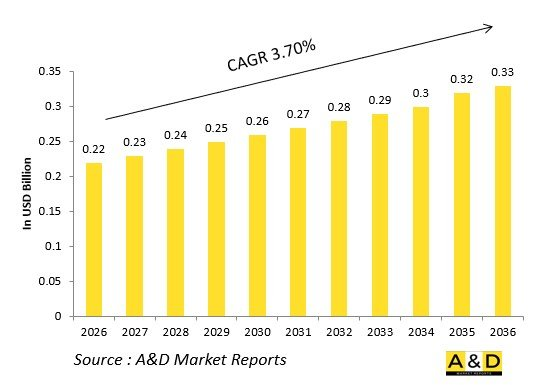
全球国防气象感测器市场预计将从2026年的2.2亿美元成长到2036年的3.3亿美元,预测期间内年复合成长率(CAGR)为3.70%。
简介:
全球国防气象感测器市场为军队提供即时气象资讯,以支援空中、陆地、海洋和太空领域的精确作战行动。这些紧凑型设备可测量风速、气压、温度、湿度和能见度,并将这些资料用于火力控制、航线规划和后勤支援。随着气候变迁扰乱作战行动,对能够承受恶劣环境(例如无人机、浮标和前沿基地)的坚固耐用型感测器的需求激增。可整合到无人机上的低功耗、小型化、高重量和高功耗(SWaP)的多参数探头推动创新。海军应用占据主导地位,支援舰船导航和飞弹弹道计算,而地面部队则依靠它们来校正炮火射击。空投探空仪和气球探空仪将观测范围扩展到敌方控制区域。该市场与多域作战相契合,将气象资料与人工智慧融合,以实现预测性战场态势感知。这些感测器共同提升了决策水准,并降低了现代战争固有的不可预测性。
国防气象感测器:技术影响
技术创新改变国防气象感测器,使其能够在动态战场环境中实现超局部化的精确定位。小型化的微机电系统(MEMS)惯性单元整合了运动补偿和风速测量功能,提高了无人机搭载的精度。雷射雷达(LIDAR)可侦测湍流和气溶胶,增强飞行员的预警能力。高光谱成像仪可识别云的微物理特性,并实现目标预测。边缘人工智慧(Edge AI)可在机载设备上处理原始资料,显着降低战术网路的延迟。固态湿度计即使在多尘环境中也能耐受污染。卫星连接的星座可透过网状中继持续监测。自校准演算法可适应盐和灰尘污染。雷达融合技术可提供全面的气象资讯。这些突破实现了小型化和低功耗,能够在机载武器和平流层气球上进行集群部署。感测器已从被动监测设备转变为主动支援耐候作战的基础。
国防气象感测器市场的主要驱动因素
国防气象感测器市场的主要驱动因素包括:精确导引武器需要微尺度风向和风速资料来补偿弹道漂移。远征部队需要便携式套件以便在恶劣环境中快速部署。气候变迁使得风暴预报能力对两栖突击作战的重要性日益凸显。无人系统的扩散要求自主导航必须配备整合式气象感测器。联合全域指挥将气象资讯整合到杀伤链中。电子战干扰促使人们寻求增强韧性并采用低特质设计。空中作战的后勤保障依赖视觉感测器。资料格式标准协调统一,以确保各军种之间的互通性。为应对半导体短缺,供应链韧性加强。预算考量强调成本效益,并优先考虑用于军民两用应用的商用现货(COTS)产品。这些因素共同作用,使得感测器成为决策的关键优势,尤其是在后勤保障紧张的情况下。
国防气象感测器的区域趋势
每个地区的作战环境决定了国防气象感测器的规格和部署策略。北美在太平洋航母打击群作战和北极巡逻中使用投放式探空仪方面处于领先地位。欧洲正推动与浮标网路的整合,以便为北约演习预测北大西洋航线的天气状况。亚太地区优先发展抗颱风感测器,用于季风作战。在印度洋-太平洋岛屿,太阳能观测站正被部署用于礁石登陆作战。在中东,用于沙漠航空作战的沙尘暴探测器已成为主流。在非洲,低成本雷达正用来应对萨赫勒地区的沙尘暴。在南美洲,用于安地斯山脉航空作战的高空观测感测器被列为优先事项。国际联盟正透过共享资料流并将美国技术与本地製造相结合的方式合作。联合国也在推动资料共享,并将美国技术与本地製造结合。无人机集群小型化和人工智慧在超本地化即时预测中的应用等趋势,反映了海上优势和远征作战的需求。
本报告分析了全球国防气象感测器市场,并重点分析了关键趋势、市场影响因素、关键技术及其影响、主要地区和国家的趋势以及市场机会。
目录
国防气象感测器市场:目录
国防气象感测器市场:报告定义
国防气象感测器市场:细分
依地区
依平台
依测量参数
依部署方式
未来十年国防气象感测器市场分析
国防气象感测器市场成长、趋势变化、技术应用概要及市场吸引力详情
国防气象感测器市场:技术
预计将影响市场的十大技术及其对整体市场的潜在影响
全球国防气象感测器市场:预测
以上各细分市场均详细涵盖了未来十年的市场预测。
国防气象感测器市场趋势与预测:依地区划分
本报告涵盖市场趋势、驱动因素、限制因素、挑战以及政治、经济、社会和技术因素。报告还提供了详细的区域市场预测和情境分析。区域分析最后对主要公司、供应商格局和公司基准进行了概述。目前市场规模是基于正常情境估算的。
北美
驱动因素、限制因素与挑战
PEST 分析
市场预测与情境分析
主要公司
供应商层级
公司标竿分析
欧洲
中东
亚太地区
南美洲
国防气象感测器市场:国家分析
美国
国防计画
最新资讯
专利
当前市场技术成熟度
市场预测与情境分析
加拿大
义大利
法国
德国
荷兰
比利时
西班牙
瑞典
希腊
澳洲
南非
印度
中国
俄罗斯
韩国
日本
马来西亚
新加坡
巴西
国防天气感测器市场:机会矩阵
专家对国防天气感测器市场报告的看法
概述
关于航空与国防市场报告
The Global defense meteorological sensors market is estimated at USD 0.22 billion in 2026, projected to grow to USD 0.33 billion by 2036 at a Compound Annual Growth Rate (CAGR) of 3.70% over the forecast period 2026-2036.
Introduction:
The Global defense meteorological sensors market equips forces with real-time weather intelligence for precise operations across air, land, sea, and space domains. These compact devices measure wind, pressure, temperature, humidity, and visibility, feeding data into fire control, aviation routing, and logistics planning. As climate variability disrupts campaigns, demand surges for rugged sensors enduring extreme conditions on drones, buoys, and forward bases. Innovations integrate multi-parameter probes with low-SWaP designs for unmanned integration. Naval applications dominate, aiding ship handling and missile trajectories, while ground units rely on them for artillery corrections. Airborne dropsondes and balloon sondes extend reach into denied areas. The market aligns with multi-domain ops, fusing weather data with AI for predictive battlespace awareness. Overall, these sensors sharpen decision edges, mitigating nature's unpredictability in modern warfare.
Technology Impact in Defense Meteorological Sensors
Technological advances revolutionize defense meteorological sensors, delivering hyper-local accuracy in dynamic theaters. Miniaturized MEMS inertial units combine motion correction with anemometry for drone-mounted precision. Laser-based LIDAR detects turbulence and aerosols, enhancing pilot warnings. Hyperspectral imagers discern cloud microphysics for targeting forecasts. Edge AI processes raw data onboard, slashing latency for tactical nets. Solid-state hygrometers resist contamination in dusty ops. Satellite-linked constellations enable persistent monitoring via mesh relays. Self-calibrating algorithms adapt to fouling from salt or sand. Fusion with radar paints comprehensive weather pictures. These leaps cut size and power draws, enabling swarm deployments on loitering munitions and stratospheric balloons, transforming sensors from passive monitors to active enablers of weather-resilient maneuvers.
Key Drivers in Defense Meteorological Sensors
Pivotal drivers propel the defense meteorological sensors market. Precision-guided munitions demand microscale wind data to counter drift. Expeditionary forces require portable kits for rapid deployment in austere sites. Climate shifts amplify storm forecasting needs for amphibious assaults. Unmanned systems proliferation mandates integrated sensors for autonomous navigation. Joint all-domain command fuses weather into kill chains. Electronic warfare clutter spurs resilient, low-signature designs. Logistics chains depend on visibility sensors for airlift ops. Interoperability standards unify data formats across services. Supply resilience counters chip shortages. Budgets favor dual-use COTS for cost efficiency. Together, these forces elevate sensors as critical nodes in decision superiority, especially amid contested logistics.
Regional Trends in Defense Meteorological Sensors
Regional dynamics tailor defense meteorological sensors to local challenges. North America leads with dropsondes for Pacific carrier strikes and Arctic patrols. Europe integrates buoy networks for North Atlantic weather routing in NATO exercises. Asia-Pacific emphasizes typhoon-hardened sensors for monsoon-season ops. Indo-Pacific islands deploy solar-powered stations for reef assaults. Middle East trends focus on dust storm detectors for desert air ops. Africa adapts low-cost radars for Sahel dust devils. South America prioritizes high-altitude sensors for Andean aviation. Global alliances share data feeds, merging U.S. tech with regional manufacturing. Trends highlight miniaturization for drone swarms and AI for hyperlocal nowcasting, reflecting maritime primacy and expeditionary demands.
Key Defense Meteorological Sensors Program
Prominent programs showcase defense meteorological sensors in operational contexts. Naval fleets equip buoys with multi-sensor arrays for ocean basin coverage. Air force tankers integrate fuselage probes for mid-air refueling safety. Artillery brigades field vehicle-mounted kits linking to counter-battery radars. Special ops drops portable stations via parachute for denied access intel. Allied ventures develop standardized sondes for shared battlespaces. Unmanned programs embed sensors in loyal wingmen for formation flying. Milestones include live-fire validations and hurricane simulations. Carrier air wings test LIDAR for deck landing cues. These initiatives pioneer networked constellations, delivering fused data to command nodes and ensuring weather never grounds the fight.
Table of Contents
Defense Meteorological Sensors Market - Table of Contents
Defense Meteorological Sensors Market Report Definition
Defense Meteorological Sensors Market Segmentation
By Region
By Platform
By Parameter Measured
By Installation
Defense Meteorological Sensors Market Analysis for next 10 Years
The 10-year Defense Meteorological Sensors Market analysis would give a detailed overview of Defense Meteorological Sensors Market growth, changing dynamics, technology adoption overviews and the overall market attractiveness is covered in this chapter.
Market Technologies of Defense Meteorological Sensors Market
This segment covers the top 10 technologies that is expected to impact this market and the possible implications these technologies would have on the overall market.
Global Defense Meteorological Sensors Market Forecast
The 10-year Defense Meteorological Sensors Market forecast of this market is covered in detailed across the segments which are mentioned above.
Regional Defense Meteorological Sensors Market Trends & Forecast
The regional counter drone market trends, drivers, restraints and Challenges of this market, the Political, Economic, Social and Technology aspects are covered in this segment. The market forecast and scenario analysis across regions are also covered in detailed in this segment. The last part of the regional analysis includes profiling of the key companies, supplier landscape and company benchmarking. The current market size is estimated based on the normal scenario.
North America
Drivers, Restraints and Challenges
PEST
Market Forecast & Scenario Analysis
Key Companies
Supplier Tier Landscape
Company Benchmarking
Europe
Middle East
APAC
South America
Country Analysis of Defense Meteorological Sensors Market
This chapter deals with the key defense programs in this market, it also covers the latest news and patents which have been filed in this market. Country level 10 year market forecast and scenario analysis are also covered in this chapter.
US
Defense Programs
Latest News
Patents
Current levels of technology maturation in this market
Market Forecast & Scenario Analysis
Canada
Italy
France
Germany
Netherlands
Belgium
Spain
Sweden
Greece
Australia
South Africa
India
China
Russia
South Korea
Japan
Malaysia
Singapore
Brazil
Opportunity Matrix for Defense Meteorological Sensors Market
The opportunity matrix helps the readers understand the high opportunity segments in this market.
Expert Opinions on Defense Meteorological Sensors Market Report
Hear from our experts their opinion of the possible analysis for this market.
Conclusions
About Aviation and Defense Market Reports
List of Tables
- Table 1: 10 Year Market Outlook, 2026-2036
- Table 2: Drivers, Impact Analysis, North America
- Table 3: Restraints, Impact Analysis, North America
- Table 4: Challenges, Impact Analysis, North America
- Table 5: Drivers, Impact Analysis, Europe
- Table 6: Restraints, Impact Analysis, Europe
- Table 7: Challenges, Impact Analysis, Europe
- Table 8: Drivers, Impact Analysis, Middle East
- Table 9: Restraints, Impact Analysis, Middle East
- Table 10: Challenges, Impact Analysis, Middle East
- Table 11: Drivers, Impact Analysis, APAC
- Table 12: Restraints, Impact Analysis, APAC
- Table 13: Challenges, Impact Analysis, APAC
- Table 14: Drivers, Impact Analysis, South America
- Table 15: Restraints, Impact Analysis, South America
- Table 16: Challenges, Impact Analysis, South America
- Table 17: Scenario Analysis, Scenario 1, By Parameter Measured, 2026-2036
- Table 18: Scenario Analysis, Scenario 1, By Platform, 2026-2036
- Table 19: Scenario Analysis, Scenario 1, By Region, 2026-2036
- Table 20: Scenario Analysis, Scenario 2, By Parameter Measured, 2026-2036
- Table 21: Scenario Analysis, Scenario 2, By Platform, 2026-2036
- Table 22: Scenario Analysis, Scenario 2, By Region, 2026-2036
List of Figures
- Figure 1: Global Defense Meteorological Sensors Market Forecast, 2026-2036
- Figure 2: Global Defense Meteorological Sensors Market Forecast, By Parameter Measured, 2026-2036
- Figure 3: Global Defense Meteorological Sensors Market Forecast, By Platform, 2026-2036
- Figure 4: Global Defense Meteorological Sensors Market Forecast, By Region, 2026-2036
- Figure 5: North America, Defense Meteorological Sensors Market, Forecast, 2026-2036
- Figure 6: Europe, Defense Meteorological Sensors Market, Forecast, 2026-2036
- Figure 7: Middle East, Defense Meteorological Sensors Market, Forecast, 2026-2036
- Figure 8: APAC, Defense Meteorological Sensors Market, Forecast, 2026-2036
- Figure 9: South America, Defense Meteorological Sensors Market, Forecast, 2026-2036
- Figure 10: United States, Defense Meteorological Sensors Market, Technology Maturation, 2026-2036
- Figure 11: United States, Defense Meteorological Sensors Market, Forecast, 2026-2036
- Figure 12: Canada, Defense Meteorological Sensors Market, Technology Maturation, 2026-2036
- Figure 13: Canada, Defense Meteorological Sensors Market, Forecast, 2026-2036
- Figure 14: Italy, Defense Meteorological Sensors Market, Technology Maturation, 2026-2036
- Figure 15: Italy, Defense Meteorological Sensors Market, Market Forecast, 2026-2036
- Figure 16: France, Defense Meteorological Sensors Market, Technology Maturation, 2026-2036
- Figure 17: France, Defense Meteorological Sensors Market, Market Forecast, 2026-2036
- Figure 18: Germany, Defense Meteorological Sensors Market, Technology Maturation, 2026-2036
- Figure 19: Germany, Defense Meteorological Sensors Market, Market Forecast, 2026-2036
- Figure 20: Netherlands, Defense Meteorological Sensors Market, Technology Maturation, 2026-2036
- Figure 21: Netherlands, Defense Meteorological Sensors Market, Market Forecast, 2026-2036
- Figure 22: Belgium, Defense Meteorological Sensors Market, Technology Maturation, 2026-2036
- Figure 23: Belgium, Defense Meteorological Sensors Market, Market Forecast, 2026-2036
- Figure 24: Spain, Defense Meteorological Sensors Market, Technology Maturation, 2026-2036
- Figure 25: Spain, Defense Meteorological Sensors Market, Market Forecast, 2026-2036
- Figure 26: Sweden, Defense Meteorological Sensors Market, Technology Maturation, 2026-2036
- Figure 27: Sweden, Defense Meteorological Sensors Market, Forecast, 2026-2036
- Figure 28: Brazil, Defense Meteorological Sensors Market, Technology Maturation, 2026-2036
- Figure 29: Brazil, Defense Meteorological Sensors Market, Market Forecast, 2026-2036
- Figure 30: Australia, Defense Meteorological Sensors Market, Technology Maturation, 2026-2036
- Figure 31: Australia, Defense Meteorological Sensors Market, Market Forecast, 2026-2036
- Figure 32: India, Defense Meteorological Sensors Market, Technology Maturation, 2026-2036
- Figure 33: India, Defense Meteorological Sensors Market, Market Forecast, 2026-2036
- Figure 34: China, Defense Meteorological Sensors Market, Technology Maturation, 2026-2036
- Figure 35: China, Defense Meteorological Sensors Market, Market Forecast, 2026-2036
- Figure 36: Saudi Arabia, Defense Meteorological Sensors Market, Technology Maturation, 2026-2036
- Figure 37: Saudi Arabia, Defense Meteorological Sensors Market, Market Forecast, 2026-2036
- Figure 38: South Korea, Defense Meteorological Sensors Market, Technology Maturation, 2026-2036
- Figure 39: South Korea, Defense Meteorological Sensors Market, Market Forecast, 2026-2036
- Figure 40: Japan, Defense Meteorological Sensors Market, Technology Maturation, 2026-2036
- Figure 41: Japan, Defense Meteorological Sensors Market, Market Forecast, 2026-2036
- Figure 42: Malaysia, Defense Meteorological Sensors Market, Technology Maturation, 2026-2036
- Figure 43: Malaysia, Defense Meteorological Sensors Market, Market Forecast, 2026-2036
- Figure 44: Singapore, Defense Meteorological Sensors Market, Technology Maturation, 2026-2036
- Figure 45: Singapore, Defense Meteorological Sensors Market, Market Forecast, 2026-2036
- Figure 46: United Kingdom, Defense Meteorological Sensors Market, Technology Maturation, 2026-2036
- Figure 47: United Kingdom, Defense Meteorological Sensors Market, Market Forecast, 2026-2036
- Figure 48: Opportunity Analysis, Defense Meteorological Sensors Market, By Parameter Measured(Cumulative Market), 2026-2036
- Figure 49: Opportunity Analysis, Defense Meteorological Sensors Market, By Parameter Measured(CAGR), 2026-2036
- Figure 50: Opportunity Analysis, Defense Meteorological Sensors Market, By (Cumulative Market), 2026-2036
- Figure 51: Opportunity Analysis, Defense Meteorological Sensors Market, By Platform(CAGR), 2026-2036
- Figure 52: Opportunity Analysis, Defense Meteorological Sensors Market, By Region (Cumulative Market), 2026-2036
- Figure 53: Opportunity Analysis, Defense Meteorological Sensors Market, By Region (CAGR), 2026-2036
- Figure 54: Scenario Analysis, Defense Meteorological Sensors Market, Cumulative Market, 2026-2036
- Figure 55: Scenario Analysis, Defense Meteorological Sensors Market, Global Market, 2026-2036
- Figure 56: Scenario 1, Defense Meteorological Sensors Market, Total Market, 2026-2036
- Figure 57: Scenario 1, Defense Meteorological Sensors Market, By Parameter Measured, 2026-2036
- Figure 58: Scenario 1, Defense Meteorological Sensors Market, By Platform, 2026-2036
- Figure 59: Scenario 1, Defense Meteorological Sensors Market, By Region, 2026-2036
- Figure 60: Scenario 2, Defense Meteorological Sensors Market, Total Market, 2026-2036
- Figure 61: Scenario 2, Defense Meteorological Sensors Market, By Parameter Measured, 2026-2036
- Figure 62: Scenario 2, Defense Meteorological Sensors Market, By Platform, 2026-2036
- Figure 63: Scenario 2, Defense Meteorological Sensors Market, By Region, 2026-2036
- Figure 64: Company Benchmark, Defense Meteorological Sensors Market, 2026-2036


