


 |
市场调查报告书
商品编码
2009457
全球国防飞机挡风玻璃市场:2026-2036 年Global Defense Aircraft Windshield Market 2026-2036 |
||||||

全球国防飞机挡风玻璃市场
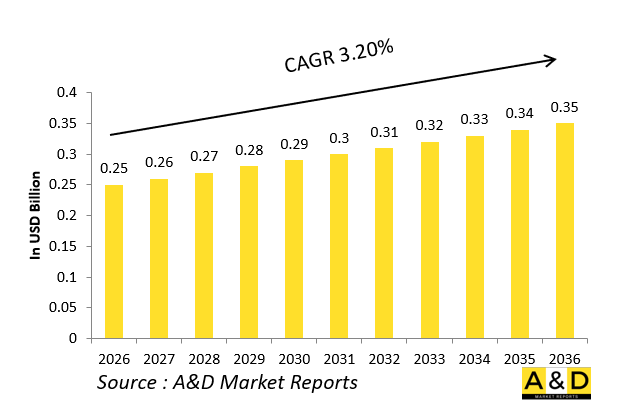
2026 年全球国防飞机挡风玻璃市场规模估计为 2.5 亿美元,预计在 2026 年至 2036 年的预测期内将以 3.20% 的复合年增长率增长,到 2036 年达到 3.5 亿美元。
介绍:
全球国防飞机挡风玻璃市场供应透明的前面板,这些面板对于飞行员在军事行动中的视野和导航至关重要。这些挡风玻璃采用多层聚碳酸酯、化学强化玻璃和丙烯酸复合材料製成,能够承受鸟击、弹片衝击以及高空压力差的影响。其主要特性包括抗反射膜、除冰加热元件以及与抬头显示器的整合。製造商为战斗机、轰炸机、运输机、直升机和无人机 (UAV) 提供产品,在强调弹道防护的同时,也注重光学纯度。市场成长与飞机现代化、教练机数量的增加、生存能力的提升密切相关。挡风玻璃是飞行员的主要互动介面,兼具良好的视野和如同装甲般的耐用性。这一专业领域支援从低空渗透到高空拦截等关键任务,确保在各种战区取得作战优势。
科技对国防飞机挡风玻璃市场的影响
技术创新正在融合光学性能和智慧功能,推动国防飞机挡风玻璃市场的发展。屈光梯度光学元件可最大限度地减少头盔瞄准器的畸变,从而提高瞄准精度。导电中阶无需机械雨刷即可快速除冰除雾。自抛光奈米涂层可有效防止沙尘、雨水和油污,即使在恶劣环境下也能保持良好的视野。整合式光伏层可为机载感测器隐蔽供电。带有防弹衬里的弹片层压板可有效阻挡小型武器射击产生的弹片。声学中阶可降低引擎噪音和音爆,进而提升飞行员的舒适度。 3D列印框架可与飞机外型完美贴合。频谱处理技术支援与夜视和红外线成像的兼容性。利用应变计进行的预测分析可预测应力失效。这些技术进步已将挡风玻璃转变为一个主动组件,整合了扩展的覆盖层和状态监测功能,从而提升了情境察觉和飞机的运转率。
国防飞机挡风玻璃市场的主要市场驱动因素
国防飞机挡风玻璃市场受多种因素驱动。飞行训练时间的增加加速了磨损,因此需要频繁更换,并采用更耐用的产品。新一代驾驶座设计将挡风玻璃整合到扩展显示器中,用于感测器融合。更严格的防鸟击法规提高了整个机队的材料标准。在恶劣的运作环境中,例如中东多尘的基地,耐磨表面至关重要。为确保供应链的韧性,稀土元素掺杂剂的来源多样化,以增强强度。增加隐身能力需要低辐射涂层来规避红外线探测。根据飞行员的回馈,符合人体工学的形状正在被采用,以减少高过载转弯时的颈部压力。模组化设计便于快速更换,进而提高维护效率。随着维修的扩大,挡风玻璃越来越适应客户特定的抬头显示器(HUD) 和气候条件。这些因素凸显了市场趋势,在频繁的空中作业中,可靠性、适应性和降低生命週期成本是优先考虑的因素。
国防飞机挡风玻璃市场的区域趋势
国防飞机挡风玻璃市场的区域趋势反映了不同地区的作战需求和工业基础的差异。北美在先进战斗机和教练机整合显示器挡风玻璃的研发方面处于领先地位。欧洲透过跨国联盟,致力于为北方巡逻机创新除冰技术。亚太地区正在扩大生产成本优化的夹层玻璃,以满足区域空军的需求并进行出口。中东地区则强调为在沙漠地区作战的战斗机提供防沙涂层。在澳洲和东南亚,海上作战所需的耐腐蚀性是首要考虑因素。东欧为前苏联时代的喷射机提供坚固耐用的替换挡风玻璃。为了规避制裁,涂层设施的在地化建设正在推进。联合测试正在协调盟国之间的互通性标准。提高挡风玻璃的防水性能,以应对季风等极端天气条件,也被视为一项重要功能。这种市场分布正在推动客製化解决方案的开发,将全球研发与区域韧性相结合,以维护空中力量。
本报告考察了全球国防飞机挡风玻璃市场,总结了关键趋势、市场影响因素、关键技术及其影响、主要地区和国家的趋势以及市场机会分析。
目录
国防飞机挡风玻璃市场:目录
国防飞机挡风玻璃市场定义:报告定义
国防飞机挡风玻璃市场:细分
按地区
按平台
材料
按飞机类型
透过技术
设定
未来十年国防飞机挡风玻璃市场分析
详细介绍国防飞机挡风玻璃市场的成长、变化趋势、技术应用概况和市场吸引力。
国防飞机挡风玻璃市场:技术
预计将对市场产生影响的十大技术及其对整体市场的潜在影响。
全球国防飞机挡风玻璃市场:预测
本市场对国防飞机挡风玻璃市场未来 10 年的预测已在上述各个细分市场中进行了详细阐述。
国防飞机挡风玻璃市场趋势与预测:按地区划分
本报告涵盖市场趋势、驱动因素、阻碍因素、挑战以及政治、经济、社会和技术等因素。报告还包括详细的区域市场预测和情境分析。区域分析最后对主要企业、供应商和公司基准进行了概述。目前市场规模是基于典型情境估算的。
北美洲
驱动因素、限制因素与挑战
PEST分析
市场预测与情境分析
主要企业
供应商层级状态
企业标竿管理
欧洲
中东
亚太地区
南美洲
国防飞机挡风玻璃市场:国家分析
我们
国防计划
最新消息
专利
该市场目前的技术成熟度水平
市场预测与情境分析
加拿大
义大利
法国
德国
荷兰
比利时
西班牙
瑞典
希腊
澳洲
南非
印度
中国
俄罗斯
韩国
日本
马来西亚
新加坡
巴西
国防飞机挡风玻璃市场:机会矩阵
国防飞机挡风玻璃市场:专家对报告的看法
结论
关于航空航太和国防市场报告
Global Defense Aircraft Windshield Market
The Global Defense Aircraft Windshield Market is estimated at USD 0.25 billion in 2026, projected to grow to USD 0.35 billion by 2036 at a Compound Annual Growth Rate (CAGR) of 3.20% over the forecast period 2026-2036.
Introduction:
The global defense aircraft windshield market supplies transparent forward-facing panels vital for pilot visibility and navigation in military operations. Constructed from layered polycarbonate, chemically strengthened glass, and acrylic composites, these windshields withstand bird strikes, debris impacts, and pressure differentials at altitude. Features include anti-reflective coatings, heater elements for de-icing, and integration with heads-up displays. Manufacturers cater to fighters, bombers, transports, helicopters, and UAVs, emphasizing optical purity alongside ballistic protection. Market growth links to airframe modernizations, expanded training fleets, and survivability enhancements. Windshields serve as the pilot's primary interface, blending clarity with armor-like resilience. This specialized segment supports mission-critical tasks from low-level ingress to high-altitude intercepts, ensuring operational edge in diverse theaters.
Technology Impact in Defense Aircraft Windshield Market
Technologies elevate the defense aircraft windshield market, fusing optics with smart functionality. Gradient-index optics minimize distortion for helmet-mounted sights, enhancing targeting accuracy. Conductive interlayers enable rapid de-icing and defogging without mechanical wipers. Self-polishing nanocoatings repel sand, rain, and oils, preserving clarity in abrasive environments. Embedded photovoltaic layers power onboard sensors discreetly. Ballistic laminates with spall liners contain fragments from small-arms fire. Acoustic interlayers dampen engine noise and sonic booms for pilot comfort. 3D-printed frames allow seamless curvature matching airframes. Multispectral treatments support night-vision and IR imaging compatibility. Predictive analytics via strain gauges forecast stress failures. These strides transform windshields into active components, integrating augmented overlays and health monitoring to boost situational awareness and aircraft uptime.
Key Drivers in Defense Aircraft Windshield Market
Essential drivers fuel the defense aircraft windshield market. Intensified flight training hours accelerate wear, demanding frequent replacements with superior durability. Next-gen cockpit designs integrate windshields as extended displays for sensor fusion. Regulatory pushes for bird-strike resistance heighten material standards across fleets. Harsh operational theaters-like dusty Middle East bases-necessitate abrasion-resistant surfaces. Supply chain resilience prompts diversified sourcing of rare-earth dopants for strengthening. Stealth retrofits require low-emissivity coatings to evade IR detection. Pilot feedback drives ergonomic shapes reducing neck strain during high-G turns. Sustainment efficiencies favor modular designs for quick swaps. Export growth adapts windshields to customer-specific HUDs and climates. These elements underscore a market oriented toward reliability, adaptability, and lifecycle cost savings in high-tempo air campaigns.
Regional Trends in Defense Aircraft Windshield Market
Regional trends in the defense aircraft windshield market reflect operational demands and industrial strengths. North America pioneers integrated display windshields for advanced fighters and trainers. Europe focuses on de-icing innovations for northern patrol aircraft via multinational consortia. Asia-Pacific scales production of cost-optimized laminates for regional air forces and exports. Middle East emphasizes sand-eroding coatings for desert fighters. Australia and Southeast Asia prioritize corrosion resistance for maritime operations. Eastern Europe supplies rugged replacements for legacy Soviet-era jets. Localization efforts establish coating facilities to bypass sanctions. Collaborative testing harmonizes standards for allied interoperability. Adaptations for extreme weather-like monsoon hydrophobicity-gain prominence. This distribution promotes tailored solutions, blending global R&D with regional resilience to sustain air readiness.
Key Defense Aircraft Windshield Market Program
Flagship programs illuminate the defense aircraft windshield market's innovations. Advanced trainer overhauls deploy wide-view windshields with HUD projection for immersive simulation. Multirole fighter upgrades integrate ballistic, NVG-compatible panels with defog grids. Heavy transport modernizations feature heated, bird-safe windshields for global logistics. Attack helicopter programs embed strain sensors for real-time integrity checks. Unmanned surrogate jets test remote-piloted windshields with augmented feeds. Electronic warfare platforms incorporate RF-transparent layers preserving canopy performance. These initiatives endure live-fire validations, altitude chamber tests, and abrasion simulations. Partnerships accelerate certification for rapid fielding. Modular mounting systems enable avionics swaps without redesign. Emphasis on pilot ergonomics and digital transparency redefines windshields as gateways to fused battlespace awareness, anchoring programs for persistent aerial dominance.
Table of Contents
Defense Aircraft Windshield Market - Table of Contents
Defense Aircraft Windshield Market Report Definition
Defense Aircraft Windshield Market Segmentation
By Region
By Platform
By Material
By Aircraft Type
By Technology
By Configuration
Defense Aircraft Windshield Market Analysis for next 10 Years
The 10-year Defense Aircraft Windshield Market analysis would give a detailed overview of Defense Aircraft Windshield Market growth, changing dynamics, technology adoption overviews and the overall market attractiveness is covered in this chapter.
Market Technologies of Defense Aircraft Windshield Market
This segment covers the top 10 technologies that is expected to impact this market and the possible implications these technologies would have on the overall market.
Global Defense Aircraft Windshield Market Forecast
The 10-year Defense Aircraft Windshield Market forecast of this market is covered in detailed across the segments which are mentioned above.
Regional Defense Aircraft Windshield Market Trends & Forecast
The regional counter drone market trends, drivers, restraints and Challenges of this market, the Political, Economic, Social and Technology aspects are covered in this segment. The market forecast and scenario analysis across regions are also covered in detailed in this segment. The last part of the regional analysis includes profiling of the key companies, supplier landscape and company benchmarking. The current market size is estimated based on the normal scenario.
North America
Drivers, Restraints and Challenges
PEST
Market Forecast & Scenario Analysis
Key Companies
Supplier Tier Landscape
Company Benchmarking
Europe
Middle East
APAC
South America
Country Analysis of Defense Aircraft Windshield Market
This chapter deals with the key defense programs in this market, it also covers the latest news and patents which have been filed in this market. Country level 10 year market forecast and scenario analysis are also covered in this chapter.
US
Defense Programs
Latest News
Patents
Current levels of technology maturation in this market
Market Forecast & Scenario Analysis
Canada
Italy
France
Germany
Netherlands
Belgium
Spain
Sweden
Greece
Australia
South Africa
India
China
Russia
South Korea
Japan
Malaysia
Singapore
Brazil
Opportunity Matrix for Defense Aircraft Windshield Market
The opportunity matrix helps the readers understand the high opportunity segments in this market.
Expert Opinions on Defense Aircraft Windshield Market Report
Hear from our experts their opinion of the possible analysis for this market.
Conclusions
About Aviation and Defense Market Reports
List of Tables
- Table 1: 10 Year Market Outlook, 2026-2036
- Table 2: Drivers, Impact Analysis, North America
- Table 3: Restraints, Impact Analysis, North America
- Table 4: Challenges, Impact Analysis, North America
- Table 5: Drivers, Impact Analysis, Europe
- Table 6: Restraints, Impact Analysis, Europe
- Table 7: Challenges, Impact Analysis, Europe
- Table 8: Drivers, Impact Analysis, Middle East
- Table 9: Restraints, Impact Analysis, Middle East
- Table 10: Challenges, Impact Analysis, Middle East
- Table 11: Drivers, Impact Analysis, APAC
- Table 12: Restraints, Impact Analysis, APAC
- Table 13: Challenges, Impact Analysis, APAC
- Table 14: Drivers, Impact Analysis, South America
- Table 15: Restraints, Impact Analysis, South America
- Table 16: Challenges, Impact Analysis, South America
- Table 17: Scenario Analysis, Scenario 1, By Region, 2026-2036
- Table 18: Scenario Analysis, Scenario 1, By Platform, 2026-2036
- Table 19: Scenario Analysis, Scenario 1, By Material, 2026-2036
- Table 20: Scenario Analysis, Scenario 2, By Region, 2026-2036
- Table 21: Scenario Analysis, Scenario 2, By Platform, 2026-2036
- Table 22: Scenario Analysis, Scenario 2, By Material, 2026-2036
List of Figures
- Figure 1: Global Defense Aircraft Windshield Market Forecast, 2026-2036
- Figure 2: Global Defense Aircraft Windshield Market Forecast, By Region, 2026-2036
- Figure 3: Global Defense Aircraft Windshield Market Forecast, By Platform, 2026-2036
- Figure 4: Global Defense Aircraft Windshield Market Forecast, By Material, 2026-2036
- Figure 5: North America, Defense Aircraft Windshield Market, Market Forecast, 2026-2036
- Figure 6: Europe, Defense Aircraft Windshield Market, Market Forecast, 2026-2036
- Figure 7: Middle East, Defense Aircraft Windshield Market, Market Forecast, 2026-2036
- Figure 8: APAC, Defense Aircraft Windshield Market, Market Forecast, 2026-2036
- Figure 9: South America, Defense Aircraft Windshield Market, Market Forecast, 2026-2036
- Figure 10: United States, Defense Aircraft Windshield Market, Region Maturation, 2026-2036
- Figure 11: United States, Defense Aircraft Windshield Market, Market Forecast, 2026-2036
- Figure 12: Canada, Defense Aircraft Windshield Market, Region Maturation, 2026-2036
- Figure 13: Canada, Defense Aircraft Windshield Market, Market Forecast, 2026-2036
- Figure 14: Italy, Defense Aircraft Windshield Market, Region Maturation, 2026-2036
- Figure 15: Italy, Defense Aircraft Windshield Market, Market Forecast, 2026-2036
- Figure 16: France, Defense Aircraft Windshield Market, Region Maturation, 2026-2036
- Figure 17: France, Defense Aircraft Windshield Market, Market Forecast, 2026-2036
- Figure 18: Germany, Defense Aircraft Windshield Market, Region Maturation, 2026-2036
- Figure 19: Germany, Defense Aircraft Windshield Market, Market Forecast, 2026-2036
- Figure 20: Netherlands, Defense Aircraft Windshield Market, Region Maturation, 2026-2036
- Figure 21: Netherlands, Defense Aircraft Windshield Market, Market Forecast, 2026-2036
- Figure 22: Belgium, Defense Aircraft Windshield Market, Region Maturation, 2026-2036
- Figure 23: Belgium, Defense Aircraft Windshield Market, Market Forecast, 2026-2036
- Figure 24: Spain, Defense Aircraft Windshield Market, Region Maturation, 2026-2036
- Figure 25: Spain, Defense Aircraft Windshield Market, Market Forecast, 2026-2036
- Figure 26: Sweden, Defense Aircraft Windshield Market, Region Maturation, 2026-2036
- Figure 27: Sweden, Defense Aircraft Windshield Market, Market Forecast, 2026-2036
- Figure 28: Brazil, Defense Aircraft Windshield Market, Region Maturation, 2026-2036
- Figure 29: Brazil, Defense Aircraft Windshield Market, Market Forecast, 2026-2036
- Figure 30: Australia, Defense Aircraft Windshield Market, Region Maturation, 2026-2036
- Figure 31: Australia, Defense Aircraft Windshield Market, Market Forecast, 2026-2036
- Figure 32: India, Defense Aircraft Windshield Market, Region Maturation, 2026-2036
- Figure 33: India, Defense Aircraft Windshield Market, Market Forecast, 2026-2036
- Figure 34: China, Defense Aircraft Windshield Market, Region Maturation, 2026-2036
- Figure 35: China, Defense Aircraft Windshield Market, Market Forecast, 2026-2036
- Figure 36: Saudi Arabia, Defense Aircraft Windshield Market, Region Maturation, 2026-2036
- Figure 37: Saudi Arabia, Defense Aircraft Windshield Market, Market Forecast, 2026-2036
- Figure 38: South Korea, Defense Aircraft Windshield Market, Region Maturation, 2026-2036
- Figure 39: South Korea, Defense Aircraft Windshield Market, Market Forecast, 2026-2036
- Figure 40: Japan, Defense Aircraft Windshield Market, Region Maturation, 2026-2036
- Figure 41: Japan, Defense Aircraft Windshield Market, Market Forecast, 2026-2036
- Figure 42: Malaysia, Defense Aircraft Windshield Market, Region Maturation, 2026-2036
- Figure 43: Malaysia, Defense Aircraft Windshield Market, Market Forecast, 2026-2036
- Figure 44: Singapore, Defense Aircraft Windshield Market, Region Maturation, 2026-2036
- Figure 45: Singapore, Defense Aircraft Windshield Market, Market Forecast, 2026-2036
- Figure 46: United Kingdom, Defense Aircraft Windshield Market, Region Maturation, 2026-2036
- Figure 47: United Kingdom, Defense Aircraft Windshield Market, Market Forecast, 2026-2036
- Figure 48: Opportunity Analysis, Defense Aircraft Windshield Market, By Region (Cumulative Market), 2026-2036
- Figure 49: Opportunity Analysis, Defense Aircraft Windshield Market, By Region (CAGR), 2026-2036
- Figure 50: Opportunity Analysis, Defense Aircraft Windshield Market, By Platform (Cumulative Market), 2026-2036
- Figure 51: Opportunity Analysis, Defense Aircraft Windshield Market, By Platform (CAGR), 2026-2036
- Figure 52: Opportunity Analysis, Defense Aircraft Windshield Market, By Material(Cumulative Market), 2026-2036
- Figure 53: Opportunity Analysis, Defense Aircraft Windshield Market, By Material(CAGR), 2026-2036
- Figure 54: Scenario Analysis, Defense Aircraft Windshield Market, Cumulative Market, 2026-2036
- Figure 55: Scenario Analysis, Defense Aircraft Windshield Market, Global Market, 2026-2036
- Figure 56: Scenario 1, Defense Aircraft Windshield Market, Total Market, 2026-2036
- Figure 57: Scenario 1, Defense Aircraft Windshield Market, By Region, 2026-2036
- Figure 58: Scenario 1, Defense Aircraft Windshield Market, By Platform, 2026-2036
- Figure 59: Scenario 1, Defense Aircraft Windshield Market, By Material, 2026-2036
- Figure 60: Scenario 2, Defense Aircraft Windshield Market, Total Market, 2026-2036
- Figure 61: Scenario 2, Defense Aircraft Windshield Market, By Region, 2026-2036
- Figure 62: Scenario 2, Defense Aircraft Windshield Market, By Platform, 2026-2036
- Figure 63: Scenario 2, Defense Aircraft Windshield Market, By Material, 2026-2036
- Figure 64: Company Benchmark, Defense Aircraft Windshield Market, 2026-2036


