


 |
市场调查报告书
商品编码
1959658
身体喷雾市场机会、成长要素、产业趋势分析及2026年至2035年预测。Body Mist Market Opportunity, Growth Drivers, Industry Trend Analysis, and Forecast 2026 - 2035 |
||||||

2025 年全球身体喷雾市场价值为 57 亿美元,预计到 2035 年将达到 93 亿美元,年复合成长率为 5.1%。
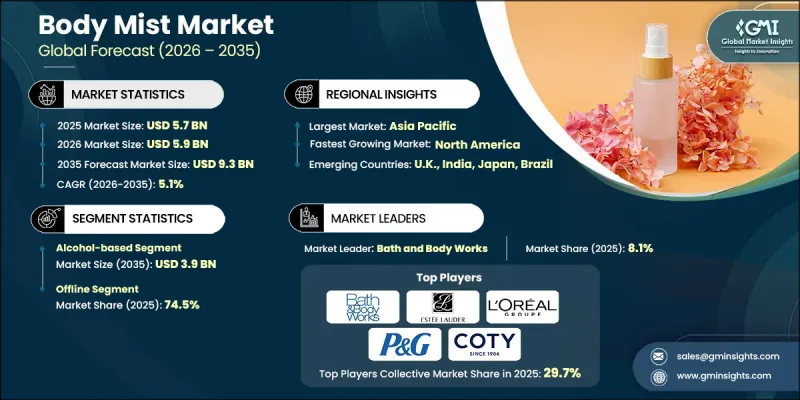
市场成长主要受消费者偏好变化的驱动,尤其是在年轻一代。年轻人越来越倾向选择价格亲民、香味清淡怡人的产品。日常实用性、休閒香氛的吸引力以及与积极生活方式的契合度,都影响着消费者对产品的接受度。人们对健康和自我护理日益增长的兴趣,也进一步促使他们将身体喷雾融入日常生活中。此外,消费者对天然和有机成分的日益关注,推动了品牌不断创新,例如推出无酒精、环保和保湿产品。政府法规和产业措施也为产品改进提供了契机,创造了消费者能够获得安全、优质且多功能产品的环境。这些产品在线上线下管道的日益普及,以及不断加强的宣传推广,都突显了香氛和保湿的双重功效,进一步推动了市场扩张。
| 市场范围 | |
|---|---|
| 开始年份 | 2025 |
| 预测年份 | 2026-2035 |
| 起始值 | 57亿美元 |
| 预测金额 | 93亿美元 |
| 复合年增长率 | 5.1% |
预计到2035年,酒精类产品市场规模将达39亿美元,2025年市占率为24亿美元。酒精类身体喷雾因其用途广泛、高效且喷雾细腻均匀而保持主流地位。其主要成分乙醇确保了淡雅的香味和快速干燥的特性,使用户能够频繁使用而不会在皮肤或衣物上留下粘腻残留。这些特性使得酒精产品深受注重便利性和快速吸收的消费者喜爱,满足了他们日常美容的需求。包括美国食品药物管理局(FDA)在内的监管机构已认可乙醇可安全用于化妆品,这进一步增强了消费者对这类产品的信心。
预计到2025年,线下通路将占据74.5%的市占率。超级市场、大卖场和专卖店等实体店仍然是主要的购物场所,因为它们提供了一个让消费者能够实际试用产品、获得个人化建议并享受即时购买体验的环境。消费者依赖实体店来获得品质保证、建立信任和便利的购物体验。这些零售店的专业人员会协助顾客选择适合其肤质、生活风格和香氛偏好的产品,从而增强消费者的信任度和品牌忠诚度。线下零售的存在与线上销售相辅相成,共同建构了一个全通路环境,最大限度地扩大了覆盖范围。
预计到2025年,美国身体喷雾市占率将达到64.5%。高人均个人护理产品支出、对个人整装仪容的重视、消费者普遍接受香水迭喷的习惯,都是推动市场需求的主要因素。身体喷雾作为一种价格亲民、清爽怡人的传统香水替代品,正日益受到消费者的青睐,尤其是在喜欢频繁使用身体喷雾的年轻一代。各大美妆和香水品牌正在加强供应链建设、产品创新,并加强在该地区市场行销力度,从而促进其产品的广泛应用。不断拓展的零售网路、全通路策略以及持续创新,正在巩固美国在全球身体喷雾市场的主导地位。
目录
第一章:调查方法和范围
第二章执行摘要
第三章业界考察
- 生态系分析
- 供应商情况
- 利润率
- 每个阶段增加的价值
- 影响价值链的因素
- 影响产业的因素
- 促进因素
- 消费者偏好的变化
- 个人保健产品的需求增加
- 人们对健康和自我护理的兴趣日益浓厚
- 产业潜在风险与挑战
- 市场饱和
- 季节性变化
- 机会
- 以永续性为优先的优质解决方案
- 年轻消费者对价格实惠的香水需求增加
- 促进因素
- 成长潜力分析
- 未来市场趋势
- 科技与创新趋势
- 当前技术趋势
- 新兴技术
- 价格趋势
- 依产品类型
- 按地区
- 监管环境
- 标准和合规要求
- 区域法规结构
- 认证标准
- 贸易统计
- 主要进口国
- 主要出口国
- 差距分析
- 风险评估和缓解措施
- 波特的分析
- PESTEL 分析
- 消费行为分析
- 购买模式
- 偏好分析
- 消费者行为的区域差异
- 电子商务对购买决策的影响
第四章 竞争情势
- 介绍
- 企业市占率分析
- 按地区
- 公司矩阵分析
- 主要市场公司的竞争分析
- 竞争定位矩阵
- 主要进展
- 併购
- 伙伴关係与合作
- 新产品发布
- 扩张计划
第五章 市场估算与预测:依产品类型划分,2022-2035年
- 酒精类
- 水溶液
- 油腻的
第六章 市场估计与预测:依香型划分,2022-2035年
- 花的
- 果味
- 柑橘
- 其他(辣味、木香等)
第七章 市场估计与预测:依价格划分,2022-2035年
- 低价位
- 中号
- 高价位范围
第八章 市场估算与预测:依原料来源划分,2022-2035年
- 合成原料基地
- 天然来源(植物来源)
- 杂交种
第九章 市场估价与预测:依包装类型划分,2022-2035年
- 喷雾瓶
- 气雾罐
- 滚珠式
- 可重复填充包装
第十章 市场估价与预测:依最终用户划分,2022-2035年
- 男性
- 女士
- 男女通用的
第十一章 市场估价与预测:依通路划分,2022-2035年
- 在线的
- 电子商务
- 我们的网站
- 离线
- 超级市场/大卖场
- 专卖店
- 其他(个体店、百货公司等)
第十二章 市场估计与预测:依地区划分,2022-2035年
- 北美洲
- 我们
- 加拿大
- 欧洲
- 德国
- 法国
- 英国
- 义大利
- 西班牙
- 亚太地区
- 中国
- 印度
- 日本
- 韩国
- 澳洲
- 拉丁美洲
- 巴西
- 墨西哥
- 阿根廷
- 中东和非洲
- 南非
- 沙乌地阿拉伯
- 阿拉伯聯合大公国
第十三章:公司简介
- Bath and Body Works
- Beiersdorf
- Chanel
- Coty
- Dior
- Estee Lauder
- Global Cosmetics HK
- Kao Corporation
- Kenvue
- L'Oreal Group
- Perfumania
- Procter and Gamble
- Revlon
- Shiseido
- Unilever
The Global Body Mist Market was valued at USD 5.7 billion in 2025 and is estimated to grow at a CAGR of 5.1% to reach USD 9.3 billion by 2035.
Market growth is driven by shifts in consumer preferences, particularly among younger demographics who are increasingly seeking lighter, refreshing fragrances at accessible price points. Daily-use convenience, casual fragrance appeal, and the ability to complement active lifestyles are influencing product adoption. The rising focus on wellness and self-care is further encouraging consumers to integrate body mists into their daily routines. Additionally, interest in natural and organic formulations is growing, prompting brands to innovate with alcohol-free, eco-friendly, and skin-hydrating options. Government regulations and industry initiatives also provide opportunities for product enhancement, ensuring that consumers have access to safe, high-quality, and multifunctional products. The growing popularity of these products across both offline and online channels further contributes to market expansion, with increased promotion of dual benefits fragrance and skin hydration driving sales.
| Market Scope | |
|---|---|
| Start Year | 2025 |
| Forecast Year | 2026-2035 |
| Start Value | $5.7 Billion |
| Forecast Value | $9.3 Billion |
| CAGR | 5.1% |
The alcohol-based segment accounted for USD 2.4 billion in 2025 and is anticipated to reach USD 3.9 billion by 2035. Alcohol-based body mists remain dominant due to their versatility, efficiency, and superior performance in delivering a fine, consistent spray. Ethanol, the primary ingredient, ensures a gentle fragrance and quick-drying application, allowing users to apply products frequently without leaving sticky residues on skin or clothing. These qualities have made alcohol-based formulations highly popular with consumers who prioritize convenience and fast absorption in their daily beauty routines. Regulatory bodies, including the FDA, recognize ethanol as safe for use in cosmetics, supporting consumer confidence in these products.
The offline channels segment held 74.5% share in 2025. Physical retail locations, including supermarkets, hypermarkets, and specialty stores, remain the preferred purchase points due to their ability to offer hands-on product testing, personalized guidance, and immediate availability. Consumers rely on offline stores to ensure quality, build trust, and enjoy a convenient shopping experience. Expert staff in these retail locations assist in helping buyers select products suited to their skin type, lifestyle, and fragrance preferences, reinforcing consumer confidence and brand loyalty. The offline retail presence also complements online sales, creating an omnichannel environment that maximizes reach.
U.S. Body Mist Market held 64.5% share in 2025. Strong per capita spending on personal care products, a cultural emphasis on grooming, and high consumer adoption of fragrance layering have driven demand. Body mists are widely embraced as affordable, lightweight alternatives to traditional perfumes, particularly among younger users who prefer frequent application. Major beauty and fragrance brands have strengthened availability, innovation, and marketing efforts in the region, contributing to widespread product adoption. Retail expansion, omnichannel strategies, and continuous innovation have reinforced the U.S.'s leadership position within the global body mist market.
Key players in the Global Body Mist Market include Bath and Body Works, Coty, L'Oreal Group, Chanel, Revlon, Shiseido, Dior, Beiersdorf, Procter and Gamble, Kao Corporation, Kenvue, Estee Lauder, Global Cosmetics HK, Perfumania, and Unilever. Companies in the body mist market are employing several strategies to expand their market presence and strengthen brand equity. They are investing heavily in product innovation, including alcohol-free, natural, and multifunctional formulations that combine fragrance with skin hydration benefits. Partnerships with retailers and the expansion of offline and online distribution networks enhance accessibility and visibility. Brand marketing initiatives leverage social media, influencer endorsements, and lifestyle campaigns to engage younger audiences. Additionally, companies focus on sustainable sourcing, eco-friendly packaging, and compliance with safety regulations to appeal to environmentally conscious consumers.
Table of Contents
Chapter 1 Methodology & Scope
- 1.1 Market scope and definition
- 1.2 Research design
- 1.2.1 Research approach
- 1.2.2 Data collection methods
- 1.3 Data mining sources
- 1.3.1 Global
- 1.3.2 Regional/Country
- 1.4 Base estimates and calculations
- 1.4.1 Base year calculation
- 1.4.2 Key trends for market estimation
- 1.5 Primary research and validation
- 1.5.1 Primary sources
- 1.6 Forecast model
- 1.7 Research assumptions and limitations
Chapter 2 Executive Summary
- 2.1 Industry 360° synopsis
- 2.2 Key market trends
- 2.2.1 Regional
- 2.2.2 Product Type
- 2.2.3 Fragrance
- 2.2.4 Price
- 2.2.5 Ingredient Origin
- 2.2.6 Packaging type
- 2.2.7 End User
- 2.2.8 Distribution Channel
- 2.3 CXO perspectives: Strategic imperatives
- 2.3.1 Key decision points for industry executives
- 2.3.2 Critical success factors for market players
- 2.4 Future outlook and strategic recommendations
Chapter 3 Industry Insights
- 3.1 Industry ecosystem analysis
- 3.1.1 Supplier landscape
- 3.1.2 Profit margin
- 3.1.3 Value addition at each stage
- 3.1.4 Factor affecting the value chain
- 3.2 Industry impact forces
- 3.2.1 Growth drivers
- 3.2.1.1 Changing consumer preferences
- 3.2.1.2 Increasing demand for personal care products
- 3.2.1.3 Increased focus on wellness and self-care
- 3.2.2 Industry pitfalls & challenges
- 3.2.2.1 Market saturation
- 3.2.2.2 Seasonal fluctuations
- 3.2.3 Opportunities
- 3.2.3.1 Sustainability-driven premium solutions
- 3.2.3.2 Rising demand from younger consumers for affordable fragrance
- 3.2.1 Growth drivers
- 3.3 Growth potential analysis
- 3.4 Future market trends
- 3.5 Technology and innovation landscape
- 3.5.1 Current technological trends
- 3.5.2 Emerging technologies
- 3.6 Price trends
- 3.6.1 By product type
- 3.6.2 By region
- 3.7 Regulatory landscape
- 3.7.1 Standards and compliance requirements
- 3.7.2 Regional regulatory frameworks
- 3.7.3 Certification standards
- 3.8 Trade statistics
- 3.8.1 Major importing countries
- 3.8.2 Major exporting countries
- 3.9 Gap analysis
- 3.10 Risk assessment and mitigation
- 3.11 Porter’s analysis
- 3.12 PESTEL analysis
- 3.13 Consumer behaviour analysis
- 3.13.1 Purchasing patterns
- 3.13.2 Preference analysis
- 3.13.3 Regional variations in consumer behaviour
- 3.13.4 Impact of e-commerce on buying decisions
Chapter 4 Competitive Landscape, 2025
- 4.1 Introduction
- 4.2 Company market share analysis
- 4.2.1 By region
- 4.2.1.1 North America
- 4.2.1.2 Europe
- 4.2.1.3 Asia Pacific
- 4.2.1.4 Latin America
- 4.2.1.5 Middle East and Africa
- 4.2.1 By region
- 4.3 Company matrix analysis
- 4.4 Competitive analysis of major market players
- 4.5 Competitive positioning matrix
- 4.6 Key developments
- 4.6.1 Mergers & acquisitions
- 4.6.2 Partnerships & collaborations
- 4.6.3 New product launches
- 4.6.4 Expansion plans
Chapter 5 Market Estimates & Forecast, By Product Type, 2022-2035 (USD Billion) (Million Units)
- 5.1 Key trends
- 5.2 Alcohol-based
- 5.3 Water-based
- 5.4 Oil-based
Chapter 6 Market Estimates & Forecast, By Fragrance Type, 2022-2035 (USD Billion) (Million Units)
- 6.1 Key trends
- 6.2 Floral
- 6.3 Fruity
- 6.4 Citrus
- 6.5 Others (spicy, woody, etc.)
Chapter 7 Market Estimates & Forecast, By Price, 2022-2035 (USD Billion) (Million Units)
- 7.1 Key trends
- 7.2 Low
- 7.3 Medium
- 7.4 High
Chapter 8 Market Estimates & Forecast, By Ingredient Origin, 2022-2035 (USD Billion) (Million Units)
- 8.1 Key trends
- 8.2 Synthetic-based
- 8.3 Naturally derived (Botanical-based)
- 8.4 Hybrid
Chapter 9 Market Estimates & Forecast, By Packaging Type, 2022-2035 (USD Billion) (Million Units)
- 9.1 Key trends
- 9.2 Spray bottles
- 9.3 Aerosol cans
- 9.4 Roll-on
- 9.5 Refillable packaging
Chapter 10 Market Estimates & Forecast, By End User, 2022-2035 (USD Billion) (Million Units)
- 10.1 Key trends
- 10.2 Male
- 10.3 Female
- 10.4 Unisex
Chapter 11 Market Estimates & Forecast, By Distribution Channel, 2022-2035 (USD Billion) (Million Units)
- 11.1 Key trends
- 11.2 Online
- 11.2.1 E-Commerce
- 11.2.2 Company website
- 11.3 Offline
- 11.3.1 Supermarkets/Hypermarkets
- 11.3.2 Specialty Stores
- 11.3.3 Others (Individual stores, Departmental stores, etc.)
Chapter 12 Market Estimates & Forecast, By Region, 2022-2035 (USD Billion) (Million Units)
- 12.1 Key trends
- 12.2 North America
- 12.2.1 U.S.
- 12.2.2 Canada
- 12.3 Europe
- 12.3.1 Germany
- 12.3.2 France
- 12.3.3 UK
- 12.3.4 Italy
- 12.3.5 Spain
- 12.4 Asia Pacific
- 12.4.1 China
- 12.4.2 India
- 12.4.3 Japan
- 12.4.4 South Korea
- 12.4.5 Australia
- 12.5 Latin America
- 12.5.1 Brazil
- 12.5.2 Mexico
- 12.5.3 Argentina
- 12.6 MEA
- 12.6.1 South Africa
- 12.6.2 Saudi Arabia
- 12.6.3 UAE
Chapter 13 Company Profiles
- 13.1 Bath and Body Works
- 13.2 Beiersdorf
- 13.3 Chanel
- 13.4 Coty
- 13.5 Dior
- 13.6 Estee Lauder
- 13.7 Global Cosmetics HK
- 13.8 Kao Corporation
- 13.9 Kenvue
- 13.10 L'Oreal Group
- 13.11 Perfumania
- 13.12 Procter and Gamble
- 13.13 Revlon
- 13.14 Shiseido
- 13.15 Unilever

 身体喷雾市场-全球产业规模、份额、趋势、机会、预测:按类型、香型、销售管道、地区和竞争对手划分,2021-2031年
 身体喷雾市场规模、份额及成长分析(按产品、性别、应用、通路和地区划分)-2026-2033年产业预测