


 |
市场调查报告书
商品编码
1952843
量子运算军备竞赛:后GPU时代的全球危机与台湾的定位Quantum Computing Arms Race: Post-GPU Era Global Crisis and Taiwan's Positioning |
||||||

随着人工智慧运算需求呈指数级增长,传统硅晶片的物理限制正迅速显现。世界正加速迈入颠覆性的“后GPU时代”,量子运算不再只是实验室理论;它正成为一把双刃剑,有可能重塑药物研发和金融风险管理。它甚至可能威胁到国家级加密系统,从而引发 "量子危机" 。
从英伟达的混合运算策略,到IonQ和Rigetti等公司竞相推出的技术路线图,再到美国、中国、欧洲和日本等国家层级的竞争,未来十年将由一场争夺运算能力主导权的激烈竞赛来定义。在此背景下,台湾的供应链面临一个关键问题:在量子运算时代,它该如何定位自己?
主要亮点
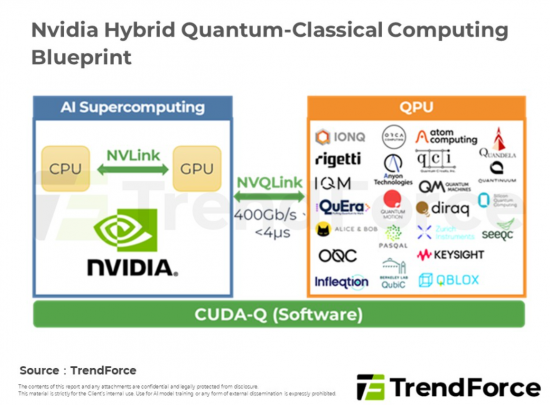
- NVIDIA 的混合平台优势:NVIDIA 将量子运算定位为 GPU 的补充技术。透过引入高速专用互连和 CUDA-Q 软体平台,NVIDIA 旨在整合各种量子硬件,并在混合运算时代巩固其生态系统领导地位,而无需依赖单一硬体类型。
- 不同的硬体理念:硬体格局由截然不同的方法构成。 IonQ 透过离子阱优先考虑精度和网路稳定性,而 Rigetti 则专注于透过基于半导体的超导电路来实现速度和可扩展性。
- 量子危机与全球军备竞赛:量子运算有望在生物医学和金融领域取得突破,但同时也威胁全球加密标准( "量子危机" )。这引发了美国、中国、欧洲和日本之间的国家军备竞赛,影响国防和基础设施。
- 台湾的战略地位:台湾先进的半导体製造能力使其在全球量子硬体供应链中处于核心地位。此外,我们正在开发实体指纹技术,以建立抵御后量子时代网路安全威胁的防御基础。
目录
第一章:随着人工智慧逼近物理极限,世界进入量子驱动的 "后GPU时代"
第二章:NVIDIA的量子雄心:不製造量子处理器,而是转型为量子时代的 "平台主导者"
第三章:量子技术分化中的架构竞争:IonQ与Rigetti的概念与平台方向
第四章:即将到来的量子时代:指数级技术进步与量子时代危机的倒数
第五章:全球量子竞赛:美国、中国、欧洲与日本的战略分歧与基础建设发展路径
第六章:量子危机与台湾的策略定位:从加密风险到产业转折点
第七章:TRI的观点
As AI compute demand grows exponentially, the physical limits of traditional silicon-based chips are rapidly becoming apparent. The world is accelerating into a disruptive "post-GPU era," in which quantum computing is no longer confined to laboratory theory but is emerging as a double-edged force capable of reshaping drug discovery and financial risk management-even triggering a "quantum crisis" by undermining national-level encryption systems.
From NVIDIA's hybrid-computing strategy to the competing technical roadmaps of IonQ and Rigetti, and from the national-level arms race unfolding across the United States, China, Europe, and Japan, the next decade will be defined by a high-stakes contest for computational supremacy. Against this backdrop, Taiwan's supply chain faces a defining question: how will it position itself in the era of quantum computing?
Key Highlights
- Nvidia's Hybrid Platform Dominance: Nvidia views quantum computing as complementary to GPUs. By deploying high-speed dedicated interconnects and the CUDA-Q software platform, Nvidia aims to integrate diverse quantum hardware, securing ecosystem leadership in the hybrid computing era without betting on a single hardware type.
- Diverging Hardware Philosophies: The hardware landscape is defined by contrasting approaches. IonQ prioritizes precision and networking stability via ion traps, whereas Rigetti focuses on speed and scalability through semiconductor-based superconducting circuits.
- The Quantum Crisis and Global Arms Race: While quantum computing promises breakthroughs in biomedicine and finance, it threatens global encryption standards (the "Quantum Crisis"). This has triggered a state-level arms race among the U.S., China, Europe, and Japan, spanning defense and infrastructure.
- Taiwan's Strategic Role: Taiwan leverages its advanced semiconductor manufacturing capabilities to anchor the global quantum hardware supply chain. Additionally, it is developing physical fingerprint technology to establish a defensive moat against post-quantum cybersecurity threats.
Table of Contents
1. The world is entering a quantum-driven "post-GPU era" as AI approaches physical limits
- Figure 1: Schematic of Quantum Superposition in a Quantum Computer
- Table 1: Classical Computers vs. Quantum Computers
2. Nvidia's Quantum Ambition: Not Building QPUs, but Transforming into the "Platform Ruler" of the Quantum Era
- Figure 2: Nvidia Hybrid Quantum-Classical Computing Blueprint
- Table 2: Nvidia's Strategic Positioning in Quantum Computing
3. Architectural Competition Amid Diverging Quantum Technologies: The Philosophies and Platform Directions of IonQ and Rigetti
- Table 3: Technological Differences Between IonQ and Rigetti
4. The Coming Quantum Era: Exponential Technological Leaps and the Countdown to a Quantum Crisis
5. The Global Quantum Race: Strategic Divergence and Infrastructure Paths Across the U.S., China, Europe, and Japan
- Table 4: Core Pillars of the Global Quantum Competition
6. The Quantum Crisis and Taiwan's Strategic Positioning: From Cryptographic Risk to an Industrial Inflection Point
- Table 5: Taiwan's Positioning in the Quantum Computing Ecosystem


