


 |
市场调查报告书
商品编码
1936039
全球30毫米中口径弹药市场(2026-2036)Global 30 mm Medium Caliber Market 2026-2036 |
||||||

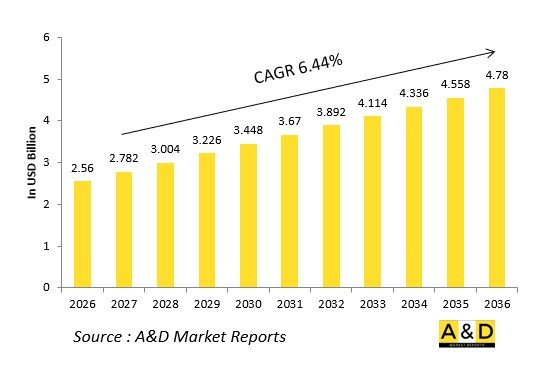
据估计,全球30毫米中口径弹药市场在2026年的价值为25.6亿美元,预计到2036年将达到47.8亿美元,2026年至2036年的复合年增长率(CAGR)为6.44%。
引言
全球30毫米中口径弹药市场为现代陆地、空中和海上平台提供关键火力,在轻武器和重炮之间实现了杀伤力的平衡。这些系统为步兵战车、武装直升机和近程武器站配备高射速火炮和专用弹药,例如脱壳穿甲弹和空爆弹。平台适应性推动了其广泛应用。
市场扩张与国防现代化一致,30毫米口径火炮在反装甲、反人员和反无人机系统(UAS)作战中表现出色。关键产品包括钝感弹药相容推进剂、钨穿甲弹和用于精确打击隐蔽目标的可程式引信。製造商正在投资研发,以应对不断演变的威胁,例如无人系统和反应装甲。
日益加剧的地缘政治紧张局势推动了采购量的增加,各国正在对其舰队进行现代化改造以应对混合战争。互通性标准促进了出口,开放式架构实现了无缝整合。供应链强调精确导引武器的各种型号和永续生产。此次竞赛汇聚了全球领先的双供弹炮研发企业,这些企业致力于开发能够实现灵活部署配置的火炮。
该市场体现了火力演进的趋势,增强了以机动作战为中心的战术优势。
技术对30毫米中口径火炮市场的影响
技术进步正在改变30毫米中口径火炮领域,提升其精准度与多功能性。配备可程式引信的空爆弹(ABM)可在掩体上方或后方引爆,透过与火控系统协调的枪口释放时间,最大限度地提高对步兵的杀伤力。脱壳穿甲弹(APFSDS)采用钨合金穿甲体,可在远距离击穿重型装甲。
采用钝感推进剂的弹药提高了安全性,并可防止因火灾或撞击而意外走火。智慧引信整合了双模感测器,可实现近炸引爆或起爆,使其适用于无人机和软目标。积层製造技术透过製造复杂的弹托,降低了成本并改善了空气动力学性能。
双供弹炮可在穿甲弹和高爆弹之间无缝切换,以应对动态威胁。与车载瞄准具的整合结合了雷射测距仪和弹道计算机,可实现移动射击精度。反无人机系统版本配备了箭形弹和燃烧弹,用于集群防御。
舰载版本增强了抗舰载振动能力,而机载版本则优先考虑低后座力。数位孪生技术优化了推进剂燃烧并稳定了炮口初速。这些创新使30毫米火炮系统发展成为一种智慧效应器,显着缩短了交战时间并降低了城市作战中的附带风险。
30毫米中口径弹药市场的主要驱动因素
为因应无人机和轻型装甲车辆等快速扩散的威胁,各国军队不断增加国防现代化预算,以增强火力,推动了30毫米中口径弹药市场的成长。该弹药可在车辆、飞机和船舰等多种平台上通用,从而推动了对标准化口径弹药的需求。
混合战争需要快速有效的压制,地缘政治紧张局势也推动了弹药采购。精确导引武器的日益普及使其即使在复杂环境下也能实现远距离精确打击。针对钝感弹药的监管措施要求确保弹药库存安全,并促进推进剂创新。
本报告对全球30毫米中口径弹药市场进行了考察和分析,提供了有关影响市场的关键技术、未来十年预测和区域趋势的资讯。
目录
30毫米中口径市场报告定义
30毫米中口径市场区隔
依地区
依类型
依平台
未来十年30毫米中口径枪枝市场分析
30毫米中口径市场技术
全球30毫米中口径市场预测
区域30毫米中口径市场趋势及预测
北美
驱动因素、限制因素与挑战
PEST分析
市场预测及情境分析
主要公司
供应商层级概览
公司基准分析
欧洲
中东
亚太地区
南美洲
30mm 中径市场国家分析
美国
国防项目
最新资讯
专利
当前市场技术成熟度
市场预测及情境分析
加拿大
义大利
法国
德国
荷兰
比利时
西班牙
瑞典
希腊
澳洲
南非
印度
中国
俄罗斯
韩国
日本
马来西亚
新加坡
巴西
30毫米中口径市场机会矩阵
30毫米中口径市场专家观点
结论
关于航空与国防市场报告
The Global 30 mm Medium Caliber Market is estimated at USD 2.56 billion in 2026, projected to grow to USD 4.78 billion by 2036 at a Compound Annual Growth Rate (CAGR) of 6.44% over the forecast period 2026-2036.
Introduction
The global 30mm medium caliber market supplies critical firepower for modern ground, air, and sea platforms, delivering balanced lethality between small arms and heavy artillery. These systems arm infantry fighting vehicles, attack helicopters, and close-in weapon stations with high-rate-of-fire autocannons and specialized munitions like fin-stabilized discarding sabot and airburst rounds. Adaptability across platforms drives widespread adoption.
Market expansion ties to defense modernization, where 30mm calibers excel in anti-armor, anti-personnel, and counter-UAS roles. Key offerings include insensitive munitions compliant propellants, tungsten penetrators, and programmable fuzes for precise effects against defilade targets. Manufacturers invest in research to counter evolving threats like unmanned systems and reactive armor.
Geopolitical tensions elevate procurement, with nations upgrading fleets for hybrid warfare. Interoperability standards facilitate exports, while open architectures enable seamless integration. Supply chains emphasize precision-guided variants and sustainable production. Competition features global primes developing dual-feed cannons for flexible loadouts.
This market embodies firepower evolution, enhancing tactical edges in maneuver-centric operations.
Technology Impact in 30mm Medium Caliber Market
Technological strides transform the 30mm medium caliber domain, boosting precision and versatility. Airburst munitions (ABM) with programmable fuzes detonate over or behind cover, maximizing effects against infantry via barrel-exit timing linked to fire control systems. Armor-piercing fin-stabilized discarding sabot (APFSDS) rounds employ tungsten alloy penetrators for deep armor defeat at extended ranges.
Insensitive munitions propellants enhance safety, resisting cook-off in fires or impacts. Smart fuzes incorporate dual-mode sensors for proximity or point detonation, adaptable to drones or soft targets. Additive manufacturing crafts complex sabots, reducing costs while improving aerodynamics.
Dual-feed autocannons switch seamlessly between penetrators and high-explosive rounds, suiting dynamic threats. Integration with vehicle sights enables fire-on-the-move accuracy, fusing laser rangefinders and ballistic computers. Counter-UAS variants deploy flechette or incendiary loads for swarm defense.
Naval adaptations ruggedize for shipboard vibration, while aviation clusters prioritize low recoil. Digital twins optimize propellant burns for consistent muzzle velocities. These innovations elevate 30mm systems to smart effectors, slashing engagement times and collateral risks in urban battles.
Key Drivers in 30mm Medium Caliber Market
Rising defense budgets for modernization propel the 30mm medium caliber market, as forces upgrade firepower against proliferating threats like drones and light armor. Versatile application across vehicles, aircraft, and vessels amplifies demand for standardized calibers.
Geopolitical tensions spur procurement, with hybrid warfare necessitating rapid, lethal suppression. Precision-guided munitions expand roles, offering standoff accuracy in cluttered environments. Insensitive munitions compliance mandates safer stockpiles, driving propellant innovations.
Platform integrations, like remote turrets on infantry carriers, favor high-volume fire rates. Export offsets encourage local production, bolstering supply resilience. Urban combat doctrines prioritize low-collateral airburst effects over area saturation.
Sustainability initiatives push eco-friendly primers and recyclable casings. Interoperability with NATO-standard guns facilitates coalition ops. Training economics favor combat-like rounds over pure practice ammo.
Evolving threats-reactive armor, UAVs-necessitate penetrator upgrades. These drivers position 30mm calibers as maneuver enablers, intertwining with active protection systems for survivable firepower.
Regional Trends in 30mm Medium Caliber Market
North America dominates via advanced platforms like Stryker upgrades, emphasizing programmable airburst for infantry carriers against urban and defilade foes. Robust R&D yields precision variants.
Europe advances dual-feed ABM cannons for IFVs like Puma, focusing on infantry defeat and light armor in high-threat corridors.
Asia-Pacific surges with indigenous production for regional tensions, tailoring APFSDS for tank-on-tank and island ops; China and India lead integrations.
Middle East adopts vehicle-mounted systems for asymmetric rocket defense, prioritizing reliability in desert conditions.
Russia develops penetrators for 2A42/2A72 guns, stressing armor defeat at oblique angles.
Latin America equips counter-narcotics vehicles with counter-UAS loads. Africa favors rugged, low-maintenance kits for peacekeeping.
Trends converge on modular ammo for multi-platform use, with supply chains shifting to Asia amid export controls.
Key 30mm Medium Caliber Market Programs
Stryker Infantry Carrier Vehicle upgrades integrate XM813 autocannons with XM1182 high-explosive airburst tracer rounds, mimicking heavy tank effects for anti-personnel lethality in open, defilade, or structures.
Puma IFV fields MK30-2 ABM cannons, dual-feeding APFSDS and programmable bursts for dismounted threats.
XM1182 HEAB-T programs enhance Stryker brigades with standoff programmable fuzes.
Russian 2A42/2A72 developments introduce cobalt-free tungsten APFSDS for enhanced penetration.
Naval close-in systems adapt 30mm for shipborne anti-drone roles. Aviation clusters arm attack helos with low-recoil AP loads.
Precision-guided 30mm initiatives fuse GPS/INS for moving targets. Insensitive munition certifications validate combat stockpiles.
Export packages bundle with turrets for offset deals. These programs redefine medium caliber as precision suppressors, boosting platform lethality.
Here's a structured set of content pieces on the global 5G in defense market, written without any numerical values. Tailored to your defense technology market expertise, these highlight connectivity's role in modern warfare using formal, analytical language for blogs or reports.
Table of Contents
30mm Medium Caliber Market - Table of Contents 30mm Medium Caliber Market Report Definition
30mm Medium Caliber Market Segmentation
By Region
By Type
By Platform
30mm Medium Caliber Market Analysis for next 10 Years
The 10-year 30mm medium caliber market analysis would give a detailed overview of 30mm medium caliber market growth, changing dynamics, technology adoption overviews and the overall market attractiveness is covered in this chapter.
Market Technologies of 30mm Medium Caliber Market
This segment covers the top 10 technologies that is expected to impact this market and the possible implications these technologies would have on the overall market.
Global 30mm Medium Caliber Market Forecast
The 10-year 30mm medium caliber market forecast of this market is covered in detailed across the segments which are mentioned above.
Regional 30mm Medium Caliber Market Trends & Forecast
The regional 30mm medium caliber market trends, drivers, restraints and Challenges of this market, the Political, Economic, Social and Technology aspects are covered in this segment. The market forecast and scenario analysis across regions are also covered in detailed in this segment. The last part of the regional analysis includes profiling of the key companies, supplier landscape and company benchmarking. The current market size is estimated based on the normal scenario.
North America
Drivers, Restraints and Challenges
PEST
Market Forecast & Scenario Analysis
Key Companies
Supplier Tier Landscape
Company Benchmarking
Europe
Middle East
APAC
South America
Country Analysis of 30mm Medium Caliber Market
This chapter deals with the key defense programs in this market, it also covers the latest news and patents which have been filed in this market. Country level 10 year market forecast and scenario analysis are also covered in this chapter.
US
Defense Programs
Latest News
Patents
Current levels of technology maturation in this market
Market Forecast & Scenario Analysis
Canada
Italy
France
Germany
Netherlands
Belgium
Spain
Sweden
Greece
Australia
South Africa
India
China
Russia
South Korea
Japan
Malaysia
Singapore
Brazil
Opportunity Matrix for Mortar Ammunition Market
The opportunity matrix helps the readers understand the high opportunity segments in this market.
Expert Opinions on Mortar Ammunition Market Report
Hear from our experts their opinion of the possible analysis for this market.
Conclusions
About Aviation and Defense Market Reports
List of Tables
- Table 1: 10 Year Market Outlook, 2026-2036
- Table 2: Drivers, Impact Analysis, North America
- Table 3: Restraints, Impact Analysis, North America
- Table 4: Challenges, Impact Analysis, North America
- Table 5: Drivers, Impact Analysis, Europe
- Table 6: Restraints, Impact Analysis, Europe
- Table 7: Challenges, Impact Analysis, Europe
- Table 8: Drivers, Impact Analysis, Middle East
- Table 9: Restraints, Impact Analysis, Middle East
- Table 10: Challenges, Impact Analysis, Middle East
- Table 11: Drivers, Impact Analysis, APAC
- Table 12: Restraints, Impact Analysis, APAC
- Table 13: Challenges, Impact Analysis, APAC
- Table 14: Drivers, Impact Analysis, South America
- Table 15: Restraints, Impact Analysis, South America
- Table 16: Challenges, Impact Analysis, South America
- Table 17: Scenario Analysis, Scenario 1, By Region, 2026-2036
- Table 18: Scenario Analysis, Scenario 1, By Platform, 2026-2036
- Table 19: Scenario Analysis, Scenario 1, By Type, 2026-2036
- Table 20: Scenario Analysis, Scenario 2, By Region, 2026-2036
- Table 21: Scenario Analysis, Scenario 2, By Platform, 2026-2036
- Table 22: Scenario Analysis, Scenario 2, By Type, 2026-2036
List of Figures
- Figure 1: Global 30 mm Medium Caliber Market Forecast, 2026-2036
- Figure 2: Global 30 mm Medium Caliber Market Forecast, By Region, 2026-2036
- Figure 3: Global 30 mm Medium Caliber Market Forecast, By Platform, 2026-2036
- Figure 4: Global 30 mm Medium Caliber Market Forecast, By Type, 2026-2036
- Figure 5: North America, 30 mm Medium Caliber Market, Forecast, 2026-2036
- Figure 6: Europe, 30 mm Medium Caliber Market, Forecast, 2026-2036
- Figure 7: Middle East, 30 mm Medium Caliber Market, Forecast, 2026-2036
- Figure 8: APAC, 30 mm Medium Caliber Market, Forecast, 2026-2036
- Figure 9: South America, 30 mm Medium Caliber Market, Forecast, 2026-2036
- Figure 10: United States, 30 mm Medium Caliber Market, Technology Maturation, 2026-2036
- Figure 11: United States, 30 mm Medium Caliber Market, Forecast, 2026-2036
- Figure 12: Canada, 30 mm Medium Caliber Market, Technology Maturation, 2026-2036
- Figure 13: Canada, 30 mm Medium Caliber Market, Forecast, 2026-2036
- Figure 14: Italy, 30 mm Medium Caliber Market, Technology Maturation, 2026-2036
- Figure 15: Italy, 30 mm Medium Caliber Market, Market Forecast, 2026-2036
- Figure 16: France, 30 mm Medium Caliber Market, Technology Maturation, 2026-2036
- Figure 17: France, 30 mm Medium Caliber Market, Market Forecast, 2026-2036
- Figure 18: Germany, 30 mm Medium Caliber Market, Technology Maturation, 2026-2036
- Figure 19: Germany, 30 mm Medium Caliber Market, Market Forecast, 2026-2036
- Figure 20: Netherlands, 30 mm Medium Caliber Market, Technology Maturation, 2026-2036
- Figure 21: Netherlands, 30 mm Medium Caliber Market, Market Forecast, 2026-2036
- Figure 22: Belgium, 30 mm Medium Caliber Market, Technology Maturation, 2026-2036
- Figure 23: Belgium, 30 mm Medium Caliber Market, Market Forecast, 2026-2036
- Figure 24: Spain, 30 mm Medium Caliber Market, Technology Maturation, 2026-2036
- Figure 25: Spain, 30 mm Medium Caliber Market, Market Forecast, 2026-2036
- Figure 26: Sweden, 30 mm Medium Caliber Market, Technology Maturation, 2026-2036
- Figure 27: Sweden, 30 mm Medium Caliber Market, Market Forecast, 2026-2036
- Figure 28: Brazil, 30 mm Medium Caliber Market, Technology Maturation, 2026-2036
- Figure 29: Brazil, 30 mm Medium Caliber Market, Market Forecast, 2026-2036
- Figure 30: Australia, 30 mm Medium Caliber Market, Technology Maturation, 2026-2036
- Figure 31: Australia, 30 mm Medium Caliber Market, Market Forecast, 2026-2036
- Figure 32: India, 30 mm Medium Caliber Market, Technology Maturation, 2026-2036
- Figure 33: India, 30 mm Medium Caliber Market, Market Forecast, 2026-2036
- Figure 34: China, 30 mm Medium Caliber Market, Technology Maturation, 2026-2036
- Figure 35: China, 30 mm Medium Caliber Market, Market Forecast, 2026-2036
- Figure 36: Saudi Arabia, 30 mm Medium Caliber Market, Technology Maturation, 2026-2036
- Figure 37: Saudi Arabia, 30 mm Medium Caliber Market, Market Forecast, 2026-2036
- Figure 38: South Korea, 30 mm Medium Caliber Market, Technology Maturation, 2026-2036
- Figure 39: South Korea, 30 mm Medium Caliber Market, Market Forecast, 2026-2036
- Figure 40: Japan, 30 mm Medium Caliber Market, Technology Maturation, 2026-2036
- Figure 41: Japan, 30 mm Medium Caliber Market, Market Forecast, 2026-2036
- Figure 42: Malaysia, 30 mm Medium Caliber Market, Technology Maturation, 2026-2036
- Figure 43: Malaysia, 30 mm Medium Caliber Market, Market Forecast, 2026-2036
- Figure 44: Singapore, 30 mm Medium Caliber Market, Technology Maturation, 2026-2036
- Figure 45: Singapore, 30 mm Medium Caliber Market, Market Forecast, 2026-2036
- Figure 46: United Kingdom, 30 mm Medium Caliber Market, Technology Maturation, 2026-2036
- Figure 47: United Kingdom, 30 mm Medium Caliber Market, Market Forecast, 2026-2036
- Figure 48: Opportunity Analysis, 30 mm Medium Caliber Market, By Region (Cumulative Market), 2026-2036
- Figure 49: Opportunity Analysis, 30 mm Medium Caliber Market, By Region (CAGR), 2026-2036
- Figure 50: Opportunity Analysis, 30 mm Medium Caliber Market, By Platform (Cumulative Market), 2026-2036
- Figure 51: Opportunity Analysis, 30 mm Medium Caliber Market, By Platform (CAGR), 2026-2036
- Figure 52: Opportunity Analysis, 30 mm Medium Caliber Market, By Type (Cumulative Market), 2026-2036
- Figure 53: Opportunity Analysis, 30 mm Medium Caliber Market, By Type (CAGR), 2026-2036
- Figure 54: Scenario Analysis, 30 mm Medium Caliber Market, Cumulative Market, 2026-2036
- Figure 55: Scenario Analysis, 30 mm Medium Caliber Market, Global Market, 2026-2036
- Figure 56: Scenario 1, 30 mm Medium Caliber Market, Total Market, 2026-2036
- Figure 57: Scenario 1, 30 mm Medium Caliber Market, By Region, 2026-2036
- Figure 58: Scenario 1, 30 mm Medium Caliber Market, By Platform, 2026-2036
- Figure 59: Scenario 1, 30 mm Medium Caliber Market, By Type, 2026-2036
- Figure 60: Scenario 2, 30 mm Medium Caliber Market, Total Market, 2026-2036
- Figure 61: Scenario 2, 30 mm Medium Caliber Market, By Region, 2026-2036
- Figure 62: Scenario 2, 30 mm Medium Caliber Market, By Platform, 2026-2036
- Figure 63: Scenario 2, 30 mm Medium Caliber Market, By Type, 2026-2036
- Figure 64: Company Benchmark, 30 mm Medium Caliber Market, 2026-2036

 中口径弹药市场报告:趋势、预测及竞争分析(至2035年)
 2026年30毫米近程反无人机弹药全球市场报告2026年全球武器引信市场报告
 大口径弹药市场:按类型、口径、材料、导引系统、终端用户产业和分销管道划分-2026年至2032年全球预测
 大口径弹药市场分析及预测(至2035年):按类型、产品、服务、技术、组件、应用、材料类型、最终用户和安装类型划分
 大口径弹药市场-全球产业规模、份额、趋势、机会、预测:依口径类型、最终用户、地区和竞争格局划分,2021-2031年60-120毫米口径弹药市场:依弹头类型、口径范围、应用、弹壳材质、发射药类型和引信类型划分-2026-2032年全球预测中大口径弹药市场按弹药类型、运载平台、推进方式、口径类别、平台和最终用户划分 - 全球预测(2026-2032 年)大口径弹药的全球市场:2025年~2035年中口径弹药的全球市场(2025年~2035年)