


 |
市场调查报告书
商品编码
1936047
全球国防加力燃烧室/再加力燃烧室系统市场(2026-2036)Global Defense Afterburner / Reheat Systems Market 2026-2036 |
||||||

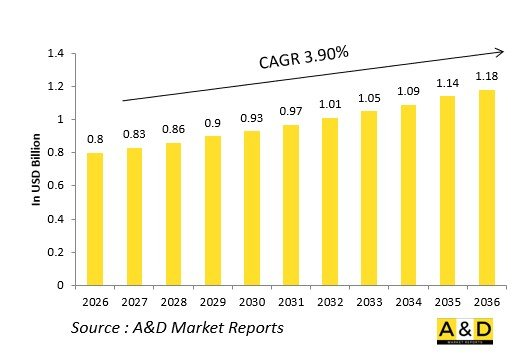
全球国防加力燃烧室/再加力燃烧室系统市场预计在2026年达到8亿美元,预计到2036年将达到11.8亿美元,2026年至2036年的复合年增长率为3.90%。
引言
全球国防加力燃烧室/再加力燃烧室系统市场透过控制涡轮后燃烧,增加超视距作战和短距起飞所需的干推力,从而为战术飞机提供动力。环形火焰稳定器可稳定超音速流动中的煤油喷雾,冷却衬里则可保护涡轮表面免受热衝击。
市场正在不断发展以满足第六代战斗机的需求,加力燃烧室在峰值功率输出和红外线抑制之间取得平衡,从而提升穿透力。核心技术包括燃油喷射环、V型稳定器和可变喉部喷嘴,这些技术可优化最大增压压力。分级喷射技术可降低烟雾特性。
地缘政治上的空中优势竞争正在推动技术发展,优先考虑自适应循环核心和与全权限数位引擎控制系统 (FADEC) 的整合。模组化设计使其能够改装到较旧的平台上。供应链的重点是高温合金和陶瓷涂层。普惠公司、罗尔斯·罗伊斯公司和赛峰集团在低氮氧化物加力燃烧室技术领域处于领先地位。
该市场透过热力学爆炸来提升作战优势。
防御性加力燃烧室/再燃烧系统技术的影响
低排放燃烧室最大限度地提高了推力,这对于白天拦截至关重要,同时透过富燃熄火稀燃区显着降低了可见讯号。冷却式花瓣喷嘴利用蒸发空气对花瓣进行薄膜冷却,实现推力向量控制,并消除可能影响隐形飞机的高温边缘。
可变几何喉道可在整个飞行包线内调整背压,防止爬升过程中烧毁和机动战斗中失去启动。等离子点火系统即使在侧风中也能实现瞬时点火,无需使用烟火药筒。从飞行员喷嘴到主喷嘴的分段燃油喷射可在整个马赫范围内稳定火焰。
衬里的耐热涂层可承受持续烧毁,延长大修间隔。整合的全权限数位引擎控制系统 (FADEC) 将燃油喷射与涡轮转速耦合,以防止过热。空心框架支架在保持稳定性的同时减轻了重量。增强推力与超音速巡航核心协同工作,实现从干推力到湿推力的无缝过渡。
数位孪生技术优化了喷射模式,以减少进气道畸变。陶瓷基体衬里提高了涡轮进气温度。这些创新扩大了不可逃逸区,并实现了对移动式地对空飞弹的纵深打击。
防御性加力燃烧室/再加力燃烧系统的关键驱动因素
第六代空中优势需要持续加力燃烧来对抗超音速巡航威胁。航母舰载机需要可靠的湿推力,以在满载情况下进行弹射起飞和煞车着陆。
永续性经济要求使用耐用衬里,以最大限度地减少热点检查。出口市场要求在中立空域进行无烟运作。隐身整合要求冷却喷嘴瓣片与飞机蒙皮无缝融合。
预算压力使得模组化加力燃烧室优先于引擎的彻底重新设计。供应链韧性可以应付难熔金属短缺的问题。互操作性标准能够实现联军部队的通用燃料控制。
城市作战需要精确的推力爆发,避免过衝。这些要求使得加力燃烧室成为策略差异化因素。
本报告分析了全球国防加力燃烧室/加力燃烧系统市场,深入探讨了影响该市场的技术、未来十年的预测以及区域趋势。
目录
国防加力燃烧室/加力燃烧系统市场报告定义
国防加力燃烧室/加力燃烧系统市场细分
依平台
依喷嘴型
依驱动方式
未来十年国防加力燃烧室/加力燃烧系统市场分析
国防加力燃烧室/加力燃烧系统市场技术
全球国防加力燃烧室/加力燃烧系统市场预测
区域国防加力燃烧室/加力燃烧系统市场趋势及预测
北美
驱动因素、限制因素及挑战
PEST分析
市场预测与情境分析
主要公司
供应商层级概览
公司标竿分析
欧洲
中东
亚太地区
南美洲
国防加力燃烧室/再燃烧系统市场国家分析
美国
国防项目
最新资讯
专利
当前市场技术成熟度
市场预测与情境分析
加拿大
义大利
法国
德国
荷兰
比利时
西班牙
瑞典
希腊
澳洲
南非
印度
中国
俄罗斯
韩国
日本
马来西亚
新加坡
巴西
国防加力燃烧室/加力燃烧系统市场机会矩阵
国防加力燃烧室/加力燃烧系统市场专家意见
结论
关于航空与国防市场报告
The Global Defense Afterburner / Reheat Systems Market is estimated at USD 0.8 billion in 2026, projected to grow to USD 1.18 billion by 2036 at a Compound Annual Growth Rate (CAGR) of 3.90% over the forecast period 2026-2036.
Introduction
The global Defense Afterburner / Reheat Systems market powers tactical aircraft through controlled post-turbine combustion, multiplying dry thrust for beyond-visual-range engagements and short takeoffs. Annular flame holders stabilize kerosene spray amid supersonic flows, while cooled liners protect turbine faces from thermal shock.
Market evolution tracks sixth-generation requirements, where afterburners balance peak power with infrared suppression for penetrating defenses. Core technologies include fuel spray rings, V-gutter stabilizers, and variable throat nozzles optimizing pressure for maximum augmentation. Emphasis on staged injection reduces smoke signatures.
Geopolitical air superiority competitions drive development, prioritizing integration with adaptive cycle cores and FADEC controls. Modular designs enable retrofits across legacy platforms. Supply chains focus on high-temperature alloys and ceramic coatings. Competition features Pratt & Whitney, Rolls-Royce, and Safran pioneering low-NOx reheat.
This market fuels combat edge through thermodynamic bursts.
Technology Impact in Defense Afterburner / Reheat Systems
Low-emission combustors with rich-quench-lean zones slash visible signatures while maximizing augmentation, critical for day intercepts. Cooled petal nozzles vector thrust without hot edges betraying stealth platforms, using transpiration air to film-cool petals.
Variable geometry throats adjust backpressure across flight envelopes, preventing blowout during climb or unstart in maneuvering combat. Plasma ignition systems light instantly under crosswinds, eliminating pyrotechnic cartridges. Staged fuel injection-pilot then main-stabilizes flame across Mach regimes.
Thermal barrier coatings on liners withstand sustained reheat, extending intervals between overhauls. Integrated FADEC sequences injection with turbine speeds, preventing overtemperature. Hollow flameholders reduce weight while maintaining stability. Augmented thrust links with super cruise cores for seamless dry-to-wet transitions.
Digital twins optimize spray patterns against inlet distortion, while ceramic matrix liners enable higher turbine inlet temperatures. These innovations extend no-escape zones and enable deep strikes against mobile SAMs.
Key Drivers in Defense Afterburner / Reheat Systems
Sixth-generation air dominance mandates sustained afterburning for super cruise intercepts against hypersonic threats. Carrier aviation demands reliable wet thrust for catapult strokes and arrested recoveries under max loads.
Sustainment economics favor durable liners minimizing hot-section inspections. Export markets require smoke-free operation for neutral airspace transit. Stealth integration drives cooled nozzle petals blending with aircraft skins.
Budget pressures prioritize modular reheat over full engine redesigns. Supply chain resilience counters refractory metal shortages. Interoperability standards enable common fuel controls across coalitions.
Urban combat needs precise thrust bursts avoiding overshoot. These imperatives position afterburners as mission differentiators.
Regional Trends in Defense Aircraft Afterburner / Reheat Systems
North America pioneers adaptive reheat for NGAD, emphasizing variable geometry.
Europe upgrades Typhoon and Rafale nozzles for dispersed basing.
Asia-Pacific accelerates indigenous development-India's Kaveri wet variant, China's WS-15-tailored to carrier ops.
Middle East pursues smoke-free systems for day operations.
Russia advances high-temperature alloys for Su-57 sustainment.
South Korea integrates with KF-21 export packages.
Trends favor ceramic liners; Asia-Pacific gains production share.
Key Defense Afterburner / Reheat Systems Programs
F135 afterburner powers F-35 across STOVL, CTOL, CV variants with stealthy petals.
NGAD variable cycle reheat enables super cruise without wet thrust.
EJ200 upgrades deliver dry super cruise with optimized nozzles.
India's Kaveri wet testing validates hollow reheat integration on Tejas.
WS-15 equips J-20 with indigenous augmentation.
Rafale M88 reheat sustains carrier operations.
T-50 FADEC-driven injection sequences wet thrust.
Table of Contents
Defense Afterburner / Reheat Systems Market - Table of Contents
Defense Afterburner / Reheat Systems Market Report Definition
Defense Afterburner / Reheat Systems Market Segmentation
By Platform
By Nozzle Type
By Actuation
Defense Afterburner / Reheat Systems Market Analysis for next 10 Years
The 10-year Defense Afterburner / Reheat Systems market analysis would give a detailed overview of Defense Afterburner / Reheat Systems market growth, changing dynamics, technology adoption overviews and the overall market attractiveness is covered in this chapter.
Market Technologies of Defense Afterburner / Reheat Systems Market
This segment covers the top 10 technologies that is expected to impact this market and the possible implications these technologies would have on the overall market.
Global Defense Afterburner / Reheat Systems Market Forecast
The 10-year Defense Afterburner / Reheat Systems market forecast of this market is covered in detailed across the segments which are mentioned above.
Regional Defense Afterburner / Reheat Systems Market Trends & Forecast
The regional counter drone market trends, drivers, restraints and Challenges of this market, the Political, Economic, Social and Technology aspects are covered in this segment. The market forecast and scenario analysis across regions are also covered in detailed in this segment. The last part of the regional analysis includes profiling of the key companies, supplier landscape and company benchmarking. The current market size is estimated based on the normal scenario.
North America
Drivers, Restraints and Challenges
PEST
Market Forecast & Scenario Analysis
Key Companies
Supplier Tier Landscape
Company Benchmarking
Europe
Middle East
APAC
South America
Country Analysis of Defense Afterburner / Reheat Systems Market
This chapter deals with the key defense programs in this market, it also covers the latest news and patents which have been filed in this market. Country level 10 year market forecast and scenario analysis are also covered in this chapter.
US
Defense Programs
Latest News
Patents
Current levels of technology maturation in this market
Market Forecast & Scenario Analysis
Canada
Italy
France
Germany
Netherlands
Belgium
Spain
Sweden
Greece
Australia
South Africa
India
China
Russia
South Korea
Japan
Malaysia
Singapore
Brazil
Opportunity Matrix for Defense Afterburner / Reheat Systems Market
The opportunity matrix helps the readers understand the high opportunity segments in this market.
Expert Opinions on Defense Afterburner / Reheat Systems Market Report
Hear from our experts their opinion of the possible analysis for this market.
Conclusions
About Aviation and Defense Market Reports
List of Tables
- Table 1: 10 Year Market Outlook, 2026-2036
- Table 2: Drivers, Impact Analysis, North America
- Table 3: Restraints, Impact Analysis, North America
- Table 4: Challenges, Impact Analysis, North America
- Table 5: Drivers, Impact Analysis, Europe
- Table 6: Restraints, Impact Analysis, Europe
- Table 7: Challenges, Impact Analysis, Europe
- Table 8: Drivers, Impact Analysis, Middle East
- Table 9: Restraints, Impact Analysis, Middle East
- Table 10: Challenges, Impact Analysis, Middle East
- Table 11: Drivers, Impact Analysis, APAC
- Table 12: Restraints, Impact Analysis, APAC
- Table 13: Challenges, Impact Analysis, APAC
- Table 14: Drivers, Impact Analysis, South America
- Table 15: Restraints, Impact Analysis, South America
- Table 16: Challenges, Impact Analysis, South America
- Table 17: Scenario Analysis, Scenario 1, By Region, 2026-2036
- Table 18: Scenario Analysis, Scenario 1, By Platform, 2026-2036
- Table 19: Scenario Analysis, Scenario 1, By Integration, 2026-2036
- Table 20: Scenario Analysis, Scenario 2, By Region, 2026-2036
- Table 21: Scenario Analysis, Scenario 2, By Platform, 2026-2036
- Table 22: Scenario Analysis, Scenario 2, By Integration, 2026-2036
List of Figures
- Figure 1: Global Afterburner / Reheat Systems Market Forecast, 2026-2036
- Figure 2: Global Afterburner / Reheat Systems Market Forecast, By Region, 2026-2036
- Figure 3: Global Afterburner / Reheat Systems Market Forecast, By Platform, 2026-2036
- Figure 4: Global Afterburner / Reheat Systems Market Forecast, By Integration, 2026-2036
- Figure 5: North America, Afterburner / Reheat Systems Market , Forecast, 2026-2036
- Figure 6: Europe, Afterburner / Reheat Systems Market , Forecast, 2026-2036
- Figure 7: Middle East, Afterburner / Reheat Systems Market , Forecast, 2026-2036
- Figure 8: APAC, Afterburner / Reheat Systems Market , Forecast, 2026-2036
- Figure 9: South America, Afterburner / Reheat Systems Market , Forecast, 2026-2036
- Figure 10: United States, Afterburner / Reheat Systems Market , Technology Maturation, 2026-2036
- Figure 11: United States, Afterburner / Reheat Systems Market , Forecast, 2026-2036
- Figure 12: Canada, Afterburner / Reheat Systems Market , Technology Maturation, 2026-2036
- Figure 13: Canada, Afterburner / Reheat Systems Market , Forecast, 2026-2036
- Figure 14: Italy, Afterburner / Reheat Systems Market , Technology Maturation, 2026-2036
- Figure 15: Italy, Afterburner / Reheat Systems Market , Market Forecast, 2026-2036
- Figure 16: France, Afterburner / Reheat Systems Market , Technology Maturation, 2026-2036
- Figure 17: France, Afterburner / Reheat Systems Market , Market Forecast, 2026-2036
- Figure 18: Germany, Afterburner / Reheat Systems Market , Technology Maturation, 2026-2036
- Figure 19: Germany, Afterburner / Reheat Systems Market , Market Forecast, 2026-2036
- Figure 20: Netherlands, Afterburner / Reheat Systems Market , Technology Maturation, 2026-2036
- Figure 21: Netherlands, Afterburner / Reheat Systems Market , Market Forecast, 2026-2036
- Figure 22: Belgium, Afterburner / Reheat Systems Market , Technology Maturation, 2026-2036
- Figure 23: Belgium, Afterburner / Reheat Systems Market , Market Forecast, 2026-2036
- Figure 24: Spain, Afterburner / Reheat Systems Market , Technology Maturation, 2026-2036
- Figure 25: Spain, Afterburner / Reheat Systems Market , Market Forecast, 2026-2036
- Figure 26: Sweden, Afterburner / Reheat Systems Market , Technology Maturation, 2026-2036
- Figure 27: Sweden, Afterburner / Reheat Systems Market , Market Forecast, 2026-2036
- Figure 28: Brazil, Afterburner / Reheat Systems Market , Technology Maturation, 2026-2036
- Figure 29: Brazil, Afterburner / Reheat Systems Market , Market Forecast, 2026-2036
- Figure 30: Australia, Afterburner / Reheat Systems Market , Technology Maturation, 2026-2036
- Figure 31: Australia, Afterburner / Reheat Systems Market , Market Forecast, 2026-2036
- Figure 32: India, Afterburner / Reheat Systems Market , Technology Maturation, 2026-2036
- Figure 33: India, Afterburner / Reheat Systems Market , Market Forecast, 2026-2036
- Figure 34: China, Afterburner / Reheat Systems Market , Technology Maturation, 2026-2036
- Figure 35: China, Afterburner / Reheat Systems Market , Market Forecast, 2026-2036
- Figure 36: Saudi Arabia, Afterburner / Reheat Systems Market , Technology Maturation, 2026-2036
- Figure 37: Saudi Arabia, Afterburner / Reheat Systems Market , Market Forecast, 2026-2036
- Figure 38: South Korea, Afterburner / Reheat Systems Market , Technology Maturation, 2026-2036
- Figure 39: South Korea, Afterburner / Reheat Systems Market , Market Forecast, 2026-2036
- Figure 40: Japan, Afterburner / Reheat Systems Market , Technology Maturation, 2026-2036
- Figure 41: Japan, Afterburner / Reheat Systems Market , Market Forecast, 2026-2036
- Figure 42: Malaysia, Afterburner / Reheat Systems Market , Technology Maturation, 2026-2036
- Figure 43: Malaysia, Afterburner / Reheat Systems Market , Market Forecast, 2026-2036
- Figure 44: Singapore, Afterburner / Reheat Systems Market , Technology Maturation, 2026-2036
- Figure 45: Singapore, Afterburner / Reheat Systems Market , Market Forecast, 2026-2036
- Figure 46: United Kingdom, Afterburner / Reheat Systems Market , Technology Maturation, 2026-2036
- Figure 47: United Kingdom, Afterburner / Reheat Systems Market , Market Forecast, 2026-2036
- Figure 48: Opportunity Analysis, Afterburner / Reheat Systems Market , By Region (Cumulative Market), 2026-2036
- Figure 49: Opportunity Analysis, Afterburner / Reheat Systems Market , By Region (CAGR), 2026-2036
- Figure 50: Opportunity Analysis, Afterburner / Reheat Systems Market , By (Cumulative Market), 2026-2036
- Figure 51: Opportunity Analysis, Afterburner / Reheat Systems Market , By Platform(CAGR), 2026-2036
- Figure 52: Opportunity Analysis, Afterburner / Reheat Systems Market , By Integration (Cumulative Market), 2026-2036
- Figure 53: Opportunity Analysis, Afterburner / Reheat Systems Market , By Integration (CAGR), 2026-2036
- Figure 54: Scenario Analysis, Afterburner / Reheat Systems Market , Cumulative Market, 2026-2036
- Figure 55: Scenario Analysis, Afterburner / Reheat Systems Market , Global Market, 2026-2036
- Figure 56: Scenario 1, Afterburner / Reheat Systems Market , Total Market, 2026-2036
- Figure 57: Scenario 1, Afterburner / Reheat Systems Market , By Region, 2026-2036
- Figure 58: Scenario 1, Afterburner / Reheat Systems Market , By Platform, 2026-2036
- Figure 59: Scenario 1, Afterburner / Reheat Systems Market , By Integration, 2026-2036
- Figure 60: Scenario 2, Afterburner / Reheat Systems Market , Total Market, 2026-2036
- Figure 61: Scenario 2, Afterburner / Reheat Systems Market , By Region, 2026-2036
- Figure 62: Scenario 2, Afterburner / Reheat Systems Market , By Platform, 2026-2036
- Figure 63: Scenario 2, Afterburner / Reheat Systems Market , By Integration, 2026-2036
- Figure 64: Company Benchmark, Afterburner / Reheat Systems Market , 2026-2036


