


 |
市场调查报告书
商品编码
1966912
全球均质轧製装甲板 (RHA) 市场 (2026-2036)Global Rolled Homogeneous Armor (RHA) Plate Market 2026-2036 |
||||||

全球均质轧製装甲板 (RHA) 市场
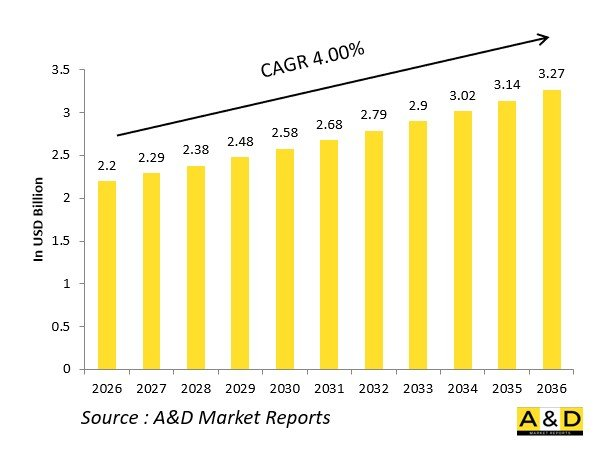
据估计,全球均质轧製装甲板 (RHA) 市场在 2026 年的价值为 22 亿美元,预计到 2036 年将达到 32.7 亿美元,2026 年至 2036 年的复合年增长率 (CAGR) 为 4.00%。
引言:全球均质轧製装甲板 (RHA) 市场
轧製均质轧製装甲(RHA)板是各种军事平台的基础防护材料。这种钢基装甲解决方案以其成分均匀和可靠的弹道性能而闻名,广泛应用于装甲车辆、坦克、船和防御工事。均质轧製装甲(RHA)能够有效抵御弹道威胁、爆炸衝击和弹片,使其成为传统和现代防御应用的可靠选择。随着陆军和海军不断推进舰队现代化,对兼具防护性、可製造性和成本效益的装甲解决方案的需求仍然强劲。全球市场受到不断变化的威胁环境的影响,包括动能弹丸和战场碎片危害。国防规划人员重视轧製均质装甲(RHA),因为它性能可靠、易于製造,并且与多层和复合防护系统相容。儘管先进装甲材料不断涌现,RHA 在军事生存战略中仍然发挥着至关重要的作用。
技术对轧製均质合金钢板的影响
技术进步正在拓展轧製均质合金钢板的性能和应用范围。改良的冶金製程能够更好地控制硬度、韧性和延展性,从而增强其抗弹性能。先进的热处理技术提高了能量吸收能力,同时降低了衝击开裂的风险。精密轧製和成型技术确保了大型装甲板厚度的一致性和结构完整性。与复合材料和模组化装甲系统的整合使轧製均质合金钢板成为多威胁防御解决方案的基础。现代焊接和连接方法提高了结构强度,同时保持了其弹道性能。微观结构改进的研究不断优化其性能,以应对不断演变的动能和爆炸威胁。这些技术发展确保轧製均质合金钢板在现代军事防护体系中保持其相关性、适应性和有效性。
轧製均质合金钢板的主要成长驱动因子
多项战略和战斗因素正在推动对轧製均质合金钢板的持续需求。装甲车辆和海军平台的不断现代化强化了对成熟可靠的装甲材料的需求。 对乘员生存能力和平台耐久性的日益重视,推动了对可靠防护解决方案的投资增加。轧製均质装甲 (RHA) 因其成本效益高、易于製造且与现有车辆设计相容而备受青睐。衝突地区军用车辆部署的不断增加,推动了对可靠弹道防护的需求。基础设施保护和军事工程应用也促进了需求的成长。 RHA 与积层製造和反应装甲系统的互通性使其成为满足不断变化的防护需求的灵活选择。此外,其易于维护和使用寿命长,也使其得以持续应用。这些因素确保 RHA 装甲板仍然是国防防护战略的重要组成部分。
RHA 装甲板的区域趋势
RHA 装甲板市场的区域趋势反映了各地区国防优先事项和工业能力的差异。拥有成熟装甲车辆製造基地的地区强调国内生产和材料自给自足。这些地区注重品质的一致性以及与国内车辆项目的整合。新兴国防市场则优先考虑经济实惠且可靠的装甲解决方案,用于升级现有车辆。 边境安全和国内稳定的考量推动了对采用成熟钢製装甲的装甲车辆的需求。以海军为主的地区正在采用轧製均质装甲(RHA)来保护船体和关键基础设施。某些地区恶劣的作业环境要求装甲材料具备高耐久性和耐腐蚀性。政府对国防工业的支持促进了全球材料供应商与本地製造商之间的合作。总体而言,区域发展趋势表明,RHA 将继续作为可靠且适应性强的防护解决方案而受到重视。 本报告分析了全球 RHA 钢板市场,提供了影响该市场的技术资讯、未来十年的预测以及区域趋势。
目录
全球均质轧製装甲板 (RHA) 市场报告定义
全球均质轧製装甲板 (RHA) 市场区隔
依地区
依平台
依厚度
依应用
依钢材等级
依加工製程
未来十年全球均质轧製装甲板 (RHA) 市场分析
全球均质轧製装甲板 (RHA) 市场技术
全球均质轧製装甲板 (RHA) 市场预测
全球均质轧製装甲板均质轧製装甲板 (RHA) 市场趋势及区域预测
北美
驱动因素、限制因素与挑战
PEST 分析
市场预测及情境分析
主要公司
供应商层级状况
公司标竿分析
欧洲
中东
亚太地区
南美洲
全球均质轧製装甲板 (RHA) 市场国家分析
美国
国防项目
最新资讯
专利
当前市场技术成熟度
市场预测及情境分析
加拿大
义大利
法国
德国
荷兰
比利时
西班牙
瑞典
希腊
澳洲
南非
印度
中国
俄罗斯
韩国
日本
马来西亚
新加坡
巴西
全球均质轧製装甲板(RHA)市场机会矩阵
全球均质轧製装甲板(RHA)市场报告相关之专家意见
结论
关于航空与国防市场报告
Global Rolled Homogeneous Armor (RHA) Plate Market
The Global Rolled Homogeneous Armor (RHA) Plate Market is estimated at USD 2.2 billion in 2026, projected to grow to USD 3.27 billion by 2036 at a Compound Annual Growth Rate (CAGR) of 4.00% over the forecast period 2026-2036.
Introduction: Global Rolled Homogeneous Armor Plate Market
Rolled homogeneous armor plates are foundational protective materials used across a wide range of military platforms. Known for their uniform composition and reliable ballistic performance, these steel-based armor solutions are widely deployed in armored vehicles, tanks, naval vessels, and structural fortifications. Rolled homogeneous armor provides effective resistance against ballistic threats, blast impacts, and fragmentation, making it a trusted choice for conventional and modern defense applications. As ground and naval forces continue to modernize fleets, demand remains strong for armor solutions that balance protection, manufacturability, and cost efficiency. The global market is influenced by evolving threat environments, including kinetic munitions and battlefield fragmentation hazards. Defense planners value rolled homogeneous armor for its proven performance, ease of fabrication, and compatibility with layered and composite protection systems. Despite the emergence of advanced armor materials, rolled homogeneous armor plates continue to play a critical role in military survivability strategies.
Technology Impact in Rolled Homogeneous Armor Plate
Technological advancements are enhancing the performance and application scope of rolled homogeneous armor plates. Improvements in metallurgical processes have led to better control over hardness, toughness, and ductility, resulting in improved ballistic resistance. Advanced heat treatment techniques enhance energy absorption while reducing susceptibility to cracking under impact. Precision rolling and forming technologies enable consistent thickness and structural integrity across large armor panels. Integration with composite and modular armor systems allows rolled homogeneous armor to serve as a base layer in multi-threat protection solutions. Modern welding and joining methods improve structural strength while preserving ballistic properties. Research into microstructural refinement continues to optimize performance against evolving kinetic and blast threats. These technological developments ensure that rolled homogeneous armor remains relevant, adaptable, and effective within modern military protection architectures.
Key Drivers in Rolled Homogeneous Armor Plate
Several strategic and operational factors drive sustained demand for rolled homogeneous armor plates. Ongoing modernization of armored vehicles and naval platforms reinforces the need for proven, reliable armor materials. Rising focus on crew survivability and platform durability increases investment in robust protective solutions. Rolled homogeneous armor is favored for its cost effectiveness, ease of manufacturing, and compatibility with existing vehicle designs. Increased deployment of military vehicles in conflict zones heightens the requirement for dependable ballistic protection. Infrastructure protection and military engineering applications also contribute to demand growth. Interoperability with add-on and reactive armor systems makes rolled homogeneous armor a flexible choice for evolving protection needs. Additionally, maintenance simplicity and long service life support its continued adoption. Together, these drivers sustain the role of rolled homogeneous armor plates as essential components of defense protection strategies.
Regional Trends in Rolled Homogeneous Armor Plate
Regional trends in the rolled homogeneous armor plate market reflect diverse defense priorities and industrial capabilities. Regions with established armored vehicle manufacturing bases emphasize domestic production and material self-reliance. These areas focus on consistent quality and integration with indigenous vehicle programs. Emerging defense markets prioritize affordable and reliable armor solutions to upgrade existing fleets. Border security and internal stability concerns drive demand for armored vehicles equipped with proven steel armor. Naval-focused regions incorporate rolled homogeneous armor into hull protection and critical infrastructure shielding. Harsh operational environments in certain regions necessitate armor materials with high durability and corrosion resistance. Government policies supporting local defense industries encourage partnerships between global material suppliers and regional manufacturers. Overall, regional developments demonstrate continued reliance on rolled homogeneous armor as a dependable and adaptable protection solution.
Key Rolled Homogeneous Armor Plate Programs
Rolled homogeneous armor plate programs are closely linked to broader armored platform development and protection enhancement initiatives. These programs focus on supplying standardized armor solutions for tanks, infantry fighting vehicles, and support platforms. Emphasis is placed on meeting stringent military specifications for ballistic resistance and structural integrity. Integration with modular armor kits allows platforms to be adapted to different threat environments. Many programs support fleet refurbishment efforts by replacing aging armor with improved steel compositions. Collaboration between defense agencies, steel manufacturers, and research institutions drives material optimization. Quality assurance and consistent production processes are central program objectives. Lifecycle support, including repair and replacement capabilities, is also prioritized. Through these programs, defense organizations maintain reliable protection levels while balancing performance, cost, and long-term sustainability.
Table of Contents
Global Rolled Homogeneous Armor (RHA) Plate Market - Table of Contents
Global Rolled Homogeneous Armor (RHA) Plate Market Report Definition
Global Rolled Homogeneous Armor (RHA) Plate Market Segmentation
By Region
By Platform
By Thickness
By Application
By Steel Grade
By Treatment
Global Rolled Homogeneous Armor (RHA) Plate Market Analysis for next 10 Years
The 10-year Global Defense Explosive Reactive Armor (ERA) Tiles Market analysis would give a detailed overview of Global Defense Explosive Reactive Armor (ERA) Tiles Market growth, changing dynamics, technology adoption overviews and the overall market attractiveness is covered in this chapter.
Market Technologies of Global Rolled Homogeneous Armor (RHA) Plate Market
This segment covers the top 10 technologies that is expected to impact this market and the possible implications these technologies would have on the overall market.
Global Rolled Homogeneous Armor (RHA) Plate Market Forecast
The 10-year Global Defense Explosive Reactive Armor (ERA) Tiles Market forecast of this market is covered in detailed across the segments which are mentioned above.
Regional Global Rolled Homogeneous Armor (RHA) Plate Market Trends & Forecast
The regional counter drone market trends, drivers, restraints and Challenges of this market, the Political, Economic, Social and Technology aspects are covered in this segment. The market forecast and scenario analysis across regions are also covered in detailed in this segment. The last part of the regional analysis includes profiling of the key companies, supplier landscape and company benchmarking. The current market size is estimated based on the normal scenario.
North America
Drivers, Restraints and Challenges
PEST
Market Forecast & Scenario Analysis
Key Companies
Supplier Tier Landscape
Company Benchmarking
Europe
Middle East
APAC
South America
Country Analysis of Global Rolled Homogeneous Armor (RHA) Plate Market
This chapter deals with the key defense programs in this market, it also covers the latest news and patents which have been filed in this market. Country level 10 year market forecast and scenario analysis are also covered in this chapter.
US
Defense Programs
Latest News
Patents
Current levels of technology maturation in this market
Market Forecast & Scenario Analysis
Canada
Italy
France
Germany
Netherlands
Belgium
Spain
Sweden
Greece
Australia
South Africa
India
China
Russia
South Korea
Japan
Malaysia
Singapore
Brazil
Opportunity Matrix for Global Rolled Homogeneous Armor (RHA) Plate Market
The opportunity matrix helps the readers understand the high opportunity segments in this market.
Expert Opinions on Global Rolled Homogeneous Armor (RHA) Plate Market Report
Hear from our experts their opinion of the possible analysis for this market.
Conclusions
About Aviation and Defense Market Reports
List of Tables
- Table 1: 10 Year Market Outlook, 2026-2036
- Table 2: Drivers, Impact Analysis, North America
- Table 3: Restraints, Impact Analysis, North America
- Table 4: Challenges, Impact Analysis, North America
- Table 5: Drivers, Impact Analysis, Europe
- Table 6: Restraints, Impact Analysis, Europe
- Table 7: Challenges, Impact Analysis, Europe
- Table 8: Drivers, Impact Analysis, Middle East
- Table 9: Restraints, Impact Analysis, Middle East
- Table 10: Challenges, Impact Analysis, Middle East
- Table 11: Drivers, Impact Analysis, APAC
- Table 12: Restraints, Impact Analysis, APAC
- Table 13: Challenges, Impact Analysis, APAC
- Table 14: Drivers, Impact Analysis, South America
- Table 15: Restraints, Impact Analysis, South America
- Table 16: Challenges, Impact Analysis, South America
- Table 17: Scenario Analysis, Scenario 1, By Thickness, 2026-2036
- Table 18: Scenario Analysis, Scenario 1, By Platform, 2026-2036
- Table 19: Scenario Analysis, Scenario 1, By Region, 2026-2036
- Table 20: Scenario Analysis, Scenario 2, By Thickness, 2026-2036
- Table 21: Scenario Analysis, Scenario 2, By Platform, 2026-2036
- Table 22: Scenario Analysis, Scenario 2, By Region, 2026-2036
List of Figures
- Figure 1: Global Rolled Homogeneous Armor (RHA) Plate Market Forecast, 2026-2036
- Figure 2: Global Rolled Homogeneous Armor (RHA) Plate Market Forecast, By Thickness, 2026-2036
- Figure 3: Global Rolled Homogeneous Armor (RHA) Plate Market Forecast, By Platform, 2026-2036
- Figure 4: Global Rolled Homogeneous Armor (RHA) Plate Market Forecast, By Region, 2026-2036
- Figure 5: North America, Rolled Homogeneous Armor (RHA) Plate Market, Forecast, 2026-2036
- Figure 6: Europe, Rolled Homogeneous Armor (RHA) Plate Market, Forecast, 2026-2036
- Figure 7: Middle East, Rolled Homogeneous Armor (RHA) Plate Market, Forecast, 2026-2036
- Figure 8: APAC, Rolled Homogeneous Armor (RHA) Plate Market, Forecast, 2026-2036
- Figure 9: South America, Rolled Homogeneous Armor (RHA) Plate Market, Forecast, 2026-2036
- Figure 10: United States, Rolled Homogeneous Armor (RHA) Plate Market, Thickness Maturation, 2026-2036
- Figure 11: United States, Rolled Homogeneous Armor (RHA) Plate Market, Forecast, 2026-2036
- Figure 12: Canada, Rolled Homogeneous Armor (RHA) Plate Market, Thickness Maturation, 2026-2036
- Figure 13: Canada, Rolled Homogeneous Armor (RHA) Plate Market, Forecast, 2026-2036
- Figure 14: Italy, Rolled Homogeneous Armor (RHA) Plate Market, Thickness Maturation, 2026-2036
- Figure 15: Italy, Rolled Homogeneous Armor (RHA) Plate Market, Market Forecast, 2026-2036
- Figure 16: France, Rolled Homogeneous Armor (RHA) Plate Market, Thickness Maturation, 2026-2036
- Figure 17: France, Rolled Homogeneous Armor (RHA) Plate Market, Market Forecast, 2026-2036
- Figure 18: Germany, Rolled Homogeneous Armor (RHA) Plate Market, Thickness Maturation, 2026-2036
- Figure 19: Germany, Rolled Homogeneous Armor (RHA) Plate Market, Market Forecast, 2026-2036
- Figure 20: Netherlands, Rolled Homogeneous Armor (RHA) Plate Market, Thickness Maturation, 2026-2036
- Figure 21: Netherlands, Rolled Homogeneous Armor (RHA) Plate Market, Market Forecast, 2026-2036
- Figure 22: Belgium, Rolled Homogeneous Armor (RHA) Plate Market, Thickness Maturation, 2026-2036
- Figure 23: Belgium, Rolled Homogeneous Armor (RHA) Plate Market, Market Forecast, 2026-2036
- Figure 24: Spain, Rolled Homogeneous Armor (RHA) Plate Market, Thickness Maturation, 2026-2036
- Figure 25: Spain, Rolled Homogeneous Armor (RHA) Plate Market, Market Forecast, 2026-2036
- Figure 26: Sweden, Rolled Homogeneous Armor (RHA) Plate Market, Thickness Maturation, 2026-2036
- Figure 27: Sweden, Rolled Homogeneous Armor (RHA) Plate Market, Forecast, 2026-2036
- Figure 28: Brazil, Rolled Homogeneous Armor (RHA) Plate Market, Thickness Maturation, 2026-2036
- Figure 29: Brazil, Rolled Homogeneous Armor (RHA) Plate Market, Market Forecast, 2026-2036
- Figure 30: Australia, Rolled Homogeneous Armor (RHA) Plate Market, Thickness Maturation, 2026-2036
- Figure 31: Australia, Rolled Homogeneous Armor (RHA) Plate Market, Market Forecast, 2026-2036
- Figure 32: India, Rolled Homogeneous Armor (RHA) Plate Market, Thickness Maturation, 2026-2036
- Figure 33: India, Rolled Homogeneous Armor (RHA) Plate Market, Market Forecast, 2026-2036
- Figure 34: China, Rolled Homogeneous Armor (RHA) Plate Market, Thickness Maturation, 2026-2036
- Figure 35: China, Rolled Homogeneous Armor (RHA) Plate Market, Market Forecast, 2026-2036
- Figure 36: Saudi Arabia, Rolled Homogeneous Armor (RHA) Plate Market, Thickness Maturation, 2026-2036
- Figure 37: Saudi Arabia, Rolled Homogeneous Armor (RHA) Plate Market, Market Forecast, 2026-2036
- Figure 38: South Korea, Rolled Homogeneous Armor (RHA) Plate Market, Thickness Maturation, 2026-2036
- Figure 39: South Korea, Rolled Homogeneous Armor (RHA) Plate Market, Market Forecast, 2026-2036
- Figure 40: Japan, Rolled Homogeneous Armor (RHA) Plate Market, Thickness Maturation, 2026-2036
- Figure 41: Japan, Rolled Homogeneous Armor (RHA) Plate Market, Market Forecast, 2026-2036
- Figure 42: Malaysia, Rolled Homogeneous Armor (RHA) Plate Market, Thickness Maturation, 2026-2036
- Figure 43: Malaysia, Rolled Homogeneous Armor (RHA) Plate Market, Market Forecast, 2026-2036
- Figure 44: Singapore, Rolled Homogeneous Armor (RHA) Plate Market, Thickness Maturation, 2026-2036
- Figure 45: Singapore, Rolled Homogeneous Armor (RHA) Plate Market, Market Forecast, 2026-2036
- Figure 46: United Kingdom, Rolled Homogeneous Armor (RHA) Plate Market, Thickness Maturation, 2026-2036
- Figure 47: United Kingdom, Rolled Homogeneous Armor (RHA) Plate Market, Market Forecast, 2026-2036
- Figure 48: Opportunity Analysis, Rolled Homogeneous Armor (RHA) Plate Market, By Thickness(Cumulative Market), 2026-2036
- Figure 49: Opportunity Analysis, Rolled Homogeneous Armor (RHA) Plate Market, By Thickness(CAGR), 2026-2036
- Figure 50: Opportunity Analysis, Rolled Homogeneous Armor (RHA) Plate Market, By (Cumulative Market), 2026-2036
- Figure 51: Opportunity Analysis, Rolled Homogeneous Armor (RHA) Plate Market, By Platform(CAGR), 2026-2036
- Figure 52: Opportunity Analysis, Rolled Homogeneous Armor (RHA) Plate Market, By Region (Cumulative Market), 2026-2036
- Figure 53: Opportunity Analysis, Rolled Homogeneous Armor (RHA) Plate Market, By Region (CAGR), 2026-2036
- Figure 54: Scenario Analysis, Rolled Homogeneous Armor (RHA) Plate Market, Cumulative Market, 2026-2036
- Figure 55: Scenario Analysis, Rolled Homogeneous Armor (RHA) Plate Market, Global Market, 2026-2036
- Figure 56: Scenario 1, Rolled Homogeneous Armor (RHA) Plate Market, Total Market, 2026-2036
- Figure 57: Scenario 1, Rolled Homogeneous Armor (RHA) Plate Market, By Thickness, 2026-2036
- Figure 58: Scenario 1, Rolled Homogeneous Armor (RHA) Plate Market, By Platform, 2026-2036
- Figure 59: Scenario 1, Rolled Homogeneous Armor (RHA) Plate Market, By Region, 2026-2036
- Figure 60: Scenario 2, Rolled Homogeneous Armor (RHA) Plate Market, Total Market, 2026-2036
- Figure 61: Scenario 2, Rolled Homogeneous Armor (RHA) Plate Market, By Thickness, 2026-2036
- Figure 62: Scenario 2, Rolled Homogeneous Armor (RHA) Plate Market, By Platform, 2026-2036
- Figure 63: Scenario 2, Rolled Homogeneous Armor (RHA) Plate Market, By Region, 2026-2036
- Figure 64: Company Benchmark, Rolled Homogeneous Armor (RHA) Plate Market, 2026-2036

 弹道防护装备市场分析及预测(至2035年):类型、产品、服务、技术、应用、材质类型、最终用户、功能、安装类型、设备
 全球防务格栅/笼式装甲市场:2026-2036全球防卫防卫防飞溅层(克维拉/玻璃纤维)市场:2026-2036
 弹道防护市场-全球产业规模、份额、趋势、机会、预测:依产品类型、应用、技术、地区和竞争格局划分,2021-2031年
 超高分子量聚乙烯(UHMWPE)防弹板市场:按产品类型、销售管道、应用和最终用户划分 - 全球预测(2026-2032年)防弹复合复合材料市场:按材料、製造流程、形式、应用、终端用户产业和销售管道-全球预测(2026-2032 年)
 全球弹道防护市场研究报告 - 产业分析、规模、份额、成长、趋势及预测(2025 年至 2033 年)
 防弹装备市场规模、份额和趋势分析报告:按应用、材料、最终用途、地区和细分市场预测,2025 年至 2033 年
 弹道防护市场机会、成长动力、产业趋势分析及 2025 - 2034 年预测
 全球弹道防护工具市场,2025-2029