


 |
市场调查报告书
商品编码
2009464
全球无人物流与支援市场(2026-2036 年)Global Unmanned Battlefield Logistics and Support Market 2026-2036 |
||||||

全球无人物流与支援市场
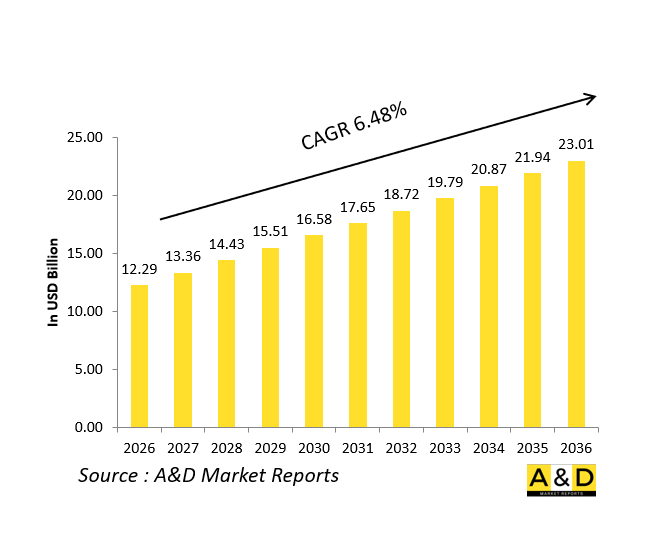
全球无人物流和支援市场预计到 2026 年价值 122.9 亿美元,预计到 2036 年将达到 230.1 亿美元,在 2026 年至 2036 年的预测期内,复合年增长率为 6.48%。
介绍
随着各国军队努力提高作战效率并降低人员风险,全球国防无人后勤支援系统市场正蓬勃发展。包括地面车辆、空中平台和自主补给单元在内的无人系统正被越来越多地部署到严苛高风险环境中,以执行后勤支援任务。这些系统旨在无需人工直接干预即可在战场上运输物资、运送伤者和执行维护任务。现代战争日益复杂化以及对快速可靠供应链日益增长的需求,正在推动无人后勤解决方案的普及。国防机构正在将这些系统整合到其作战体系中,以提高作战准备和永续性。此外,对最大限度降低战区人员风险的日益重视也加速了市场需求。随着军事战略的不断演变,无人后勤支援系统正成为未来战场作战不可或缺的一部分。
技术对国防无人后勤支援市场的影响。
技术进步正在对国防无人后勤支援市场产生变革性影响。人工智慧和机器学习的创新实现了自主导航、路线优化和即时决策,使无人系统即使在动态环境中也能高效运作。光达、雷达和成像系统等先进感测器的整合提升了情境察觉和障碍物侦测能力。通讯技术的进步实现了无人平台与指挥中心之间的无缝协调,从而支援以网路为中心的作战行动。电池和能源管理技术的改进延长了运行时间,提高了这些系统在长期运作中的可靠性。此外,机器人技术和模组化设计的进步增强了各种后勤作业的柔软性和适应性。网路安全技术的引入也为保护系统免受潜在威胁提供了保障。这些技术创新正在提升现代国防行动中无人后勤解决方案的性能、可靠性和扩充性。
国防无人后勤支援市场的主要驱动因素
多种因素正在推动国防无人后勤支援市场的成长。其中一个主要驱动因素是,在战区后勤和补给行动中,降低军事人员风险的需求日益增长。无人系统无需人员直接参与即可执行高风险操作,从而提供了更安全的替代方案。军事行动日益复杂化以及对高效快速回应供应链的需求不断增长,也促进了市场扩张。国防机构致力于提高作战效率,并确保在恶劣环境下的持续保障。此外,国防领域向自动化和数位转型的转变正在加速无人后勤解决方案的采用。这些系统可以减少所需人员和营运成本,因此成本效益和资源最佳化也是推动市场需求的因素。对研发和技术进步的投入增加,也推动了创新和市场成长。
国防无人后勤支援市场区域趋势
国防无人后勤支援市场的区域趋势显示出在应用和投资水准上的差异。北美凭藉其对先进军事技术的重视和对自主系统的大量投资,继续保持主要市场地位。欧洲也透过国防现代化努力和旨在增强作战能力的联合项目实现了成长。在亚太地区,不断增长的国防费用和对加强军事后勤的日益重视正在推动对无人解决方案的需求。该地区各国正投资国内研发和战略伙伴关係,以增强自身能力。在中东,由于需要应对复杂的安全挑战并提高作战效率,无人解决方案的应用正在不断扩大。在拉丁美洲和非洲,随着国防机构寻求创新解决方案以实现后勤基础设施现代化,市场正在逐步扩张。整体而言,各区域的趋势都反映了全球后勤营运向自动化和效率提升的转变。
本报告深入分析了全球无人物流和支援市场,提供了影响该市场的技术资讯、未来 10 年的预测以及各个区域市场的趋势。
目录
无人后勤支援市场报告定义
无人物流与支援市场的细分
按类型
按地区
按尺寸
未来十年无人物流与支援市场分析
无人物流支援市场技术
全球无人物流与支援市场预测
区域无人物流和支持市场的趋势和预测。
北美洲
促进因素、阻碍因素、挑战
害虫
市场预测与情境分析
主要企业
供应商等级
企业标竿管理
欧洲
中东
亚太地区
南美洲
无人物流与支持市场国别分析
我们
国防计划
最新消息
专利
该市场目前的技术成熟度水平
市场预测与情境分析
加拿大
义大利
法国
德国
荷兰
比利时
西班牙
瑞典
希腊
澳洲
南非
印度
中国
俄罗斯
韩国
日本
马来西亚
新加坡
巴西
无人物流与支持市场的机会矩阵
专家对无人物流与支援市场报告的意见
结论
关于航空航太和国防市场报告
Global Unmanned Battlefield Logistics and Support Market
The Global Unmanned Battlefield Logistics and Support Market is estimated at USD 12.29 billion in 2026, projected to grow to USD 23.01 billion by 2036 at a Compound Annual Growth Rate (CAGR) of 6.48% over the forecast period 2026-2036.
Introduction:
The global defense unmanned battlefield logistics and support market is gaining strong momentum as military forces seek to enhance operational efficiency and reduce risks to personnel. Unmanned systems, including ground vehicles, aerial platforms, and autonomous supply units, are increasingly being deployed to handle logistics and support functions in challenging and high-risk environments. These systems are designed to transport supplies, evacuate casualties, and perform maintenance tasks without direct human involvement on the battlefield. The growing complexity of modern warfare and the need for rapid, reliable supply chains are driving the adoption of unmanned logistics solutions. Defense organizations are integrating these systems into their operational frameworks to improve mission readiness and sustainment capabilities. Additionally, the emphasis on minimizing human exposure in combat zones is accelerating demand. As military strategies continue to evolve, unmanned logistics and support systems are becoming essential components of future battlefield operations.
Technology Impact in Defense Unmanned Battlefield Logistics and Support Market
Technological advancements are playing a transformative role in the defense unmanned battlefield logistics and support market. Innovations in artificial intelligence and machine learning are enabling autonomous navigation, route optimization, and real-time decision-making, allowing unmanned systems to operate efficiently in dynamic environments. The integration of advanced sensors, including lidar, radar, and imaging systems, enhances situational awareness and obstacle detection. Improvements in communication technologies are enabling seamless coordination between unmanned platforms and command centers, supporting network-centric operations. Battery and energy management advancements are extending operational endurance, making these systems more reliable for prolonged missions. Additionally, developments in robotics and modular design are increasing flexibility and adaptability across various logistics tasks. Cybersecurity technologies are also being incorporated to protect systems from potential threats. These technological innovations are enhancing the performance, reliability, and scalability of unmanned logistics solutions in modern defense operations.
Key Drivers in Defense Unmanned Battlefield Logistics and Support Market
Several key factors are driving the growth of the defense unmanned battlefield logistics and support market. A primary driver is the increasing need to reduce risks to military personnel during logistics and supply operations in combat zones. Unmanned systems provide a safer alternative by performing high-risk tasks without direct human involvement. The growing complexity of military operations and the demand for efficient and responsive supply chains are also contributing to market expansion. Defense organizations are focusing on improving operational efficiency and ensuring continuous support in challenging environments. Additionally, the shift toward automation and digital transformation in the defense sector is accelerating the adoption of unmanned logistics solutions. Cost efficiency and resource optimization are further supporting demand, as these systems can reduce manpower requirements and operational expenses. Increasing investments in research and development, along with advancements in technology, are also driving innovation and market growth.
Regional Trends in Defense Unmanned Battlefield Logistics and Support Market
Regional trends in the defense unmanned battlefield logistics and support market highlight varying levels of adoption and investment. North America remains a leading region due to its strong focus on advanced military technologies and significant investment in autonomous systems. Europe is also experiencing growth, driven by defense modernization initiatives and collaborative programs aimed at enhancing operational capabilities. In the Asia-Pacific region, rising defense expenditures and increasing focus on strengthening military logistics are fueling demand for unmanned solutions. Countries in this region are investing in indigenous development and strategic partnerships to enhance their capabilities. The Middle East is witnessing growing adoption, supported by the need to address complex security challenges and improve operational efficiency. In Latin America and Africa, the market is gradually expanding as defense organizations explore innovative solutions to modernize their logistics infrastructure. Overall, regional dynamics reflect a global shift toward automation and efficiency in battlefield support operations.
Key Defense Unmanned Battlefield Logistics and Support Market Program
Key programs in the defense unmanned battlefield logistics and support market are focused on advancing autonomous capabilities and improving operational effectiveness. Governments and defense organizations are investing in initiatives that support the development and deployment of unmanned logistics platforms across various domains. These programs often emphasize the integration of artificial intelligence, advanced sensors, and communication technologies to enhance system performance. Collaboration between defense agencies and technology companies is playing a crucial role in accelerating innovation and ensuring the development of reliable solutions. Many programs are also focused on creating modular and scalable systems that can be adapted to different mission requirements. Training and simulation initiatives are being introduced to prepare personnel for operating and managing these systems effectively. Additionally, efforts are being made to ensure interoperability with existing defense infrastructure. These programs are driving the evolution of unmanned logistics and reinforcing their importance in modern military strategies.
Table of Contents
Unmanned Battlefield Logistics and Support Market Report Definition
Unmanned Battlefield Logistics and Support Market Segmentation
By Type
By Region
By Size
Unmanned Battlefield Logistics and Support Market Analysis for next 10 Years
The 10-year unmanned battlefield logistics and support market analysis would give a detailed overview of unmanned battlefield logistics and support market growth, changing dynamics, technology adoption overviews and the overall market attractiveness is covered in this chapter.
Market Technologies of Unmanned Battlefield Logistics and Support Market
This segment covers the top 10 technologies that is expected to impact this market and the possible implications these technologies would have on the overall market.
Global Unmanned Battlefield Logistics and Support Market Forecast
The 10-year unmanned battlefield logistics and support market forecast of this market is covered in detailed across the segments which are mentioned above.
Regional Unmanned Battlefield Logistics and Support Market Trends & Forecast
The regional unmanned battlefield logistics and support market trends, drivers, restraints and Challenges of this market, the Political, Economic, Social and Technology aspects are covered in this segment. The market forecast and scenario analysis across regions are also covered in detailed in this segment. The last part of the regional analysis includes profiling of the key companies, supplier landscape and company benchmarking. The current market size is estimated based on the normal scenario.
North America
Drivers, Restraints and Challenges
PEST
Market Forecast & Scenario Analysis
Key Companies
Supplier Tier Landscape
Company Benchmarking
Europe
Middle East
APAC
South America
Country Analysis of Unmanned Battlefield Logistics and Support Market
This chapter deals with the key defense programs in this market, it also covers the latest news and patents which have been filed in this market. Country level 10 year market forecast and scenario analysis are also covered in this chapter.
US
Defense Programs
Latest News
Patents
Current levels of technology maturation in this market
Market Forecast & Scenario Analysis
Canada
Italy
France
Germany
Netherlands
Belgium
Spain
Sweden
Greece
Australia
South Africa
India
China
Russia
South Korea
Japan
Malaysia
Singapore
Brazil
Opportunity Matrix for Unmanned Battlefield Logistics and Support Market
The opportunity matrix helps the readers understand the high opportunity segments in this market.
Expert Opinions on Unmanned Battlefield Logistics and Support Market Report
Hear from our experts their opinion of the possible analysis for this market.
Conclusions
About Aviation and Defense Market Reports
List of Tables
- Table 1: 10 Year Market Outlook, 2026-2036
- Table 2: Drivers, Impact Analysis, North America
- Table 3: Restraints, Impact Analysis, North America
- Table 4: Challenges, Impact Analysis, North America
- Table 5: Drivers, Impact Analysis, Europe
- Table 6: Restraints, Impact Analysis, Europe
- Table 7: Challenges, Impact Analysis, Europe
- Table 8: Drivers, Impact Analysis, Middle East
- Table 9: Restraints, Impact Analysis, Middle East
- Table 10: Challenges, Impact Analysis, Middle East
- Table 11: Drivers, Impact Analysis, APAC
- Table 12: Restraints, Impact Analysis, APAC
- Table 13: Challenges, Impact Analysis, APAC
- Table 14: Drivers, Impact Analysis, South America
- Table 15: Restraints, Impact Analysis, South America
- Table 16: Challenges, Impact Analysis, South America
- Table 17: Scenario Analysis, Scenario 1, By Region, 2026-2036
- Table 18: Scenario Analysis, Scenario 1, By Type, 2026-2036
- Table 19: Scenario Analysis, Scenario 1, By Size, 2026-2036
- Table 20: Scenario Analysis, Scenario 2, By Region, 2026-2036
- Table 21: Scenario Analysis, Scenario 2, By Type, 2026-2036
- Table 22: Scenario Analysis, Scenario 2, By Size, 2026-2036
List of Figures
- Figure 1: Global Unmanned Battlefield Logistics and Support Market Forecast, 2026-2036
- Figure 2: Global Unmanned Battlefield Logistics and Support Market Forecast, By Region, 2026-2036
- Figure 3: Global Unmanned Battlefield Logistics and Support Market Forecast, By Type, 2026-2036
- Figure 4: Global Unmanned Battlefield Logistics and Support Market Forecast, By Size, 2026-2036
- Figure 5: North America, Unmanned Battlefield Logistics and Support Market, Market Forecast, 2026-2036
- Figure 6: Europe, Unmanned Battlefield Logistics and Support Market, Market Forecast, 2026-2036
- Figure 7: Middle East, Unmanned Battlefield Logistics and Support Market, Market Forecast, 2026-2036
- Figure 8: APAC, Unmanned Battlefield Logistics and Support Market, Market Forecast, 2026-2036
- Figure 9: South America, Unmanned Battlefield Logistics and Support Market, Market Forecast, 2026-2036
- Figure 10: United States, Unmanned Battlefield Logistics and Support Market, Region Maturation, 2026-2036
- Figure 11: United States, Unmanned Battlefield Logistics and Support Market, Market Forecast, 2026-2036
- Figure 12: Canada, Unmanned Battlefield Logistics and Support Market, Region Maturation, 2026-2036
- Figure 13: Canada, Unmanned Battlefield Logistics and Support Market, Market Forecast, 2026-2036
- Figure 14: Italy, Unmanned Battlefield Logistics and Support Market, Region Maturation, 2026-2036
- Figure 15: Italy, Unmanned Battlefield Logistics and Support Market, Market Forecast, 2026-2036
- Figure 16: France, Unmanned Battlefield Logistics and Support Market, Region Maturation, 2026-2036
- Figure 17: France, Unmanned Battlefield Logistics and Support Market, Market Forecast, 2026-2036
- Figure 18: Germany, Unmanned Battlefield Logistics and Support Market, Region Maturation, 2026-2036
- Figure 19: Germany, Unmanned Battlefield Logistics and Support Market, Market Forecast, 2026-2036
- Figure 20: Netherlands, Unmanned Battlefield Logistics and Support Market, Region Maturation, 2026-2036
- Figure 21: Netherlands, Unmanned Battlefield Logistics and Support Market, Market Forecast, 2026-2036
- Figure 22: Belgium, Unmanned Battlefield Logistics and Support Market, Region Maturation, 2026-2036
- Figure 23: Belgium, Unmanned Battlefield Logistics and Support Market, Market Forecast, 2026-2036
- Figure 24: Spain, Unmanned Battlefield Logistics and Support Market, Region Maturation, 2026-2036
- Figure 25: Spain, Unmanned Battlefield Logistics and Support Market, Market Forecast, 2026-2036
- Figure 26: Sweden, Unmanned Battlefield Logistics and Support Market, Region Maturation, 2026-2036
- Figure 27: Sweden, Unmanned Battlefield Logistics and Support Market, Market Forecast, 2026-2036
- Figure 28: Brazil, Unmanned Battlefield Logistics and Support Market, Region Maturation, 2026-2036
- Figure 29: Brazil, Unmanned Battlefield Logistics and Support Market, Market Forecast, 2026-2036
- Figure 30: Australia, Unmanned Battlefield Logistics and Support Market, Region Maturation, 2026-2036
- Figure 31: Australia, Unmanned Battlefield Logistics and Support Market, Market Forecast, 2026-2036
- Figure 32: India, Unmanned Battlefield Logistics and Support Market, Region Maturation, 2026-2036
- Figure 33: India, Unmanned Battlefield Logistics and Support Market, Market Forecast, 2026-2036
- Figure 34: China, Unmanned Battlefield Logistics and Support Market, Region Maturation, 2026-2036
- Figure 35: China, Unmanned Battlefield Logistics and Support Market, Market Forecast, 2026-2036
- Figure 36: Saudi Arabia, Unmanned Battlefield Logistics and Support Market, Region Maturation, 2026-2036
- Figure 37: Saudi Arabia, Unmanned Battlefield Logistics and Support Market, Market Forecast, 2026-2036
- Figure 38: South Korea, Unmanned Battlefield Logistics and Support Market, Region Maturation, 2026-2036
- Figure 39: South Korea, Unmanned Battlefield Logistics and Support Market, Market Forecast, 2026-2036
- Figure 40: Japan, Unmanned Battlefield Logistics and Support Market, Region Maturation, 2026-2036
- Figure 41: Japan, Unmanned Battlefield Logistics and Support Market, Market Forecast, 2026-2036
- Figure 42: Malaysia, Unmanned Battlefield Logistics and Support Market, Region Maturation, 2026-2036
- Figure 43: Malaysia, Unmanned Battlefield Logistics and Support Market, Market Forecast, 2026-2036
- Figure 44: Singapore, Unmanned Battlefield Logistics and Support Market, Region Maturation, 2026-2036
- Figure 45: Singapore, Unmanned Battlefield Logistics and Support Market, Market Forecast, 2026-2036
- Figure 46: United Kingdom, Unmanned Battlefield Logistics and Support Market, Region Maturation, 2026-2036
- Figure 47: United Kingdom, Unmanned Battlefield Logistics and Support Market, Market Forecast, 2026-2036
- Figure 48: Opportunity Analysis, Unmanned Battlefield Logistics and Support Market, By Region (Cumulative Market), 2026-2036
- Figure 49: Opportunity Analysis, Unmanned Battlefield Logistics and Support Market, By Region (CAGR), 2026-2036
- Figure 50: Opportunity Analysis, Unmanned Battlefield Logistics and Support Market, By Type (Cumulative Market), 2026-2036
- Figure 51: Opportunity Analysis, Unmanned Battlefield Logistics and Support Market, By Type (CAGR), 2026-2036
- Figure 52: Opportunity Analysis, Unmanned Battlefield Logistics and Support Market, By Size(Cumulative Market), 2026-2036
- Figure 53: Opportunity Analysis, Unmanned Battlefield Logistics and Support Market, By Size(CAGR), 2026-2036
- Figure 54: Scenario Analysis, Unmanned Battlefield Logistics and Support Market, Cumulative Market, 2026-2036
- Figure 55: Scenario Analysis, Unmanned Battlefield Logistics and Support Market, Global Market, 2026-2036
- Figure 56: Scenario 1,Unmanned Battlefield Logistics and Support Market, Total Market, 2026-2036
- Figure 57: Scenario 1,Unmanned Battlefield Logistics and Support Market, By Region, 2026-2036
- Figure 58: Scenario 1,Unmanned Battlefield Logistics and Support Market, By Type, 2026-2036
- Figure 59: Scenario 1, Unmanned Battlefield Logistics and Support Market, By Size, 2026-2036
- Figure 60: Scenario 2, Unmanned Battlefield Logistics and Support Market, Total Market, 2026-2036
- Figure 61: Scenario 2, Unmanned Battlefield Logistics and Support Market, By Region, 2026-2036
- Figure 62: Scenario 2, Unmanned Battlefield Logistics and Support Market, By Type, 2026-2036
- Figure 63: Scenario 2, Unmanned Battlefield Logistics and Support Market, By Size, 2026-2036
- Figure 64: Company Benchmark, Unmanned Battlefield Logistics and Support Market, 2026-2036

 2026年下一代武器技术全球市场报告2026年全球军事后勤人工智慧(AI)市场报告2026年全球军事基础设施市场报告2026年全球国防物流市场报告
 国防后勤市场:2026-2032年全球市场预测(按服务类型、平台、合约类型、所有权和最终用户划分)全球军用剩余物资市场(依产品类型、状况、销售管道、应用领域及最终用户类型划分)预测(2026-2032年)
 2026-2030年全球国防物流市场
 国防物流市场规模、份额、成长及全球产业分析:按类型、应用和地区划分,并预测至2026-2034年2026年下一代战场技术全球市场报告军事物流市场规模(按类型、运输方式、地区和预测)