


 |
市场调查报告书
商品编码
1891244
即用型 (RTU) 药品包装市场(第三版):产业趋势及全球预测(至 2035 年)-依容器类型、封盖类型、製造材料和主要地区划分Ready to Use Pharmaceutical Packaging Market (3rd Edition): Industry Trends and Global Forecasts, till 2035 - Distribution by Type of Container, Type of Closure, Material of Fabrication and Key Geographical Regions |
||||||

RTU 药品包装市场:概论
全球 RTU 药品包装市场预计将以 9.7% 的复合年增长率增长,从目前的 95 亿美元增长至 2035 年的 251 亿美元。
市场规模和机会分析基于以下参数进行细分:
容器型别
- 无菌药筒
- 无菌注射器
- 无菌小瓶
封盖类型
- 瓶盖
- 活塞
- 密封件
- 塞子
- 针头/针尖防护罩
製造材料
- 铝
- 玻璃
- 塑料
- 橡胶
主要地区
- 北美
- 欧洲
- 亚洲
- 拉丁美洲
- 中东和北非
- 世界其他地区
医药包装市场:成长与趋势
在製药业,疫苗和药品的安全性和完整性至关重要。这些产品的初级包装对于维持品质和防止污染至关重要。因此,灭菌是製药生产中确保产品安全并符合严格品质标准的关键步骤。因此,即用型/预灭菌容器和封盖在医药包装领域得到了发展。即用型(RTU)小瓶无需内部灭菌步骤,从而降低了污染风险并缩短了生产週期。
随着药品产品线的扩展,对相关初级和二级包装解决方案的需求必然增加。然而,传统的初级包装面临许多挑战,包括生产週期长和严格监管。这促使业内人士将目光转向无菌/即用型初级包装解决方案。药品初级包装的广泛应用已成为传统初级包装的可行替代方案,在优化药品填充和包装流程方面具有显着优势。这些包装元件省去了填充和包装流程中的多个步骤(主要是清洁、灭菌和容器准备),在提高操作效率的同时,也符合现行的监管要求。此外,即用型包装系统经过预处理,可去除热原(进入人体后可能引起发烧的物质),确保药品成分符合监管标准。由于医用级聚合物具有许多其他优势,即用型容器密封系统在製药业正日益普及。
即用型药品包装市场:主要发现
本报告深入分析了即用型药品包装市场的现状,并指出了该行业的潜在成长机会。报告的主要发现包括:
- 目前,近50家製造商已推出或正在研发超过95种类型的无菌/即用型容器。其中相当一部分公司成立于2000年之前。
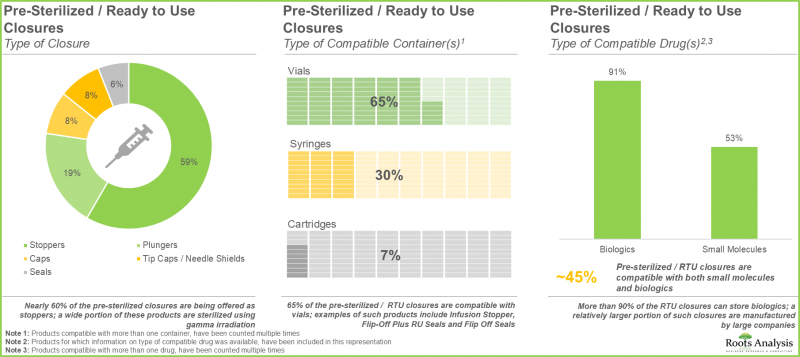
- 约45%的即用型容器以小瓶形式供应,其中大部分产品采用环氧乙烷(EtO)灭菌。
- 全球约有 85 家製造商生产用于无菌/即用型 (RTU) 容器的瓶盖,其中约 60% 的公司总部位于亚洲。
- 各种 RTU 瓶盖适用于各种容器类型,包括小瓶、注射器和药筒,为生物製剂和小分子药物提供最佳包装解决方案。
- 为了获得竞争优势,RTU 容器和瓶盖製造商目前正致力于将先进功能整合到其产品线中。
- 约有 40 家公司声称提供具有不同自由度的机器人,以提高各种製药製程的生产效率和灵活性。
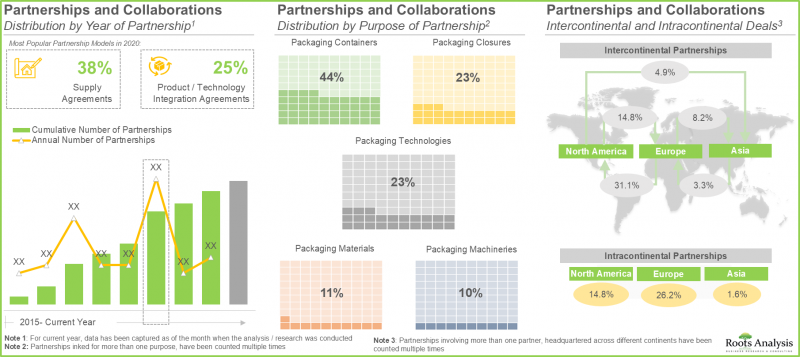
- 利害关係人对即用型(RTU)容器和封盖产业的日益关注也体现在合作活动中,过去两年签署的合作协议数量最多。
- 基于我们的智慧财产权,我们提供了一个独特的框架,用于评估进入预灭菌/即用型初级包装行业的潜在机会。利害关係人可以使用该框架。
- 预计在不久的将来,西林瓶将占无菌/即用型容器需求的约 55%。
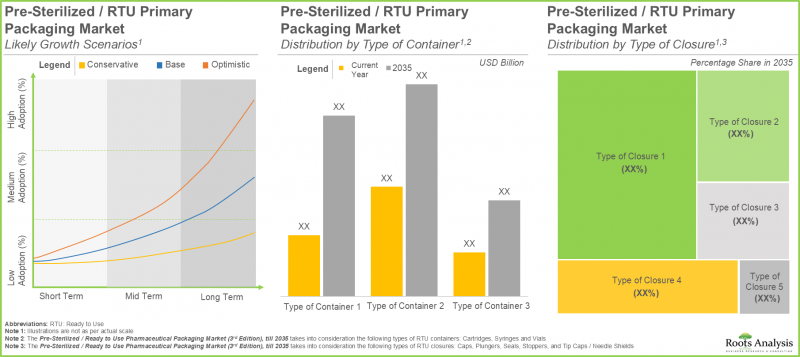
- 预计未来几年,即用型初级包装市场将以 9.2% 的复合年增长率成长,主要成长动力来自无菌/即用型容器的收入。
- 预计即用型药品包装的市场机会将分布在各种类型的初级包装系统、生产材料和主要地理区域。
- 由于对能够满足复杂药品需求的高级包装材料和技术的需求不断增长,该行业存在许多增长机会。
即用型药品包装市场:主要细分市场
无菌注射器细分市场在即用型药品包装市场中占最大占有率。
依容器类型划分,市场可分为无菌药筒、无菌注射器和无菌小瓶。目前,无菌注射器类别在整个即用型药品包装市场中占最大占有率。此外,预计在整个预测期内,无菌小瓶细分市场的即用型药品包装市场将展现出最大的成长潜力。
依封盖类型划分,预计瓶盖细分市场在预测期内将快速成长。
依封盖类型划分,市场可分为瓶盖、活塞、密封件、塞子和针头保护帽/针头保护套。目前,活塞细分市场在全球即用型药品包装市场中占最大占有率。然而,预计瓶盖细分市场在预测期内将以较高的复合年增长率成长。
依製造材料划分,塑胶细分市场在全球即用型药品包装市场中占最大占有率。
依製造材料划分,市场可分为铝、玻璃、塑胶和橡胶。目前,塑胶细分市场在全球即用型药品包装市场中占最大占有率。其次是玻璃包装领域,预计在预测期内将以较高的复合年增长率成长。
亚洲占最大的市场占有率。
依主要地区划分,市场分为北美、欧洲、亚洲、拉丁美洲、中东和北非以及世界其他地区。目前,亚洲在全球即用型(RTU)药品包装市场中处于领先地位,占最大的收入占有率。此外,预计亚洲市场未来将以更高的复合年增长率成长。
即用型药品包装市场代表性公司
- APG Pharma
- Aptar
- Daikyo Seiko
- Datwyler
- DWK Life Sciences
- 宁波正力药用包装
- SCHOTT
- Stevanto
- West Pharmaceutical Services
即用型药品包装市场:研究范围
- 市场规模及机会分析:本报告对全球即用型药品包装市场进行了详细分析,重点关注以下关键市场细分:[A] 容器类型,[B] 封盖类型,[C] 製造材料,以及 [D] 主要地区。
- 预灭菌/即用型容器市场概况:对于预灭菌/即用型容器,我们基于以下参数对灭菌/即用型容器市场概况:对于预灭菌/即用型容器,我们基于以下参数对灭菌/即用型容器製造商进行全面评估:[A] 容器类型,[B] 製造材料,[C] 容器颜色,[D] 适用药品类型,[E] 企业规模,[F] 包装,[G] 灭菌/即用型,[E] 企业规模,[F] 包装,[J] 灭菌市场的技术性,[H] 获得技术认证,[F] 包装,[G] 灭菌其他涂层和即用型试剂盒的供应情况。此外,我们也基于以下参数对灭菌/即用型容器製造商进行全面评估:[A] 成立年份,[B] 公司规模(员工人数),以及 [C] 总部所在地。
- 灭菌/即用型瓶盖市场概况:对于预灭菌/即用型瓶盖,我们基于多个相关参数提供全面评估,例如:[A] 瓶盖类型,[B] 製造材料,[C] 容器类型可用性,[D] 药品类型可用性,[E] 使用的灭菌技术,[F] 容器类型的包装,[G] 获得性市场的可用性。此外,我们也基于以下参数对预灭菌/即用型瓶盖生产商进行全面评估:[A] 成立年份,[B] 公司规模(员工人数),以及 [C] 总部所在地。
- 主要发现:基于以下相关参数,对预灭菌/即用型容器和瓶盖市场趋势进行深入分析:[A] 容器类型和企业规模,[B] 容器类型和包装形式,[C] 容器类型和製造材料,[D] 容器类型和容器颜色,[E] 容器类型和灭菌技术,[F] 容器製造和药物类型,[G] 类型,[F] 容器瓶盖类型和灭菌技术,[J] 瓶盖类型和可用成品形式,以及 [K] 瓶盖类型和相容药物类型。
- 预灭菌/即用型容器产品竞争分析:对各种预灭菌/即用型容器进行全面的竞争分析,考虑以下因素:[A] 公司实力和 [B] 产品竞争力。
- 灭菌/即用型瓶盖产品竞争分析:对各种灭菌/即用型瓶盖进行全面的竞争分析。具体而言,我们将考虑以下因素:[A] 公司实力和 [B] 产品竞争力。
- 公司简介:详细介绍提供灭菌/即用型容器和瓶盖的主要公司。重点关注:[A] 公司概况,[B] 财务资讯(如有),[C] 产品组合,以及 [D] 近期发展和未来展望。
- 合作伙伴关係:本报告基于多个参数,对药品即用包装市场中的利益相关者参与情况进行了深入分析,这些参数包括:[A] 合作年限,[B] 合作类型,[C] 合作伙伴类型,[D] 重点领域,[E] 包装系统类型,[F] 包装材料类型,[G] 主要参与者,以及 [H] 地区。
- 市场进入决策框架:一个全面的框架,用于识别未满足的需求,并协助企业进入预灭菌/即用型初级包装市场。此框架重点在于各种因素,例如:[A] 产品覆盖范围,[B] 市场活跃度,[C] 产品差异化,[D] 竞争地位,以及 [E] 生产复杂性。
- 需求分析:基于各种相关参数(例如初级包装系统类型和所用生产材料),对灭菌/即用型容器和封盖的当前和未来需求进行深入评估。
- 市场影响分析:对可能影响市场成长的各种因素进行全面分析,包括驱动因素、限制因素、机会和现有挑战。
- 案例研究:深入探讨机器人设备在製药生产和填充包装流程的应用。本文重点介绍了在这些流程中采用自动化/自动化技术所带来的各种优势。
目录
第一章:引言
第二章:研究方法
第三章:经济及其他专案特定考量
第四章:摘要整理
第五章:导论
- 章节概述
- 药品包装与填充
- 即用型(RTU)初级包装
- 结论
第六章:无菌/即用型容器:市场概况
- 章节概述
- 无菌/即用型容器:市场概况
- 无菌/即用型容器:生产商列表
章节7 无菌/即用型封盖:市场概况
- 章节概述
- 无菌/即用型封盖:市场概况
- 无菌/即用型封盖:製造商概况
第 8 章:关键洞察
- 章节概述
- 无菌/即用型容器:关键洞察
- 无菌/即用型封盖:关键洞察
第 9 章:产品竞争分析:无菌/即用型容器
- 章节概述
- 无菌/即用型容器:产品竞争分析
第 10 章:产品竞争分析:无菌/即用型瓶盖
- 章节概述
- 无菌/即用型包装:产品竞争分析
第 11 章 公司简介
- 章节概述
- APG 製药包装
- Aptar
- 大京精工
- Datwyler
- DWK 生命科学
- 宁波正力製药包装
- 肖特
- Stevanato
- West Pharmaceutical Services
第 12 章:合作与伙伴关係
- 章节概述
- 合作模式
- 无菌/即用型药品包装:合作与伙伴关係
第 13 章:市场进入决策架构
第十四章 需求分析
- 章节概述
- 研究范围与方法
- 依容器类型划分的全球无菌/即用型药品包装需求
- 以封盖类型划分的全球无菌/即用型药品包装需求
- 依製造材料划分的全球无菌/即用型药品包装需求
- 依主要地区划分的全球无菌/即用型药品包装需求
第十五章 市场影响分析:驱动因素、限制因素、机会与挑战
第十六章 全球无菌/即用型药品包装市场
第十七章 依容器类型划分的无菌/即用型药品包装市场
第十八章无菌/即用型药品包装市场
第19章:无菌/即用型药品包装市场(依製造材料划分)
第20章:无菌/即用型药品包装市场(依主要地区划分)
第21章:药品包装的新兴趋势
- 章节概述
- 新兴趋势
- 结论
第22章:案例研究:药品包装中的机器人技术
- 章节概述
- 机器人在製药业中的作用
- 为製药业提供机器人的公司
- 为药品包装提供整合机器人系统的公司
- 无菌技术
- AST
- 博世包装技术
- Dara Pharma
- Fedegari
- IMA
- Steriline
- Vanrx Pharmasystems
- 结论
第23章:结论
第24章:高阶主管见解
第25章附录1:表格资料
第26章附录2:公司与组织清单
Ready to Use Pharmaceutical Packaging Market: Overview
As per Roots Analysis, the global ready-to-use pharmaceutical packaging market is estimated to grow from USD 9.5 billion in the current year to USD 25.1 billion by 2035, at a CAGR of 9.7% during the forecast period, till 2035.
The market sizing and opportunity analysis has been segmented across the following parameters:
Type of Container
- Sterile Cartridges
- Sterile Syringes
- Sterile Vials
Type of Closure
- Caps
- Plungers
- Seals
- Stoppers
- Tip Caps / Needle Shields
Material of Fabrication
- Aluminum
- Glass
- Plastic
- Rubber
Key Geographical Regions
- North America
- Europe
- Asia
- Latin America
- Middle East and North Africa
- Rest of the World
Ready to Use Pharmaceutical Packaging Market: Growth and Trends
The safety and integrity of vaccines and medications are extremely crucial in the pharmaceutical industry. The primary packaging of these products is essential for maintaining their quality and shielding them from contaminants. Consequently, sterilization is essential in pharmaceutical production because it ensures product safety and enforces rigorous quality standards. This has resulted in the development of ready-to-use (RTU) / pre-sterilized containers and closures in pharmaceutical packaging. RTU vials, or ready-to-use vials, remove the necessity for internal sterilization methods, thereby minimizing contamination dangers and shortening production schedules
The expanding pipeline of pharmaceutical drug products has unintentionally resulted in a rise in the need for their related primary and secondary packaging solutions. Nonetheless, conventional primary packaging faces numerous issues, such as prolonged production schedules and strict regulations. This has led industry stakeholders to concentrate on pre-sterilized / (RTU) primary packaging options. The availability of pharmaceutical primary packaging has arisen as a viable alternative to traditional primary packaging, providing substantial benefits to optimize pharmaceutical fill / finish processes. These packaging elements reduce several stages in the complete fill finished production (primarily cleaning, sterilizing, and getting containers ready), thus enhancing operational efficiencies while adhering to current regulatory requirements. Additionally, RTU packaging systems undergo pre-treatment to eliminate pyrogens (agents that can cause fever when introduced into the body) to guarantee that the drug components comply with regulatory standards. Due to various additional advantages provided by medical polymers, RTU container-closure systems have steadily increased in popularity within the pharmaceutical sector.
Ready to Use Pharmaceutical Packaging Market: Key Insights
The report delves into the current state of the ready-to-use pharmaceutical packaging market and identifies potential growth opportunities within industry. Some key findings from the report include:
- Presently, over 95 pre-sterilized / ready-to-use containers are available or being developed by close to 50 manufacturers; a relatively larger proportion of these players were established before 2000.
- Nearly 45% of the ready-to-use containers are being offered as vials; majority of these products are sterilized using ethylene oxide (EtO).
- Around 85 pre-sterilized / RTU closures are being manufactured by players across the globe; ~60% of these firms are headquartered in Asia.
- A wide range of RTU closures are compatible with different types of containers, including vials, syringes and cartridges, providing optimal packaging solutions for biologics and small molecules.
- In pursuit of gaining a competitive edge, companies engaged in the manufacturing of RTU containers and closures are presently focusing on the integration of advanced features into their respective product offerings.
- Around 40 companies claim to offer robotic machinery, with different degrees of freedom, to enhance the productivity and flexibility of various pharmaceutical operations.
- The rising interest of stakeholders in the RTU containers and closures domain is also evident from the partnership activity; in fact, the maximum number of collaborations were inked in the last two years.
- Based on our intellectual capital, we have proposed a proprietary framework enabling stakeholders to evaluate the viability of entering the pre-sterilized / RTU primary packaging industry.
- Vials are expected to account for close to 55% of the demand for pre-sterilized / ready to use containers in the foreseen future.
- The RTU primary packaging market is anticipated to grow at a CAGR of 9.2% over the next few years, primarily driven by the revenues generated from pre-sterilized / ready to use containers.
- The projected opportunity of RTU pharmaceutical packaging is likely to be distributed across different types of primary packaging systems, materials of fabrication and key geographical regions.
- Several growth opportunities exist in the industry owing to the increasing demand for advanced packaging materials and technologies that can accommodate the requirements of complex drug products.
Ready to Use Pharmaceutical Packaging Market: Key Segments
Sterile Syringes Segment holds the Largest Share of the Ready to Use Pharmaceutical Packaging Market
In terms of the type of container, the market is segmented into sterile cartridges, sterile syringes and sterile vials. Currently, the sterile syringes category possesses the largest share of the overall ready-to-use pharmaceutical packaging market. Additionally, the market for ready-to-use pharmaceutical packaging in the sterile vials segment is predicted to exhibit the greatest growth potential throughout the forecast period.
By Type of Closure, Caps Segment is Expected to Grow at a Faster Pace During the Forecast Period
In terms of the type of closure, the market is segmented into caps, plungers, seals, stoppers and tip caps / needle shields. At present, the plungers segment holds the maximum share of the global ready-to-use pharmaceutical packaging market. However, the market for caps segment is expected to grow at a higher CAGR during the forecast period.
By Material of Fabrication, Plastic Segment Accounts for the Largest Share of the Global Ready to Use Pharmaceutical Packaging Market
In terms of the material of fabrication, the market is segmented into aluminum, glass, plastic and rubber. At present, the plastic segment captures the highest proportion of the global ready-to-use pharmaceutical packaging market. This is followed by the glass segment which is expected to grow at a higher CAGR during the forecast period.
Asia Accounts for the Largest Share of the Market
In terms of key geographical regions, the market is segmented into North America, Europe, Asia, Latin America, Middle East and North Africa, and rest of the world. Currently, Asia dominates the global ready-to-use pharmaceutical packaging market and accounts for the largest revenue share. Further, the market in Asia is likely to grow at a higher CAGR in the coming future.
Example Players in the Ready to Use Pharmaceutical Packaging Market
- APG Pharma
- Aptar
- Daikyo Seiko
- Datwyler
- DWK Life Sciences
- Ningbo Zhengli Pharmaceutical Packaging
- SCHOTT
- Stevanto
- West Pharmaceutical Services
Ready to Use Pharmaceutical Packaging Market: Research Coverage
- Market Sizing and Opportunity Analysis: The report features an in-depth analysis of the global ready-to-use pharmaceutical packaging market, focusing on key market segments, including [A] type of container, [B] type of closure, [C] material of fabrication and [D] key geographical regions.
- Pre-Sterilized / Ready to Use Containers Market Landscape: A comprehensive evaluation of the pre-sterilized / ready to use containers, based on several relevant parameters, such as [A] type of container, [B] material(s) of fabrication, [C] container color, [D] type of compatible drug(s), [E] scale of operation, [F] packaging format(s), [G] sterilization technique(s) used, [H] quality certification(s) obtained, [I] target market, [J] availability of additional coating and RTU kits. Additionally, a comprehensive evaluation of pre-sterilized / ready to use container manufacturers, based on parameters, such as [A] year of establishment, [B] company size (in terms of number of employees) and [C] location of headquarters.
- Pre-Sterilized / Ready to Use Closures Market Landscape: A comprehensive evaluation of the pre-sterilized / ready to use closures, based on several relevant parameters, such as [A] type of closure, [B] material(s) of fabrication, [C] type of compatible container(s), [D] type of compatible drug(s), [E] sterilization technique(s) used, [F] available finish format(s), [G] quality certification(s) obtained, [H] target market and [I] availability of additional coating. Additionally, a comprehensive evaluation of pre-sterilized / ready to use closure manufacturers, based on parameters, such as [A] year of establishment, [B] company size (in terms of number of employees) and [C] location of headquarters.
- Key Insights: In-depth analysis of market trends in the pre-sterilized / ready to use containers and closures domain, based on relevant parameters, such as [A] type of container and scale of operation, [B] type of container and packaging format(s), [C] type of container and material(s) of fabrication, [D] type of container and container color, [E] type of container and sterilization technique(s) used, [F] type of container and type of compatible drug(s), [G] material(s) of fabrication and sterilization technique(s) used, [H] type of closure and material(s) of fabrication, [I] type of closure and sterilization technique(s) used, [J] type of closure and available finish format(s), and [K] type of closure and type of compatible drug(s).
- Product Competitiveness Analysis for Pre-Sterilized / Ready to Use Containers: A comprehensive competitive analysis of various types of pre-sterilized / ready to use containers, examining factors, such as [A] company strength and [B] product competitiveness.
- Product Competitiveness Analysis for Pre-Sterilized / Ready to Use Closures: A comprehensive competitive analysis of various types of pre-sterilized / ready to use closures, examining factors, such as [A] company strength and [B] product competitiveness.
- Company Profiles: In-depth profiles of key players that are engaged in offering pre-sterilized / ready-to-use containers and closures, focusing on [A] overview of the company, [B] financial information (if available), [C] product portfolio and [D] recent developments and an informed future outlook.
- Partnerships and Collaborations: An insightful analysis of the deals inked by stakeholders in the ready-to-use pharmaceutical packaging market, based on several parameters, such as [A] year of partnership, [B] type of partnership. [C] type of partner, [D] focus area, [E] type of packaging system, [F] type of packaging material, [G] most active players and [H] geography.
- Market Entry Decision Making Framework: A comprehensive framework to identify the unmet needs and assist players in entering the pre-sterilized / RTU primary packaging domain, focusing on various factors, such as [A] product reach, [B] market activity, [C] product differentiation, [D] competitiveness and [E] manufacturing complexity.
- Demand Analysis: A detailed assessment of the current and future demand for pre-sterilized / ready to use containers and closures, based on various relevant parameters, such as [A] type of primary packaging system and [B] material of fabrication used.
- Market Impact Analysis: A thorough analysis of various factors, such as drivers, restraints, opportunities, and existing challenges that are likely to impact market growth.
- Case Study: A detailed discussion on the use of robotic machinery in pharmaceutical manufacturing and fill / finish operations, featuring the various advantages of employing automation / automated technologies in such processes.
Key Questions Answered in this Report
- How many companies are currently engaged in this market?
- Which are the leading companies in this market?
- What factors are likely to influence the evolution of this market?
- What is the current and future market size?
- What is the CAGR of this market?
- How is the current and future market opportunity likely to be distributed across key market segments?
Reasons to Buy this Report
- The report provides a comprehensive market analysis, offering detailed revenue projections of the overall market and its specific sub-segments. This information is valuable to both established market leaders and emerging entrants.
- Stakeholders can leverage the report to gain a deeper understanding of the competitive dynamics within the market. By analyzing the competitive landscape, businesses can make informed decisions to optimize their market positioning and develop effective go-to-market strategies.
- The report offers stakeholders a comprehensive overview of the market, including key drivers, barriers, opportunities, and challenges. This information empowers stakeholders to stay abreast of market trends and make data-driven decisions to capitalize on growth prospects.
Additional Benefits
- Complimentary PPT Insights Packs
- Complimentary Excel Data Packs for all Analytical Modules in the Report
- 15% Free Content Customization
- Detailed Report Walkthrough Session with Research Team
- Free Updated report if the report is 6-12 months old or older
TABLE OF CONTENTS
1. PREFACE
- 1.1. Introduction
- 1.2. Key Market Insights
- 1.3. Project Objectives
- 1.4. Scope of the Report
- 1.5. Inclusions and Exclusions
- 1.6. Key Questions Answered
- 1.7. Chapter Outlines
2. RESEARCH METHODOLOGY
- 2.1. Chapter Overview
- 2.2. Research Assumptions
- 2.3. Project Methodology
- 2.4. Forecast Methodology
- 2.5. Robust Quality Control
- 2.7. Key Considerations
- 2.7.1. Demographics
- 2.7.2. Economic Factors
- 2.7.3. Government Regulations
- 2.7.4. Supply Chain
- 2.7.5. COVID Impact / Related Factors
- 2.7.6. Market Access
- 2.7.7. Healthcare Policies
- 2.7.8. Industry Consolidation
- 2.7.9. Key Market Segmentations
3. ECONOMIC AND OTHER PROJECT SPECIFIC CONSIDERATIONS
- 3.1. Chapter Overview
- 3.2. Market Dynamics
- 3.2.1. Time Period
- 3.2.1.1. Historical Trends
- 3.2.1.2. Current and Future Estimates
- 3.2.2. Currency Coverage
- 3.2.2.1. Overview of Major Currencies Affecting the Market
- 3.2.2.2. Impact of Currency Fluctuations on the Industry
- 3.2.3. Foreign Exchange Impact
- 3.2.3.1. Evaluation of Foreign Exchange Rates and Their Impact on Market
- 3.2.3.2. Strategies for Mitigating Foreign Exchange Risk
- 3.2.4. Recession
- 3.2.4.1. Historical Analysis of Past Recessions and Lessons Learnt
- 3.2.4.2. Assessment of Current Economic Conditions and Potential Impact on the Market
- 3.2.5. Inflation
- 3.2.5.1. Measurement and Analysis of Inflationary Pressures in the Economy
- 3.2.5.2. Potential Impact of Inflation on the Market Evolution
- 3.2.1. Time Period
4. EXECUTIVE SUMMARY
- 4.1. Chapter Overview
5. INTRODUCTION
- 5.1. Chapter Overview
- 5.2. Pharmaceutical Packaging and Filling
- 5.2.1. Need for Pharmaceutical Packaging
- 5.2.2. Types of Pharmaceutical Packaging
- 5.2.3. Limitations of Traditional Primary Packaging
- 5.2.4. Innovation in Pharmaceutical Packaging
- 5.3. Ready to Use Primary Packaging
- 5.3.1. Sterilization Techniques used in Primary Packaging
- 5.3.2. Advantages of Ready to Use Primary Packaging
- 5.3.3. Cost Saving Opportunities in Ready to Use Primary Packaging
- 5.3.4. Current Demand for Ready to Use Primary Packaging
- 5.4. Concluding Remarks
6. PRE-STERILIZED / READY TO USE CONTAINERS: MARKET LANDSCAPE
- 6.1. Chapter Overview
- 6.2. Pre-Sterilized / Ready to Use Containers: Overall Market Landscape
- 6.2.1. Analysis by Type of Container
- 6.2.2. Analysis by Material(s) of Fabrication
- 6.2.3. Analysis by Container Color
- 6.2.4. Analysis by Type of Compatible Drug(s)
- 6.2.5. Analysis by Scale of Operation
- 6.2.6. Analysis by Packaging Format(s)
- 6.2.7. Analysis by Sterilization Technique(s) Used
- 6.2.8. Analysis by Quality Certification(s) Obtained
- 6.2.9. Analysis by Target Market
- 6.2.10. Analysis by Availability of Additional Coating
- 6.2.11. Analysis by Availability of RTU Kits
- 6.3. Pre-Sterilized / Ready to Use Containers: Manufacturer Landscape
- 6.3.1. Analysis by Year of Establishment
- 6.3.2. Analysis by Company Size
- 6.3.3. Analysis by Location of Headquarters
- 6.3.4. Leading Manufacturers: Analysis by Number of Products
7. PRE-STERILIZED / READY TO USE CLOSURES: MARKET LANDSCAPE
- 7.1. Chapter Overview
- 7.2. Pre-Sterilized / Ready to Use Closures: Overall Market Landscape
- 7.2.1. Analysis by Type of Closure
- 7.2.2. Analysis by Material(s) of Fabrication
- 7.2.3. Analysis by Type of Compatible Container(s)
- 7.2.4. Analysis by Type of Compatible Drug(s)
- 7.2.5. Analysis by Sterilization Technique(s) Used
- 7.2.6. Analysis by Available Finish Format(s)
- 7.2.7. Analysis by Quality Certification(s) Obtained
- 7.2.8. Analysis by Target Market
- 7.2.9. Analysis by Availability of Additional Coating
- 7.3. Pre-Sterilized / Ready to Use Closures: Manufacturer Landscape
- 7.3.1. Analysis by Year of Establishment
- 7.3.2. Analysis by Company Size
- 7.3.3. Analysis by Location of Headquarters
- 7.3.4. Leading Manufacturers: Analysis by Number of Products
8. KEY INSIGHTS
- 8.1. Chapter Overview
- 8.2. Pre-Sterilized / Ready to Use Containers: Key Insights
- 8.2.1. Analysis by Type of Container and Scale of Operation
- 8.2.2. Analysis by Type of Container and Packaging Format(s)
- 8.2.3. Analysis by Type of Container and Material(s) of Fabrication
- 8.2.4. Analysis by Type of Container and Container Color
- 8.2.5. Analysis by Type of Container and Sterilization Technique(s) Used
- 8.2.6. Analysis by Type of Container and Type of Compatible Drug(s)
- 8.2.7. Analysis by Material(s) of Fabrication and Sterilization Technique(s) Used
- 8.3. Pre-Sterilized / Ready to Use Closures: Key Insights
- 8.3.1. Analysis by Type of Closure and Material(s) of Fabrication
- 8.3.2. Analysis by Type of Closure and Sterilization Technique(s) Used
- 8.3.3. Analysis by Type of Closure and Available Finish Format(s)
- 8.3.4. Analysis by Type of Closure and Type of Compatible Drug(s)
9. PRODUCT COMPETITIVENESS ANALYSIS: PRE-STERILIZED / READY TO USE CONTAINERS
- 9.1. Chapter Overview
- 9.2. Pre-Sterilized / Ready to Use Containers: Product Competitiveness Analysis
- 9.2.1. Assumptions and Key Parameters
- 9.2.2. Methodology
- 9.2.3. Product Competitiveness Analysis: Vials
- 9.2.4. Product Competitiveness Analysis: Syringes
- 9.2.5. Product Competitiveness Analysis: Bags
- 9.2.6. Product Competitiveness Analysis: Cartridges
10. PRODUCT COMPETITIVENESS ANALYSIS: PRE-STERILIZED / READY TO USE CLOSURES
- 10.1. Chapter Overview
- 10.2. Pre-Sterilized / Ready to Use Closures: Product Competitiveness Analysis
- 10.2.1. Assumptions and Key Parameters
- 10.2.2. Methodology
- 10.2.3. Product Competitiveness Analysis: Stoppers
- 10.2.4. Product Competitiveness Analysis: Plungers
- 10.2.5. Product Competitiveness Analysis: Caps
- 10.2.6. Product Competitiveness Analysis: Tip Caps / Needle Shields
- 10.2.7. Product Competitiveness Analysis: Seals
11. COMPANY PROFILES
- 11.1. Chapter Overview
- 11.2. APG Pharma Packaging
- 11.2.1. Company Overview
- 11.2.2. Product Portfolio
- 11.2.2.1. Ready to Use Closures
- 11.2.3. Recent Developments and Future Outlook
- 11.3. Aptar
- 11.3.1. Company Overview
- 11.3.2. Financial Information
- 11.3.3. Product Portfolio
- 11.3.3.1. Ready to Use Closures
- 11.3.4. Recent Developments and Future Outlook
- 11.4. Daikyo Seiko
- 11.4.1. Company Overview
- 11.4.2. Product Portfolio
- 11.4.2.1. Ready to Use Containers
- 11.4.2.2. Ready to Use Closures
- 11.4.3. Recent Developments and Future Outlook
- 11.5. Datwyler
- 11.5.1. Company Overview
- 11.5.2. Financial Information
- 11.5.3. Product Portfolio
- 11.5.3.1. Ready to Use Closures
- 11.5.4. Recent Developments and Future Outlook
- 11.6. DWK Life Sciences
- 11.6.1. Company Overview
- 11.6.2. Product Portfolio
- 11.6.2.1. Ready to Use Containers
- 11.6.2.2. Ready to Use Closures
- 11.6.3. Recent Developments and Future Outlook
- 11.7. Ningbo Zhengli Pharmaceutical Packaging
- 11.7.1. Company Overview
- 11.7.2. Product Portfolio
- 11.7.2.1. Ready to Use Containers
- 11.7.3. Recent Developments and Future Outlook
- 11.8. SCHOTT
- 11.8.1. Company Overview
- 11.8.2. Financial Information
- 11.8.3. Product Portfolio
- 11.8.3.1. Ready to Use Containers
- 11.8.3.2. Ready to Use Closures
- 11.8.4. Recent Developments and Future Outlook
- 11.9. Stevanato
- 11.9.1. Company Overview
- 11.9.2. Product Portfolio
- 11.9.2.1. Ready to Use Containers
- 11.9.2.2. Ready to Use Closures
- 11.9.3. Recent Developments and Future Outlook
- 11.10. West Pharmaceutical Services
- 11.10.1. Company Overview
- 11.10.2. Financial Information
- 11.10.3. Product Portfolio
- 11.10.3.1. Ready to Use Containers
- 11.10.3.2. Ready to Use Closures
- 11.10.4. Recent Developments and Future Outlook
12. PARTNERSHIPS AND COLLABORATIONS
- 12.1. Chapter Overview
- 12.2. Partnership Models
- 12.3. Pre-Sterilized / Ready to Use Pharmaceutical Packaging: Partnerships and Collaborations
- 12.3.1. Analysis by Year of Partnership
- 12.3.2. Analysis by Type of Partnership
- 12.3.3. Analysis by Year and Type of Partnership
- 12.3.4. Analysis by Type of Partner
- 12.3.5. Analysis by Year of Partnership and Type of Partner
- 12.3.6. Analysis by Type of Partnership and Type of Partner
- 12.3.7. Analysis by Purpose of Partnership
- 12.3.8. Analysis by Type of Packaging System
- 12.3.9. Analysis by Type of Packaging Material
- 12.3.10. Most Active Players: Analysis by Number of Partnerships
- 12.3.11. Analysis by Geography
- 12.3.11.1. Intercontinental and Intracontinental Deals
13. MARKET ENTRY DECISION MAKING FRAMEWORK
- 13.1. Chapter Overview
- 13.2. Key Assumptions and Methodology
- 13.3. Key Parameters Impacting Market Entry Decision Making
- 13.3.1. Product Reach
- 13.3.2. Product Differentiation
- 13.3.3. Market Activity
- 13.3.4. Product Competitiveness
- 13.3.5. Manufacturing Complexity
- 13.4. Concluding Remarks
14. DEMAND ANALYSIS
- 14.1. Chapter Overview
- 14.2. Scope and Methodology
- 14.3. Global Demand for Pre-Sterilized / Ready to Use Pharmaceutical Packaging: Distribution by Type of Container
- 14.3.1. Pre-Sterilized / Ready to Use Vials, Historical Trends (Since 2018) and Forecasted Estimates (Till 2035)
- 14.3.2. Pre-Sterilized / Ready to Use Syringes, Historical Trends (Since 2018) and Forecasted Estimates (Till 2035)
- 14.3.3. Pre-Sterilized / Ready to Use Cartridges, Historical Trends (Since 2018) and Forecasted Estimates (Till 2035)
- 14.4. Global Demand for Pre-Sterilized / Ready to Use Pharmaceutical Packaging: Distribution by Type of Closure
- 14.4.1. Pre-Sterilized / Ready to Use Caps, Historical Trends (Since 2018) and Forecasted Estimates (Till 2035)
- 14.4.2. Pre-Sterilized / Ready to Use Plungers, Historical Trends (Since 2018) and Forecasted Estimates (Till 2035)
- 14.4.3. Pre-Sterilized / Ready to Use Seals, Historical Trends (Since 2018) and Forecasted Estimates (Till 2035)
- 14.4.4. Pre-Sterilized / Ready to Use Stoppers, Historical Trends (Since 2018) and Forecasted Estimates (Till 2035)
- 14.4.5. Pre-Sterilized / Ready to Use Tip Caps / Needle Shields, Historical Trends (Since 2018) and Forecasted Estimates (Till 2035)
- 14.5. Global Demand for Pre-Sterilized / Ready to Use Pharmaceutical Packaging: Distribution by Material of Fabrication
- 14.5.1. Pre-Sterilized / Ready to Use Aluminum Containers and Closures, Historical Trends (Since 2018) and Forecasted Estimates (Till 2035)
- 14.5.2. Pre-Sterilized / Ready to Use Glass Containers and Closures, Historical Trends (Since 2018) and Forecasted Estimates (Till 2035)
- 14.5.3. Pre-Sterilized / Ready to Use Plastic Containers and Closures, Historical Trends (Since 2018) and Forecasted Estimates (Till 2035)
- 14.5.4. Pre-Sterilized / Ready to Use Rubber Containers and Closures, Historical Trends (Since 2018) and Forecasted Estimates (Till 2035)
- 14.6. Global Demand for Pre-Sterilized / Ready to Use Pharmaceutical Packaging: Distribution by Key Geographical Region
- 14.6.1. Pre-Sterilized / Ready to Use Pharmaceutical Packaging in North America, Historical Trends (Since 2018) and Forecasted Estimates (Till 2035)
- 14.6.2. Pre-Sterilized / Ready to Use Pharmaceutical Packaging in Europe, Historical Trends (Since 2018) and Forecasted Estimates (Till 2035)
- 14.6.3. Pre-Sterilized / Ready to Use Pharmaceutical Packaging in Asia, Historical Trends (Since 2018) and Forecasted Estimates (Till 2035)
- 14.6.4. Pre-Sterilized / Ready to Use Pharmaceutical Packaging in Latin America, Historical Trends (Since 2018) and Forecasted Estimates (Till 2035)
- 14.6.5. Pre-Sterilized / Ready to Use Pharmaceutical Packaging in Middle East and North Africa, Historical Trends (Since 2018) and Forecasted Estimates (Till 2035)
- 14.6.6. Pre-Sterilized / Ready to Use Pharmaceutical Packaging in Rest of the World, Historical Trends (Since 2018) and Forecasted Estimates (Till 2035)
15. MARKET IMPACT ANALYSIS: DRIVERS, RESTRAINTS, OPPORTUNITIES AND CHALLENGES
- 15.1. Chapter Overview
- 15.2. Market Drivers
- 15.3. Market Restraints
- 15.4. Market Opportunities
- 15.5. Market Challenges
- 15.6. Conclusion
16. GLOBAL PRE-STERILIZED / READY TO USE PHARMACEUTICAL PACKAGING MARKET
- 16.1. Chapter Overview
- 16.2. Assumptions and Methodology
- 16.3. Global Pre-Sterilized / Ready to Use Pharmaceutical Packaging Market, Historical Trends (Since 2018) and Forecasted Estimates (Till 2035)
- 16.3.1. Scenario Analysis
- 16.3.1.1. Conservative Scenario
- 16.3.1.2. Optimistic Scenario
- 16.3.1. Scenario Analysis
- 16.4. Key Market Segmentations
- 16.5. Dynamic Dashboard
17. PRE-STERILIZED / READY TO USE PHARMACEUTICAL PACKAGING MARKET, BY TYPE OF CONTAINER
- 17.1. Chapter Overview
- 17.2. Key Assumptions and Methodology
- 17.3. Pre-Sterilized / Ready to use Pharmaceutical Packaging Market: Distribution by Type of Container
- 17.3.1. Vials: Historical Trends (Since 2018) and Forecasted Estimates (Till 2035)
- 17.3.2. Syringes: Historical Trends (Since 2018) and Forecasted Estimates (Till 2035)
- 17.3.3. Cartridges: Historical Trends (Since 2018) and Forecasted Estimates (Till 2035)
- 17.4. Data Triangulation and Validation
18. PRE-STERILIZED / READY TO USE PHARMACEUTICAL PACKAGING MARKET, BY TYPE OF CLOSURE
- 18.1. Chapter Overview
- 18.2. Key Assumptions and Methodology
- 18.3. Pre-Sterilized / Ready to Use Pharmaceutical Packaging Market: Distribution by Type of Closure
- 18.3.1. Caps: Historical Trends (Since 2018) and Forecasted Estimates (Till 2035)
- 18.3.2. Plungers: Historical Trends (Since 2018) and Forecasted Estimates (Till 2035)
- 18.3.3. Seals: Historical Trends (Since 2018) and Forecasted Estimates (Till 2035)
- 18.3.4. Stoppers: Historical Trends (Since 2018) and Forecasted Estimates (Till 2035)
- 18.3.5. Tip Caps / Needle Shields: Historical Trends (Since 2018) and Forecasted Estimates (Till 2035)
- 18.4. Data Triangulation and Validation
19. PRE-STERILIZED / READY TO USE PHARMACEUTICAL PACKAGING MARKET, BY MATERIAL OF FABRICATION
- 19.1. Chapter Overview
- 19.2. Key Assumptions and Methodology
- 19.3. Aluminum Containers and Closures: Historical Trends (Since 2018) and Forecasted Estimates (Till 2035)
- 19.4. Glass Containers and Closures: Historical Trends (Since 2018) and Forecasted Estimates (Till 2035)
- 19.5. Plastic Containers and Closures: Historical Trends (Since 2018) and Forecasted Estimates (Till 2035)
- 19.6. Rubber Containers and Closures: Historical Trends (Since 2018) and Forecasted Estimates (Till 2035)
- 19.7. Data Triangulation and Validation
20. PRE-STERILIZED / READY TO USE PHARMACEUTICAL PACKAGING MARKET, BY KEY GEOGRAPHICAL REGION
- 20.1. Chapter Overview
- 20.2. Key Assumptions and Methodology
- 20.3. North America: Historical Trends (Since 2018) and Forecasted Estimates (Till 2035)
- 20.3.1. Pre-Sterilized / Ready to Use Pharmaceutical Packaging Market for Containers
- 20.3.2. Pre-Sterilized / Ready to Use Pharmaceutical Packaging Market for Closures
- 20.4. Europe: Historical Trends (Since 2018) and Forecasted Estimates (Till 2035)
- 20.4.1. Pre-Sterilized / Ready to Use Pharmaceutical Packaging Market for Containers
- 20.4.2. Pre-Sterilized / Ready to Use Pharmaceutical Packaging Market for Closures
- 20.5. Asia: Historical Trends (Since 2018) and Forecasted Estimates (Till 2035)
- 20.5.1. Pre-Sterilized / Ready to Use Pharmaceutical Packaging Market for Containers
- 20.5.2. Pre-Sterilized / Ready to Use Pharmaceutical Packaging Market for Closures
- 20.6. Latin America: Historical Trends (Since 2018) and Forecasted Estimates (Till 2035)
- 20.6.1. Pre-Sterilized / Ready to Use Pharmaceutical Packaging Market for Containers
- 20.6.2. Pre-Sterilized / Ready to Use Pharmaceutical Packaging Market for Closures
- 20.7. Middle East and North Africa: Historical Trends (Since 2018) and Forecasted Estimates (Till 2035)
- 20.7.1. Pre-Sterilized / Ready to Use Pharmaceutical Packaging Market for Containers
- 20.7.2. Pre-Sterilized / Ready to Use Pharmaceutical Packaging Market for Closures
- 20.8. Rest of the World: Historical Trends (Since 2018) and Forecasted Estimates (Till 2035)
- 20.8.1. Pre-Sterilized / Ready to Use Pharmaceutical Packaging Market for Containers
- 20.8.2. Pre-Sterilized / Ready to Use Pharmaceutical Packaging Market for Closures
- 20.9. Data Triangulation and Validation
21. EMERGING TRENDS IN PHARMACEUTICAL PACKAGING
- 21.1. Chapter Overview
- 21.2. Emerging Trends
- 21.2.1. Preference for Self-Medication of Drugs, Through the Use of Modern Drug Delivery Devices
- 21.2.2. Development of Improved Packaging Components and Efforts to Optimize Manufacturing Costs
- 21.2.3. Availability of Modular Facilities
- 21.2.4. Growing Demand and Preference for Personalized Therapies
- 21.2.5. Rise in Provisions for Automating Fill / Finish Operations
- 21.2.6. Surge in Partnership Activity
- 21.2.7. Increase in Initiatives Undertaken by Industry Stakeholders in Developing Regions
- 21.3. Concluding Remarks
22. CASE STUDY: ROBOTICS IN PHARMACEUTICAL PACKAGING
- 22.1. Chapter Overview
- 22.2. Role of Robotics in Pharmaceutical Industry
- 22.2.1. Key Considerations for Selecting a Robotic System
- 22.2.2. Advantages of Robotic Systems
- 22.2.3. Disadvantages of Robotic Systems
- 22.3. Companies Providing Robots for Use in Pharmaceutical Industry
- 22.4. Companies Providing Equipment Integrated Robotic Systems in Pharmaceutical Packaging
- 22.4.1. Aseptic Technologies
- 22.4.1.1. Crystal L1 Robot Line
- 22.4.1.2. Crystal SL1 Robot Line
- 22.4.2. AST
- 22.4.2.1. ASEPTiCELL
- 22.4.2.2. GENiSYS R
- 22.4.2.3. GENiSYS C
- 22.4.2.4. GENiSYS Lab
- 22.4.3. Bosch Packaging Technology
- 22.4.3.1. ATO
- 22.4.4. Dara Pharma
- 22.4.4.1. SYX-E Cartridge + RABS
- 22.4.5. Fedegari
- 22.4.5.1. Fedegari Isolator
- 22.4.6. IMA
- 22.4.6.1. INJECTA
- 22.4.6.2. STERI LIF3
- 22.4.7. Steriline
- 22.4.7.1. Robotic Nest Filling Machine (RNFM)
- 22.4.7.2. Robotic Vial Filling Machine (RVFM)
- 22.4.7.3. Robotic Vial Capping Machine (RVCM)
- 22.4.8. Vanrx Pharmasystems
- 22.4.8.1. Microcell Vial Filler
- 22.4.8.2. SA25 Aseptic Filling Workcell
- 22.4.1. Aseptic Technologies
- 22.5. Concluding Remarks
23. CONCLUSION
- 23.1. Chapter Overview
24. EXECUTIVE INSIGHTS
- 24.1. Chapter Overview
- 24.2. Company A
- 24.2.1. Company Snapshot
- 24.2.2. Interview Transcript: Business Development Specialist
- 24.3. Company B
- 24.3.1. Company Snapshot
- 24.3.2. Interview Transcript: Founder and Managing Director
- 24.4. Company C
- 24.4.1. Company Snapshot
- 24.4.2. Interview Transcript: Business Development and Technology Director
- 24.5. Company D
- 24.5.1. Company Snapshot
- 24.5.2. Interview Transcript: Former Facilitator
- 24.6. Company E
- 24.6.1. Company Snapshot
- 24.6.2. Interview Transcript: Former Project Manager of Business Development
25. APPENDIX 1: TABULATED DATA
26. APPENDIX 2: LIST OF COMPANIES AND ORGANIZATION
List of Tables
- Table 5.1 Compatibility of Polymers with Ethylene Oxide Sterilization
- Table 5.2 Advantages and Disadvantages of Different Sterilization Techniques
- Table 6.1 Pre-Sterilized / Ready to Use Containers: Information on Type of Container, Material(s) of Fabrication, Container Color and Type of Compatible Drug(s)
- Table 6.2 Pre-Sterilized / Ready to Use Containers: Information on Scale of Operation, Packaging Format(s) and Sterilization Technique(s) Used
- Table 6.3 Pre-Sterilized / Ready to Use Containers: Information on Quality Certification(s) Obtained and Target Market
- Table 6.4 Pre-Sterilized / Ready to Use Containers: Information on Availability of Additional Coating and RTU Kits
- Table 6.5 Pre-Sterilized / Ready to Use Containers: List of Manufacturers
- Table 7.1 Pre-Sterilized / Ready to Use Closures: Information on Type of Closure, Material(s) of Fabrication, Type of Compatible Container(s), Type of Compatible Drug(s) and Sterilization Technique(s) Used
- Table 7.2 Pre-Sterilized / Ready to Use Closures: Information on Available Finish Format(s), Quality Certification(s) Obtained and Target Market
- Table 7.3 Pre-Sterilized / Ready to Use Closures: Information on Availability of Additional Coating
- Table 7.4 Pre-Sterilized / Ready to Use Closures: List of Manufacturers
- Table 11.1 Leading Ready to Use Container and Closure Manufacturers
- Table 11.2 APG Pharma Packaging: Company Snapshot
- Table 11.3 APG Pharma Packaging: Ready to Use Closures
- Table 11.4 Aptar: Company Snapshot
- Table 11.5 Aptar: Ready to Use Closures
- Table 11.6 Aptar: Recent Developments and Future Outlook
- Table 11.7 Daikyo Seiko: Company Snapshot
- Table 11.8 Daikyo Seiko: Ready to Use Containers
- Table 11.9 Daikyo Seiko: Ready to Use Closures
- Table 11.10 Datwyler: Company Snapshot
- Table 11.11 Datwyler: Ready to Use Closures
- Table 11.12 Datwyler: Recent Developments and Future Outlook
- Table 11.13 DWK Life Sciences: Company Snapshot
- Table 11.14 DWK Life Sciences: Ready to Use Containers
- Table 11.15 DWK Life Sciences: Ready to Use Closures
- Table 11.16 DWK Life Sciences: Recent Developments and Future Outlook
- Table 11.17 Ningbo Zhengli Pharmaceutical Packaging: Company Snapshot
- Table 11.18 Ningbo Zhengli Pharmaceutical Packaging: Ready to Use Containers
- Table 11.19 Ningbo Zhengli Pharmaceutical Packaging: Recent Developments and Future Outlook
- Table 11.20 SCHOTT: Company Snapshot
- Table 11.21 SCHOTT: Ready to Use Containers
- Table 11.22 SCHOTT: Ready to Use Closures
- Table 11.23 SCHOTT: Recent Developments and Future Outlook
- Table 11.24 Stevanato: Company Snapshot
- Table 11.25 Stevanato: Ready to Use Containers
- Table 11.26 Stevanato: Ready to Use Closures
- Table 11.27 Stevanato: Recent Developments and Future Outlook
- Table 11.28 West Pharmaceutical Services: Company Snapshot
- Table 11.29 West Pharmaceutical Services: Ready to Use Containers
- Table 11.30 West Pharmaceutical Services: Ready to Use Closures
- Table 11.31 West Pharmaceutical Services: Recent Developments and Future Outlook
- Table 12.1 Pre-Sterilized / Ready to Use Containers and Closures: List of Partnerships and Collaborations, Since 2015
- Table 14.1 Global Demand for Pre-Sterilized / Ready to Use Pharmaceutical Packaging: Distribution by Type of Container
- Table 14.2 Global Demand for Pre-Sterilized / Ready to Use Pharmaceutical Packaging: Distribution by Type of Closure
- Table 14.3 Global Demand for Pre-Sterilized / Ready to Use Pharmaceutical Packaging: Distribution by Material of Fabrication
- Table 14.4 Global Demand for Pre-Sterilized / Ready to Use Pharmaceutical Packaging: Distribution by Key Geographical Regions
- Table 16.1 Tiered Pricing Structure for Pre-Sterilized / RTU Pharmaceutical Packaging across Different Geographies
- Table 22.1 List of Pharmaceutical Robotics Manufacturers
- Table 22.2 Aseptic Technologies: Company Overview
- Table 22.3 Aseptic Technologies: Key Specifications of Crystal L1 Robot Line
- Table 22.4 Aseptic Technologies: Key Specifications of Crystal SL1 Robot Line
- Table 22.5 AST: Company Overview
- Table 22.6 AST: Key Specifications of ASEPTiCell
- Table 22.7 AST: Key Specifications of GENiSYS R
- Table 22.8 AST: Key Specifications of GENiSYS C
- Table 22.9 AST: Key Specifications of GENiSYS Lab
- Table 22.10 Bosch Packaging Technology: Company Overview
- Table 22.11 Bosch Packaging Technology: Key Specifications of ATO
- Table 22.12 Dara Pharma: Company Overview
- Table 22.13 Dara Pharma: Key Specifications of SYX-E Cartridge + RABS
- Table 22.14 Fedegari: Company Overview
- Table 22.15 Fedegari: Key Specifications of Fedegari Isolator
- Table 22.16 IMA: Company Overview
- Table 22.17 IMA: Key Specifications of INJECTA
- Table 22.18 IMA: Key Specifications of STERI LIF3
- Table 22.19 Steriline: Company Overview
- Table 22.20 Steriline: Key Specifications of Robotic Nest Filling Machine
- Table 22.21 Steriline: Key Specifications of Robotic Vial Filling Machine
- Table 22.22 Steriline: Key Specifications of Robotic Vial Capping Machine)
- Table 22.23 Vanrx Pharmasystems: Company Overview
- Table 22.24 Vanrx Pharmasystems: Key Specifications of Microcell Vial Filler
- Table 22.25 Key Specifications of SA25 Aseptic Filling Workcell
- Table 24.1 Jinan Youlyy Industrial: Company Snapshot
- Table 24.2 Sagar Rubber: Company Snapshot
- Table 24.3 Aseptic Technologies: Company Snapshot
- Table 24.4 BioPhorum Operations: Company Snapshot
- Table 24.5 PYRAMID Laboratories: Company Snapshot
- Table 25.1 Pre-Sterilized / Ready to Use Containers: Distribution by Type of Container
- Table 25.2 Pre-Sterilized / Ready to Use Containers: Distribution by Material(s) of Fabrication
- Table 25.3 Pre-Sterilized / Ready to Use Containers: Distribution by Container Color
- Table 25.4 Pre-Sterilized / Ready to Use Containers: Distribution by Type of Compatible Drug(s)
- Table 25.5 Pre-Sterilized / Ready to Use Containers: Distribution by Scale of Operation
- Table 25.6 Pre-Sterilized / Ready to Use Containers: Distribution by Packaging Format(s)
- Table 25.7 Pre-Sterilized / Ready to Use Containers: Distribution by Sterilization Technique(s) Used
- Table 25.8 Pre-Sterilized / Ready to Use Containers: Distribution by Quality Certification(s) Obtained
- Table 25.9 Pre-Sterilized / Ready to Use Containers: Distribution by Target Market
- Table 25.10 Pre-Sterilized / Ready to Use Containers: Distribution by Availability of Additional Coating
- Table 25.11 Pre-Sterilized / Ready to Use Containers: Distribution by Availability of RTU Kits
- Table 25.12 Pre-Sterilized / Ready to Use Container Manufacturers: Distribution by Year of Establishment
- Table 25.13 Pre-Sterilized / Ready to Use Container Manufacturers: Distribution by Company Size
- Table 25.14 Pre-Sterilized / Ready to Use Container Manufacturers: Distribution by Location of Headquarters (Region-wise)
- Table 25.15 Pre-Sterilized / Ready to Use Container Manufacturers: Distribution by Location of Headquarters (Country-wise)
- Table 25.16 Leading Manufacturers: Distribution by Number of Products
- Table 25.17 Pre-Sterilized / Ready to Use Closures: Distribution by Type of Closure
- Table 25.18 Pre-Sterilized / Ready to Use Closures: Distribution by Material(s) of Fabrication
- Table 25.19 Pre-Sterilized / Ready to Use Closures: Distribution by Type of Compatible Container(s)
- Table 25.20 Pre-Sterilized / Ready to Use Closures: Distribution by Type of Compatible Drug(s)
- Table 25.21 Pre-Sterilized / Ready to Use Closures: Distribution by Sterilization Technique(s) Used
- Table 25.22 Pre-Sterilized / Ready to Use Closures: Distribution by Available Finish Format(s)
- Table 25.23 Pre-Sterilized / Ready to Use Closures: Distribution by Quality Certification(s) Obtained
- Table 25.24 Pre-Sterilized / Ready to Use Closures: Distribution by Target Market
- Table 25.25 Pre-Sterilized / Ready to Use Closures: Distribution by Availability of Additional Coating
- Table 25.26 Pre-Sterilized / Ready to Use Closure Manufacturers: Distribution by Year of Establishment
- Table 25.27 Pre-Sterilized / Ready to Use Closure Manufacturers: Distribution by Company Size
- Table 25.28 Pre-Sterilized / Ready to Use Closure Manufacturers: Distribution by Location of Headquarters (Region-wise)
- Table 25.29 Pre-Sterilized / Ready to Use Closure Manufacturers: Distribution by Location of Headquarters (Country-wise)
- Table 25.30 Leading Manufacturers: Distribution by Number of Products
- Table 25.31 Key Insights: Distribution by Type of Container and Scale of Operation
- Table 25.32 Key Insights: Distribution by Type of Container and Packaging Format(s)
- Table 25.33 Key Insights: Distribution by Type of Container and Material(s) of Fabrication
- Table 25.34 Key Insights: Distribution by Type of Container and Container Color
- Table 25.35 Key Insights: Distribution by Type of Container and Sterilization Technique(s) Used
- Table 25.36 Key Insights: Distribution by Type of Container and Type of Compatible Drug(s)
- Table 25.37 Key Insights: Distribution by Material(s) of Fabrication and Sterilization Technique(s) Used
- Table 25.38 Key Insights: Distribution by Type of Closure and Material(s) of Fabrication
- Table 25.39 Key Insights: Distribution by Type of Closure and Sterilization Technique(s) Used
- Table 25.40 Key Insights: Distribution by Type of Closure and Available Finish Format(s)
- Table 25.41 Key Insights: Distribution by Type of Closure and Type of Compatible Drug(s)
- Table 25.42 Aptar: Annual Revenues, Since 2016 (USD Billion)
- Table 25.43 Datwyler: Annual Revenues, Since 2016 (CHF Billion)
- Table 25.44 SCHOTT: Annual Revenues, Since 2019 (EUR Billion)
- Table 25.45 West Pharmaceutical Services: Annual Revenues, Since 2018 (USD Billion)
- Table 25.46 Partnerships and Collaborations: Cumulative Year-wise Trend, Since 2015
- Table 25.47 Partnerships and Collaborations: Distribution by Type of Partnership
- Table 25.48 Partnerships and Collaborations: Distribution by Year of Partnership and Type of Partnership
- Table 25.49 Partnerships and Collaborations: Distribution by Type of Partner
- Table 25.50 Partnerships and Collaborations: Distribution by Year of Partnership and Type of Partner, Since 2015
- Table 25.51 Partnerships and Collaborations: Distribution by Type of Partnership and Type of Partner
- Table 25.52 Partnerships and Collaborations: Distribution by Purpose(s) of Partnership
- Table 25.53 Partnerships and Collaborations: Distribution by Type of Packaging System
- Table 25.54 Partnerships and Collaborations: Distribution by Type of Packaging Material
- Table 25.55 Most Active Players: Distribution by Number of Partnerships
- Table 25.56 Partnerships and Collaborations: Local and International Agreements
- Table 25.57 Partnerships and Collaborations: Intercontinental and Intracontinental Agreements
- Table 25.58 Global Demand for Pre-Sterilized / Ready to Use Pharmaceutical Packaging, Till 2035: Distribution by Type of Container
- Table 25.59 Demand for Pre-Sterilized / Ready to Use Vials, Till 2035
- Table 25.60 Demand for Pre-Sterilized / Ready to Use Syringes, Till 2035
- Table 25.61 Demand for Pre-Sterilized / Ready to Use Cartridges, Till 2035
- Table 25.62 Demand for Pre-Sterilized / Ready to Use Pharmaceutical Packaging, Till 2035: Distribution by Type of Closure
- Table 25.63 Demand for Pre-Sterilized / Ready to Use Caps, Till 2035
- Table 25.64 Demand for Pre-Sterilized / Ready to Use Plungers, Till 2035
- Table 25.65 Demand for Pre-Sterilized / Ready to Use Seals, Till 2035
- Table 25.66 Demand for Pre-Sterilized / Ready to Use Stoppers, Till 2035
- Table 25.67 Demand for Pre-Sterilized / Ready to Use Tip Caps / Needle Shields, Till 2035
- Table 25.68 Global Demand for Pre-Sterilized / Ready to Use Pharmaceutical Packaging, Till 2035: Distribution by Material of Fabrication
- Table 25.69 Demand for Pre-Sterilized / Ready to Use Pharmaceutical Packaging for Aluminum Containers and Closures, Till 2035
- Table 25.70 Demand for Pre-Sterilized / Ready to Use Pharmaceutical Packaging for Glass Containers and Closures, Till 2035
- Table 25.71 Demand for Pre-Sterilized / Ready to Use Pharmaceutical Packaging for Plastic Containers and Closures, Till 2035
- Table 25.72 Demand for Pre-Sterilized / Ready to Use Pharmaceutical Packaging for Rubber Containers and Closures, Till 2035
- Table 25.73 Global Demand for Pre-Sterilized / Ready to Use Pharmaceutical Packaging, Till 2035: Distribution by Geography
- Table 25.74 Demand for Pre-Sterilized / Ready to Use Pharmaceutical Packaging in North America, Till 2035
- Table 25.75 Demand for Pre-Sterilized / Ready to Use Pharmaceutical Packaging in Europe, Till 2035
- Table 25.76 Demand for Pre-Sterilized / Ready to Use Pharmaceutical Packaging in Asia, Till 2035
- Table 25.77 Demand for Pre-Sterilized / Ready to Use Pharmaceutical Packaging in Latin America, Till 2035
- Table 25.78 Demand for Pre-Sterilized / Ready to Use Pharmaceutical Packaging in Middle East and North Africa, Till 2035
- Table 25.79 Demand for Pre-Sterilized / Ready to Use Pharmaceutical Packaging in Rest of the World, Till 2035
- Table 25.80 Global Pre-Sterilized / Ready to Use Pharmaceutical Packaging Market, Historical Trends (Since 2018) and Forecasted Estimates (Till 2035)
- Table 25.81 Global Pre-Sterilized / Ready to Use Pharmaceutical Packaging Market, Till 2035: Optimistic Scenario
- Table 25.82 Global Pre-Sterilized / Ready to Use Pharmaceutical Packaging Market, Till 2035: Conservative Scenario
- Table 25.83 Pre-Sterilized / Ready to Use Pharmaceutical Packaging Market for Vials: Historical Trends (Since 2018) and Forecasted Estimates (Till 2035)
- Table 25.84 Pre-Sterilized / Ready to Use Pharmaceutical Packaging Market for Syringes: Historical Trends (Since 2018) and Forecasted Estimates (Till 2035)
- Table 25.85 Pre-Sterilized / Ready to Use Pharmaceutical Packaging Market for Cartridges: Historical Trends (Since 2018) and Forecasted Estimates (Till 2035)
- Table 25.86 Pre-Sterilized / Ready to Use Pharmaceutical Packaging Market for Caps: Historical Trends (Since 2018) and Forecasted Estimates (Till 2035)
- Table 25.87 Pre-Sterilized / Ready to Use Pharmaceutical Packaging Market for Plungers: Historical Trends (Since 2018) and Forecasted Estimates (Till 2035)
- Table 25.88 Pre-Sterilized / Ready to Use Pharmaceutical Packaging Market for Seals: Historical Trends (Since 2018) and Forecasted Estimates (Till 2035)
- Table 25.89 Pre-Sterilized / Ready to Use Pharmaceutical Packaging Market for Stoppers: Historical Trends (Since 2018) and Forecasted Estimates (Till 2035)
- Table 25.90 Pre-Sterilized / Ready to Use Pharmaceutical Packaging Market for Tip Caps / Needle Shields: Historical Trends (Since 2018) and Forecasted Estimates (Till 2035)
- Table 25.91 Pre-Sterilized / Ready to Use Pharmaceutical Packaging Market for Aluminum Containers and Closures: Historical Trends (Since 2018) and Forecasted Estimates (Till 2035)
- Table 25.92 Pre-Sterilized / Ready to Use Pharmaceutical Packaging Market for Glass Containers and Closures: Historical Trends (Since 2018) and Forecasted Estimates (Till 2035)
- Table 25.93 Pre-Sterilized / Ready to Use Pharmaceutical Packaging Market for Plastic Containers and Closures: Historical Trends (Since 2018) and Forecasted Estimates (Till 2035)
- Table 25.94 Pre-Sterilized / Ready to Use Pharmaceutical Packaging Market for Rubber Containers and Closures: Historical Trends (Since 2018) and Forecasted Estimates (Till 2035)
- Table 25.95 Pre-Sterilized / Ready to Use Pharmaceutical Packaging Market in North America: Historical Trends (Since 2018) and Forecasted Estimates (Till 2035)
- Table 25.96 Pre-Sterilized / Ready to Use Pharmaceutical Packaging Market for Containers in North America: Historical Trends (Since 2018) and Forecasted Estimates (Till 2035)
- Table 25.97 Pre-Sterilized / Ready to Use Pharmaceutical Packaging Market for Closures in North America: Historical Trends (Since 2018) and Forecasted Estimates (Till 2035)
- Table 25.98 Pre-Sterilized / Ready to Use Pharmaceutical Packaging Market in Europe: Historical Trends (Since 2018) and Forecasted Estimates (Till 2035)
- Table 25.99 Pre-Sterilized / Ready to Use Pharmaceutical Packaging Market for Containers in Europe: Historical Trends (Since 2018) and Forecasted Estimates (Till 2035)
- Table 25.100 Pre-Sterilized / Ready to Use Pharmaceutical Packaging Market for Closures in Europe: Historical Trends (Since 2018) and Forecasted Estimates (Till 2035)
- Table 25.101 Pre-Sterilized / Ready to Use Pharmaceutical Packaging Market in Asia: Historical Trends (Since 2018) and Forecasted Estimates (Till 2035)
- Table 25.102 Pre-Sterilized / Ready to Use Pharmaceutical Packaging Market for Containers in Asia: Historical Trends (Since 2018) and Forecasted Estimates (Till 2035)
- Table 25.103 Pre-Sterilized / Ready to Use Pharmaceutical Packaging Market for Closures in Asia: Historical Trends (Since 2018) and Forecasted Estimates (Till 2035)
- Table 25.104 Pre-Sterilized / Ready to Use Pharmaceutical Packaging Market in Latin America: Historical Trends (Since 2018) and Forecasted Estimates (Till 2035)
- Table 25.105 Pre-Sterilized / Ready to Use Pharmaceutical Packaging Market for Containers in Latin America: Historical Trends (Since 2018) and Forecasted Estimates (Till 2035)
- Table 25.106 Pre-Sterilized / Ready to Use Pharmaceutical Packaging Market for Closures in Latin America: Historical Trends (Since 2018) and Forecasted Estimates (Till 2035)
- Table 25.107 Pre-Sterilized / Ready to Use Pharmaceutical Packaging Market in Middle East and North Africa: Historical Trends (Since 2018) and Forecasted Estimates (Till 2035)
- Table 25.108 Pre-Sterilized / Ready to Use Pharmaceutical Packaging Market for Containers in Middle East and North Africa: Historical Trends (Since 2018) and Forecasted Estimates (Till 2035)
- Table 25.109 Pre-Sterilized / Ready to Use Pharmaceutical Packaging Market for Closures in Middle East and North Africa: Historical Trends (Since 2018) and Forecasted Estimates (Till 2035)
- Table 25.110 Pre-Sterilized / Ready to Use Pharmaceutical Packaging Market in Rest of the World: Historical Trends (Since 2018) and Forecasted Estimates (Till 2035)
- Table 25.111 Pre-Sterilized / Ready to Use Pharmaceutical Packaging Market for Containers in Rest of the World: Historical Trends (Since 2018) and Forecasted Estimates (Till 2035)
- Table 25.112 Pre-Sterilized / Ready to Use Pharmaceutical Packaging Market for Closures in Rest of the World: Historical Trends (Since 2018) and Forecasted Estimates (Till 2035)
List of Figures
- Figure 2.1 Research Methodology: Research Methodology
- Figure 2.2 Research Methodology: Forecast Methodology
- Figure 2.3 Research Methodology: Robust Quality Control
- Figure 2.4 Research Methodology: Key Market Segmentation
- Figure 4.1 Executive Summary: Pre-Sterilized / Ready to Use Containers Market Landscape
- Figure 4.2 Executive Summary: Pre-Sterilized / Ready to Use Closures Market Landscape
- Figure 4.3 Executive Summary: Partnerships and Collaborations
- Figure 4.4 Executive Summary: Market Entry Decision Making Framework
- Figure 4.5 Executive Summary: Demand Analysis
- Figure 4.6 Executive Summary: Market Sizing and Opportunity Analysis
- Figure 5.1 Advantages of Pharmaceutical Packaging
- Figure 5.2 Type of Pharmaceutical Packaging
- Figure 5.3 Innovation in Pharmaceutical Packaging and Value Chain
- Figure 5.4 Ready to Use Enables Flexible, Flexible Aseptic Processing
- Figure 5.5 Advantages of Ready to Use Platform
- Figure 5.6 Drivers of Ready to Use Platform
- Figure 6.1 Pre-Sterilized / Ready to Use Containers: Distribution by Type of Container
- Figure 6.2 Pre-Sterilized / Ready to Use Containers: Distribution by Material(s) of Fabrication
- Figure 6.3 Pre-Sterilized / Ready to Use Containers: Distribution by Container Color
- Figure 6.4 Pre-Sterilized / Ready to Use Containers: Distribution by Type of Compatible Drug(s)
- Figure 6.5 Pre-Sterilized / Ready to Use Containers: Distribution by Scale of Operation
- Figure 6.6 Pre-Sterilized / Ready to Use Containers: Distribution by Packaging Format(s)
- Figure 6.7 Pre-Sterilized / Ready to Use Containers: Distribution by Sterilization Technique(s) Used
- Figure 6.8 Pre-Sterilized / Ready to Use Containers: Distribution by Quality Certification(s) Obtained
- Figure 6.9 Pre-Sterilized / Ready to Use Containers: Distribution by Target Market
- Figure 6.10 Pre-Sterilized / Ready to Use Containers: Distribution by Availability of Additional Coating
- Figure 6.11 Pre-Sterilized / Ready to Use Containers: Distribution by Availability of RTU Kits
- Figure 6.12 Pre-Sterilized / Ready to Use Container Manufacturers: Distribution by Year of Establishment
- Figure 6.13 Pre-Sterilized / Ready to Use Container Manufacturers: Distribution by Company Size
- Figure 6.14 Pre-Sterilized / Ready to Use Container Manufacturers: Distribution by Location of Headquarters (Region-wise)
- Figure 6.15 Pre-Sterilized / Ready to Use Container Manufacturers: Distribution by Location of Headquarters (Country-wise)
- Figure 6.16 Leading Manufacturers: Distribution by Number of Products
- Figure 7.1 Pre-Sterilized / Ready to Use Closures: Distribution by Type of Closure
- Figure 7.2 Pre-Sterilized / Ready to Use Closures: Distribution by Material(s) of Fabrication
- Figure 7.3 Pre-Sterilized / Ready to Use Closures: Distribution by Type of Compatible Container(s)
- Figure 7.4 Pre-Sterilized / Ready to Use Closures: Distribution by Type of Compatible Drug(s)
- Figure 7.5 Pre-Sterilized / Ready to Use Closures: Distribution by Sterilization Technique(s) Used
- Figure 7.6 Pre-Sterilized / Ready to Use Closures: Distribution by Available Finish Format(s)
- Figure 7.7 Pre-Sterilized / Ready to Use Closures: Distribution by Quality Certification(s) Obtained
- Figure 7.8 Pre-Sterilized / Ready to Use Closures: Distribution by Target Market
- Figure 7.9 Pre-Sterilized / Ready to Use Closures: Distribution by Availability of Additional Coating
- Figure 7.10 Pre-Sterilized / Ready to Use Closure Manufacturers: Distribution by Year of Establishment
- Figure 7.11 Pre-Sterilized / Ready to Use Closure Manufacturers: Distribution by Company Size
- Figure 7.12 Pre-Sterilized / Ready to Use Closure Manufacturers: Distribution by Location of Headquarters (Region-wise)
- Figure 7.13 Pre-Sterilized / Ready to Use Closure Manufacturers: Distribution by Location of Headquarters (Country-wise)
- Figure 7.14 Leading Manufacturers: Distribution by Number of Products
- Figure 8.1 Key Insights: Distribution by Type of Container and Scale of Operation
- Figure 8.2 Key Insights: Distribution by Type of Container and Packaging Format(s)
- Figure 8.3 Key Insights: Distribution by Type of Container and Material(s) of Fabrication
- Figure 8.4 Key Insights: Distribution by Type of Container and Container Color
- Figure 8.5 Key Insights: Distribution by Type of Container and Sterilization Technique(s) Used
- Figure 8.6 Key Insights: Distribution by Type of Container and Type of Compatible Drug(s)
- Figure 8.7 Key Insights: Distribution by Material(s) of Fabrication and Sterilization Technique(s) Used
- Figure 8.8 Key Insights: Distribution by Type of Closure and Material(s) of Fabrication
- Figure 8.9 Key Insights: Distribution by Type of Closure and Sterilization Technique(s) Used
- Figure 8.10 Key Insights: Distribution by Type of Closure and Available Finish Format(s)
- Figure 8.11 Key Insights: Distribution by Type of Closure and Type of Compatible Drug(s)
- Figure 9.1 Product Competitiveness Analysis: Vials
- Figure 9.2 Product Competitiveness Analysis: Syringes
- Figure 9.3 Product Competitiveness Analysis: Bags
- Figure 9.4 Product Competitiveness Analysis: Cartridges
- Figure 10.1 Product Competitiveness Analysis: Stoppers
- Figure 10.2 Product Competitiveness Analysis: Plungers
- Figure 10.3 Product Competitiveness Analysis: Caps
- Figure 10.4 Product Competitiveness Analysis: Tip Caps / Needle Shields
- Figure 10.5 Product Competitiveness Analysis: Seals
- Figure 11.1 Aptar: Annual Revenues, Since 2016 (USD Billion)
- Figure 11.2 Datwyler: Annual Revenues, Since 2016 (CHF Billion)
- Figure 11.3 SCHOTT: Annual Revenues, Since 2016 (EUR Billion)
- Figure 11.4 West Pharmaceutical Services: Annual Revenues, Since 2018 (USD Billion)
- Figure 12.1 Partnerships and Collaborations: Cumulative Year-wise Trend, Since 2015
- Figure 12.2 Partnerships and Collaborations: Distribution by Type of Partnership
- Figure 12.3 Partnerships and Collaborations: Distribution by Year and Type of Partnership
- Figure 12.4 Partnerships and Collaborations: Distribution by Type of Partner
- Figure 12.5 Partnerships and Collaborations: Distribution by Year of Partnership and Type of Partner, Since 2015
- Figure 12.6 Partnerships and Collaborations: Distribution by Type of Partnership and Type of Partner
- Figure 12.7 Partnerships and Collaborations: Distribution by Purpose of Partnership
- Figure 12.8 Partnerships and Collaborations: Distribution by Type of Packaging System
- Figure 12.9 Partnerships and Collaborations: Distribution by Type of Packaging Material
- Figure 12.10 Most Active Players: Distribution by Number of Partnerships
- Figure 12.11 Partnerships and Collaborations: Local and International Agreements
- Figure 12.12 Partnerships and Collaborations: Intercontinental and Intracontinental Agreements
- Figure 13.1 Spider Web Analysis: Product Reach
- Figure 13.2 Spider Web Analysis: Product Differentiation
- Figure 13.3 Spider Web Analysis: Market Activity
- Figure 13.4 Spider Web Analysis: Product Competitiveness
- Figure 13.5 Spider Web Analysis: Manufacturing Complexity
- Figure 13.6 Market Entry Decision Making Framework: Concluding Remarks
- Figure 14.1 Demand for Pre-Sterilized / Ready to Use Vials, Historical Trends (Since 2018) and Forecasted Estimates (Till 2035)
- Figure 14.2 Demand for Pre-Sterilized / Ready to Use Syringes, Historical Trends (Since 2018) and Forecasted Estimates (Till 2035)
- Figure 14.3 Demand for Pre-Sterilized / Ready to Use Cartridges, Historical Trends (Since 2018) and Forecasted Estimates (Till 2035)
- Figure 14.4 Demand for Pre-Sterilized / Ready to Use Caps, Historical Trends (Since 2018) and Forecasted Estimates (Till 2035)
- Figure 14.5 Demand for Pre-Sterilized / Ready to Use Plungers, Historical Trends (Since 2018) and Forecasted Estimates (Till 2035)
- Figure 14.6 Demand for Pre-Sterilized / Ready to Use Seals, Historical Trends (Since 2018) and Forecasted Estimates (Till 2035)
- Figure 14.7 Demand for Pre-Sterilized / Ready to Use Stoppers, Historical Trends (Since 2018) and Forecasted Estimates (Till 2035)
- Figure 14.8 Demand for Pre-Sterilized / Ready to Use Tip Caps / Needle Shields, Historical Trends (Since 2018) and Forecasted Estimates (Till 2035)
- Figure 14.9 Demand for Pre-Sterilized / Ready to Use Aluminum Containers and Closures, Historical Trends (Since 2018) and Forecasted Estimates (Till 2035)
- Figure 14.10 Demand for Pre-Sterilized / Ready to Use Glass Containers and Closures, Historical Trends (Since 2018) and Forecasted Estimates (Till 2035)
- Figure 14.11 Demand for Pre-Sterilized / Ready to Use Plastic Containers and Closures, Historical Trends (Since 2018) and Forecasted Estimates (Till 2035)
- Figure 14.12 Demand for Pre-Sterilized / Ready to Use Rubber Containers and Closures, Historical Trends (Since 2018) and Forecasted Estimates (Till 2035)
- Figure 14.13 Demand for Pre-Sterilized / Ready to Use Pharmaceutical Packaging in North America, Historical Trends (Since 2018) and Forecasted Estimates (Till 2035)
- Figure 14.14 Demand for Pre-Sterilized / Ready to Use Pharmaceutical Packaging in Europe, Historical Trends (Since 2018) and Forecasted Estimates (Till 2035)
- Figure 14.15 Demand for Pre-Sterilized / Ready to Use Pharmaceutical Packaging in Asia, Historical Trends (Since 2018) and Forecasted Estimates (Till 2035)
- Figure 14.16 Demand for Pre-Sterilized / Ready to Use Pharmaceutical Packaging in Latin America, Historical Trends (Since 2018) and Forecasted Estimates (Till 2035)
- Figure 14.17 Demand for Pre-Sterilized / Ready to Use Pharmaceutical Packaging in Middle East and North Africa, Historical Trends (Since 2018) and Forecasted Estimates (Till 2035)
- Figure 14.18 Demand for Pre-Sterilized / Ready to Use Pharmaceutical Packaging in Rest of the World, Historical Trends (Since 2018) and Forecasted Estimates (Till 2035)
- Figure 16.1 Percentage Distribution of Production and Processing Costs for Primary Packaging Components
- Figure 16.2 Global Pre-Sterilized / Ready to Use Pharmaceutical Packaging Market, Historical Trends (Since 2018) and Forecasted Estimates (Till 2035)
- Figure 16.3 Global Pre-Sterilized / Ready to Use Pharmaceutical Packaging Market: Conservative Scenario
- Figure 16.4 Global Pre-Sterilized / Ready to Use Pharmaceutical Packaging Market: Optimistic Scenario
- Figure 16.5 Dynamic Dashboard
- Figure 17.1 Pre-Sterilized / Ready to Use Pharmaceutical Packaging Market: Distribution by Type of Container (USD Billion)
- Figure 17.2 Pre-Sterilized / Ready to Use Pharmaceutical Packaging Market for Vials: Historical Trends (Since 2018) and Forecasted Estimates (Till 2035) (USD Billion)
- Figure 17.3 Pre-Sterilized / Ready to Use Pharmaceutical Packaging Market for Syringes: Historical Trends (Since 2018) and Forecasted Estimates (Till 2035) (USD Billion)
- Figure 17.4 Pre-Sterilized / Ready to Use Pharmaceutical Packaging Market for Cartridges: Historical Trends (Since 2018) and Forecasted Estimates (Till 2035) (USD Billion)
- Figure 18.1 Pre-Sterilized / Ready to Use Pharmaceutical Packaging Market: Distribution by Type of Closure (USD Billion)
- Figure 18.2 Pre-Sterilized / Ready to Use Pharmaceutical Packaging Market for Caps: Historical Trends (Since 2018) and Forecasted Estimates (Till 2035) (USD Billion)
- Figure 18.3 Pre-Sterilized / Ready to Use Pharmaceutical Packaging Market for Plungers: Historical Trends (Since 2018) and Forecasted Estimates (Till 2035) (USD Billion)
- Figure 18.4 Pre-Sterilized / Ready to Use Pharmaceutical Packaging Market for Seals: Historical Trends (Since 2018) and Forecasted Estimates (Till 2035) (USD Billion)
- Figure 18.5 Pre-Sterilized / Ready to Use Pharmaceutical Packaging Market for Stoppers: Historical Trends (Since 2018) and Forecasted Estimates (Till 2035) (USD Billion)
- Figure 18.6 Pre-Sterilized / Ready to Use Pharmaceutical Packaging Market for Tip Caps / Needle Shields: Historical Trends (Since 2018) and Forecasted Estimates (Till 2035) (USD Billion)
- Figure 19.1 Pre-Sterilized / Ready to Use Pharmaceutical Packaging Market for Aluminum Containers and Closures: Historical Trends (Since 2018) and Forecasted Estimates (Till 2035)
- Figure 19.2 Pre-Sterilized / Ready to Use Pharmaceutical Packaging Market for Glass Containers and Closures: Historical Trends (Since 2018) and Forecasted Estimates (Till 2035)
- Figure 19.3 Pre-Sterilized / Ready to Use Pharmaceutical Packaging Market for Plastic Containers and Closures: Historical Trends (Since 2018) and Forecasted Estimates (Till 2035)
- Figure 19.4 Pre-Sterilized / Ready to Use Pharmaceutical Packaging Market for Rubber Containers and Closures: Historical Trends (Since 2018) and Forecasted Estimates (Till 2035)
- Figure 20.1 Pre-Sterilized / Ready to Use Pharmaceutical Packaging Market in North America: Historical Trends (Since 2018) and Forecasted Estimates (Till 2035)
- Figure 20.2 Pre-Sterilized / Ready to Use Pharmaceutical Packaging Market for Containers in North America: Historical Trends (Since 2018) and Forecasted Estimates (Till 2035)
- Figure 20.3 Pre-Sterilized / Ready to Use Pharmaceutical Packaging Market for Closures in North America: Historical Trends (Since 2018) and Forecasted Estimates (Till 2035)
- Figure 20.4 Pre-Sterilized / Ready to Use Pharmaceutical Packaging Market in Europe: Historical Trends (Since 2018) and Forecasted Estimates (Till 2035)
- Figure 20.5 Pre-Sterilized / Ready to Use Pharmaceutical Packaging Market for Containers in Europe: Historical Trends (Since 2018) and Forecasted Estimates (Till 2035)
- Figure 20.6 Pre-Sterilized / Ready to Use Pharmaceutical Packaging Market for Closures in Europe: Historical Trends (Since 2018) and Forecasted Estimates (Till 2035)
- Figure 20.7 Pre-Sterilized / Ready to Use Pharmaceutical Packaging Market in Asia: Historical Trends (Since 2018) and Forecasted Estimates (Till 2035)
- Figure 20.8 Pre-Sterilized / Ready to Use Pharmaceutical Packaging Market for Containers in Asia: Historical Trends (Since 2018) and Forecasted Estimates (Till 2035)
- Figure 20.9 Pre-Sterilized / Ready to Use Pharmaceutical Packaging Market for Closures in Asia: Historical Trends (Since 2018) and Forecasted Estimates (Till 2035)
- Figure 20.10 Pre-Sterilized / Ready to Use Pharmaceutical Packaging Market in Latin America: Historical Trends (Since 2018) and Forecasted Estimates (Till 2035)
- Figure 20.11 Pre-Sterilized / Ready to Use Pharmaceutical Packaging Market for Containers in Latin America: Historical Trends (Since 2018) and Forecasted Estimates (Till 2035)
- Figure 20.12 Pre-Sterilized / Ready to Use Pharmaceutical Packaging Market for Closures in Latin America: Historical Trends (Since 2018) and Forecasted Estimates (Till 2035)
- Figure 20.13 Pre-Sterilized / Ready to Use Pharmaceutical Packaging Market in Middle East and North Africa: Historical Trends (Since 2018) and Forecasted Estimates (Till 2035)
- Figure 20.14 Pre-Sterilized / Ready to Use Pharmaceutical Packaging Market for Containers in Middle East and North Africa: Historical Trends (Since 2018) and Forecasted Estimates (Till 2035)
- Figure 20.15 Pre-Sterilized / Ready to Use Pharmaceutical Packaging Market for Closures in Middle East and North Africa: Historical Trends (Since 2018) and Forecasted Estimates (Till 2035)
- Figure 20.6 Pre-Sterilized / Ready to Use Pharmaceutical Packaging Market in Rest of the World: Historical Trends (Since 2018) and Forecasted Estimates (Till 2035)
- Figure 20.17 Pre-Sterilized / Ready to Use Pharmaceutical Packaging Market for Containers in Rest of the World: Historical Trends (Since 2018) and Forecasted Estimates (Till 2035)
- Figure 20.18 Pre-Sterilized / Ready to Use Pharmaceutical Packaging Market for Closures in Rest of the World: Historical Trends (Since 2018) and Forecasted Estimates (Till 2035)
- Figure 21.1 Emerging Trends in Pharmaceutical Packaging
- Figure 21.2 Future Growth Opportunities for Ready to Use Containers and Closures Based on Recent Trends
- Figure 22.1 Key Considerations for Selecting a Robotic System
- Figure 22.2 Pharmaceutical Manufacturing: Advantages of Robotic Systems
- Figure 22.3 Pharmaceutical Manufacturing: Disadvantages of Robotic Systems
- Figure 23.1 Concluding Remarks: Pre-Sterilized / Ready to Use Containers Market Landscape
- Figure 23.2 Concluding Remarks: Pre-Sterilized / Ready to Use Closures Market Landscape
- Figure 23.3 Concluding Remarks: Partnerships and Collaborations
- Figure 23.4 Concluding Remarks: Market Entry Decision Making Framework
- Figure 23.5 Concluding Remarks: Demand Analysis
- Figure 23.6 Concluding Remarks: Market Forecast

 RTU(即用型)药品包装市场分析及预测(至2035年):依类型、产品、服务、技术、材料类型、应用、设备、最终用户、製程、解决方案划分
 即用型药品包装市场规模、份额和趋势分析报告:按容器类型、材料、地区和细分市场预测(2026-2033 年)