


 |
市场调查报告书
商品编码
1994827
银屑病治疗市场:2025-2035年Psoriasis Drugs Market Report: 2025-2035 |
||||||

概括:
干癣是一种慢性发炎性皮肤病,全球有超过1.25亿人受其影响,其中包括美国超过800万人。其特征是出现增厚、发红、鳞屑状的斑块,引起搔痒和疼痛,无论病情轻重,都会给患者带来巨大的生理、心理和社会经济负担。随着大众对皮肤、头髮和指甲外观的关注度和期望值不断提高,越来越多的患者正在寻求更有效、更持久的治疗方法。
这种疾病的管理需要终身进行,其重点在于透过抑制过度皮肤细胞更新和减轻发炎来达到缓解。治疗方法的选择取决于疾病类型、受累体表面积以及整体严重程度。轻症通常采用局部治疗,而中重度干癣通常需要口服全身性治疗、生物製药或联合治疗。过去十年,银屑病的治疗已从广泛的免疫抑制疗法转向高度选择性的疗法。除了已有的生物製药(TNF、IL-12/23、IL-17 和 IL-23 抑制剂)外,口服小分子药物(特别是 TYK2 抑制剂)和新一代生物製药也相继问世。这些创新治疗方法带来了前所未有的皮肤症状完全清除率(PASI 100)、更长的缓解持续时间以及更高的便利性和安全性。因此,市场成长加速,符合治疗条件的患者群体扩大,保险公司和医生对银屑病长期缓解疾病效果的期望也显着提高。
根据SNS Research估计,到2025年底,干癣治疗市场销售额预计将达到约200亿美元。儘管面临药物稳定性问题和竞争对手之间的专利纠纷等挑战,但在几款处于后期研发阶段的新药的推动下,该市场预计将在预测期内实现显着增长。
这份题为《银屑病治疗市场:2025-2035—机会、挑战、策略与预测》的报告,对银屑病治疗生态系统进行了详细评估,内容涵盖疾病本身、治疗方法类型、给药技术、关键趋势、市场驱动因素、挑战、投资潜力、主要治疗方法、药物开发平臺、机会、未来发展蓝图、价值链以及生态系统参与者的概况。报告也提供了2025年至2035年银屑病治疗市场规模的预测。这些预测进一步细分为四个治疗类别、三种给药途径、四个分销管道、五个地区和26个主要国家。
涵盖的主题:
本报告涵盖以下主题:
- 银屑病治疗的生态系统
- 市场驱动因素与障碍
- 银屑病:疾病及主要趋势
- 主要药物类别和主要银屑病治疗方法的分析
- 未来药物开发平臺
- 银屑病药物传递技术
- 产业蓝图与价值链
- 概述和策略 66 家领先的生态系统参与企业,包括银屑病治疗开发公司。
- 为参与企业提供的策略建议
- 2025年至2035年市场分析及预测
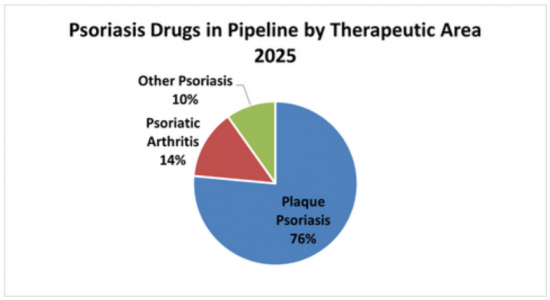
例:依治疗领域分類的干癣药物开发平臺细分(%)
本报告包含一套完整的 Excel 数据表,其中包含报告中所有数值预测的定量数据,以及一个涵盖银屑病治疗市场临床开发平臺并介绍 51 种有前景的候选药物的 Excel 表格。
主要发现:
本报告的主要结论如下:
- 预计到2025年底,全球干癣治疗市场规模将达到196亿美元,主要驱动因素包括疾病盛行率上升、诊断率提高以及先进治疗方法的普及。鑑于银屑病具有慢性復发的特点,长期治疗需求预计将保持稳定,从而支撑市场在2030年后的稳定成长。
- 生物製药仍然是干癣治疗市场的基石,IL-17 和 IL-23 抑制剂,特别是 Skyrizi(risankizumab)和 Tremfya(Guselkumab),由于其卓越的疗效和持续的反应特性,继续得到越来越多的应用。
- 在美国,生物相似药的市场渗透率仍然有限。互通性障碍、旷日持久的诉讼以及合约策略等因素延缓了多种已获FDA已通过核准的生物类似药的实用化,导致生物製剂价格居高不下,并阻碍了成本竞争的加剧。
- 我们的研发管线正日益聚焦于下一代免疫调节疗法,策略重点也从传统的TNF和IL-12/23计画转向更新、更具获利潜力的机制。研发工作主要集中在下一代IL-23製剂、选择性IL-17通路调变器,尤其是口服TYK2抑制剂。由于患者对非注射疗法的强烈需求,这些仍然是我们重要的商业性重点。虽然TNF抑制剂在干癣性关节炎和长期病情稳定的患者中仍具有临床效用,但它们已不再是我们研发的主要成长动力。
- 除了生物製剂之外,口服和外用製剂领域的创新也正在加速发展。正在进行的项目包括TYK2抑制剂、选择性JAK通路调变器、第二代PDE4抑制剂、维生素D相关或合併外用製剂平台,以及旨在提高用药依从性和维持缓解的新型多重机制疗法。
- 免疫学产品组合具有很高的策略价值,因此产业整合正在加剧。併购和平台合作仍然是建立竞争优势的核心,加速了领先的免疫学相关企业产品线的重组和多元化。
本报告主要解答以下问题:
本报告解答了以下关键问题:
- 银屑病治疗药物的市场规模有多大?
- 哪些趋势、挑战和障碍正在影响这一成长?
- 各个细分市场和地区的生态系统是如何演变的?
- 到2030年,市场规模将达到多少?成长率将是多少?
- 预计哪个国家或细分市场将拥有最高的成长率?
- 生物相似药在治疗干癣的前景如何?
- 银屑病治疗药物的市场规模有多大?
- 主要市场参与企业有哪些?他们的策略是什么?
- 原厂药专利到期会对市场产生什么影响?
- 银屑病药物生产商应采取哪些策略来避免竞争?
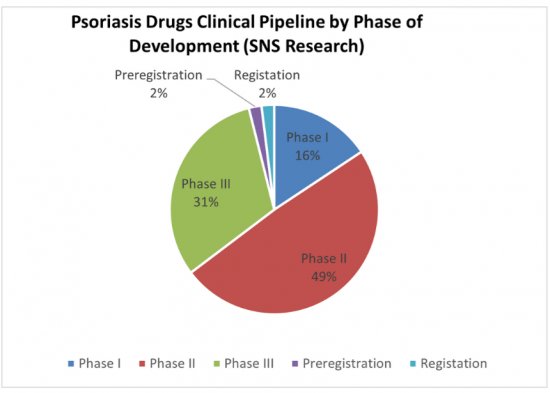
图示范例:干癣治疗候选药物依研发阶段分布(%)
预测性分割:
我们提供了以下各个子市场及其子类别的市场预测:
治疗领域
- TNF抑制剂
- 白细胞介素
- 维生素D类似物和外用类固醇
- 其他的
给药途径
- 外用
- 口服
- 肠外
分销管道
- 临床环境/诊所
- 零售药房
- 数位药房
- 直接面向消费者(D2C)
当地市场
- 亚太地区
- 欧洲
- 中东和非洲
- 北美洲
- 拉丁美洲和中美洲
国家/地区
- 澳洲
- 巴西
- 加拿大
- 中国
- 埃及
- 法国
- 德国
- 希腊
- 印度
- 以色列
- 义大利
- 日本
- 墨西哥
- 荷兰
- 波兰
- 葡萄牙
- 俄罗斯
- 沙乌地阿拉伯
- 南非
- 韩国
- 西班牙
- 瑞士
- 台湾
- 土耳其
- 英国
- 我们
公司和组织清单:
本报告中提及的所有公司和组织如下:
- Abbott Laboratories
- AbbVie
- AbGenomics International
- Acelyrin
- Aclaris Therapeutics
- Actelion Pharmaceuticals
- Akeso Biopharma
- Akros Pharma
- Akzo Nobel Group
- Almirall
- AltruBio
- Alumis(前身为 Esker Therapeutics)
- Alvotech
- Amgen
- Anacor Pharmaceuticals
- AnaptysBio
- Arcutis Biotherapeutics
- Artax Biopharma
- Artelo Biosciences
- AstraZeneca
- Azora Therapeutics
- Bausch & Lomb
- Bausch Health
- Bausch Health Ireland Limited
- Bayer
- Biocad
- Biocon Biologics
- Biofrontera AG
- Biogen
- BioMimetix
- Biosintez
- Bio-Thera Solutions
- BMS (Bristol-Myers Squibb)
- Boehringer Ingelheim
- Boston Pharmaceuticals
- Botanix Pharmaceuticals
- Cadila Healthcare
- Cadila Pharmaceuticals
- Can-Fite BioPharma
- Cantargia
- Celgene Corporation
- Celltrion Healthcare
- Cerbios-Pharma
- Cipher Pharmaceuticals
- Coherus BioSciences
- Dermata Therapeutics
- DICE Therapeutics(已被礼来收购)
- Dr. Reddy's Laboratories
- Dusa Pharmaceuticals
- Eli Lilly and Company
- Enavate Sciences
- Encore Dermatology
- EPI Health
- European Medicines Agency (EMA)
- FDA
- Galderma
- Galectin Therapeutics
- Glenmark Pharmaceuticals
- GSK (GlaxoSmithKline)
- Hanwha Pharmaceutical
- Immutep
- Innovent Biologics
- InSite Vision
- Issar Pharma
- Janssen Biotech
- Janssen Pharmaceutical
- Janssen Research & Development
- Japan Tobacco (JT)
- Jiangsu Hengrui Pharmaceuticals Co.
- Johnson & Johnson
- Kyongbo Pharm
- Kyowa Kirin
- LEO Pharma
- Lipidor AB
- Mabpharm
- Maruho
- Mayne Pharma Group
- MC2 Therapeutics
- Meiji Seika Pharma
- Merck
- Merck & Co.
- MIT
- MoonLake Immunotherapeutics
- Mylan
- Nestle Skin Health
- Novartis
- Ono Pharmaceutical
- Ortho Dermatologics
- Pelthos Therapeutics(Ligand Pharmaceuticals 的子公司)
- Pfizer
- Pharmalucence
- Photogen Technologies Inc.
- Pierre Fabre Laboratories
- Pola Pharma
- Portal Instruments
- Promius Pharma
- Protagonist Therapeutics
- Provectus Biopharmaceuticals
- Rani Therapeutics
- Samsung
- Samsung Bioepis
- Sandoz
- Sanofi
- SFA Therapeutics
- Shire
- Sudo Biosciences
- Sun Pharma
- Suzhou Zelgen Biopharmaceuticals
- Takeda
- Taro Pharmaceutical Industries
- Teva
- Theravance Biopharma
- US Department of Justice
- US Federal Trade Commission
- UCB
- UNION Therapeutics
- URL Pharma
- Vanda Pharmaceuticals
- Viatris
- Vyne Therapeutics
- XBiotech
- Xbrane Biopharma
- Yangji Pharmaceutical
- Zydus Group
Synopsis:
Psoriasis is a chronic inflammatory skin disorder affecting more than 125 million people globally, including over 8 million in the United States. Characterized by thick, reddened, scaly plaques that cause itching and pain, the disease imposes substantial physical, psychosocial, and economic burdens across all severity levels. Growing public awareness and rising expectations around skin, hair, and nail appearance have increased the number of patients seeking more effective and durable treatment options.
Disease management is lifelong and focuses on achieving remission by slowing excessive skin-cell turnover and reducing inflammation. Treatment selection depends on disease type, body-surface involvement, and overall severity. Mild disease is typically managed with topical therapies, whereas moderate-to-severe psoriasis often requires oral systemics, biologics, or combination approaches. Over the past decade, psoriasis treatment has shifted from broad immunosuppression to highly selective therapies. Established biologics (TNF, IL-12/23, IL-17, and IL-23 inhibitors) have been complemented by oral small molecules (notably TYK2 inhibitors) and next-generation biologics. These innovations are achieving unprecedented complete skin clearance rates (PASI 100), extended duration of response, and improved convenience and safety profiles. As a result, they are driving stronger market growth, expanding the treatable patient population, and significantly increasing payer and physician expectations for long-term disease modification in psoriasis.
SNS Research estimates that the psoriasis drugs market will account for nearly $20 Billion in revenue by the end of 2025. Despite challenges relating to drug stability and patent disputes amongst competition, the market is poised for significant growth over the forecast period, fueled by several novel agents advancing through late-stage development.
The "Psoriasis Drugs Market: 2025 - 2035 - Opportunities, Challenges, Strategies & Forecasts" report presents an in-depth assessment of the psoriasis drugs ecosystem including psoriasis disorders, types of treatment options, delivery technologies, key trends, market drivers, challenges, investment potential, leading therapies, drug development pipeline, opportunities, future roadmap, value chain, ecosystem player profiles and strategies. The report also presents market size forecasts for psoriasis drugs from 2025 through to 2035. The forecasts are further segmented by 4 therapeutic classes, 3 routes of administration, 4 distribution channels, 5 regions and 26 leading countries.
Topics Covered:
The report covers the following topics:
- Psoriasis drugs ecosystem
- Market drivers and barriers
- Psoriasis disorders and key trends
- Analysis of key drug classes and leading psoriasis drugs
- Future drug development pipeline
- Psoriasis drug delivery technologies
- Industry roadmap and value chain
- Profiles and strategies of 66 leading ecosystem players, including psoriasis drug developers
- Strategic recommendations for ecosystem players
- Market analysis and forecasts from 2025 till 2035
Sample Figure: Psoriasis Drugs Development Pipeline Breakdown by Therapeutic Area (%)
The report comes with an associated Excel datasheet suite covering quantitative data from all numeric forecasts presented in the report, as well as an Excel sheet covering clinical drug development pipeline for the psoriasis drugs market, profiling 51 future candidates.
Key Findings:
The report has the following key findings:
- Global psoriasis drug spending is projected to reach $19.6 billion by the end of 2025, driven by rising disease prevalence, increased diagnosis rates, and expanding access to advanced therapies. Given the chronic, relapsing nature of psoriasis, long-term treatment demand remains stable, supporting steady market growth through 2030 and beyond.
- Biologics remain the backbone of the psoriasis therapeutics market, with IL-17 and IL-23 inhibitors, particularly Skyrizi (risankizumab) and Tremfya (guselkumab), continuing to gain adoption due to superior efficacy and durable response profiles.
- In the U.S., biosimilar penetration remains limited. Interchangeability barriers, litigation timelines, and contracting strategies have slowed the real-world uptake of several FDA-approved biosimilars, sustaining premium biologic pricing and delaying broader cost competition.
- Pipeline activity is increasingly concentrated on next-generation immunomodulators, with strategic emphasis shifting away from legacy TNF and IL-12/23 programs and toward newer, higher-yield mechanisms. Development efforts center on next-generation IL-23 agents, selective IL-17 pathway modulators, and especially oral TYK2 inhibitors, which remain a major commercial focus due to strong patient preference for non-injectable therapies. TNF inhibitors retain clinical utility in psoriatic arthritis and long-term stable disease, but they are no longer a primary R&D growth engine.
- Beyond biologics, innovation is accelerating in oral and topical modalities. Active programs include TYK2 inhibitors, selective JAK pathway modulators, second-generation PDE4 inhibitors, vitamin-D-adjacent or combination-topical platforms, and emerging multi-mechanism regimens aimed at improving adherence and sustained clearance.
- Industry consolidation continues to intensify, reflecting the high strategic value of immunology portfolios. Mergers, acquisitions, and platform partnerships remain central to competitive positioning, reshaping pipelines and accelerating diversification among leading immunology players.
Key Questions Answered:
The report provides answers to the following key questions:
- How big is the psoriasis drugs opportunity?
- What trends, challenges and barriers are influencing its growth?
- How is the ecosystem evolving by segment and region?
- What will the market size be in 2030 and at what rate will it grow?
- Which countries and submarkets will see the highest percentage of growth?
- What are the prospects of biosimilar drugs in psoriasis?
- How big is the market for psoriasis drugs?
- Who are the key market players and what are their strategies?
- How will patent expirations of innovator drugs impact the market?
- What strategies should psoriasis drug manufacturers adopt to remain competitive?
Sample Figure: Distribution of Psoriasis Pipeline Candidates by Developmental Phase (%)
Forecast Segmentation:
Market forecasts are provided for each of the following submarkets and their subcategories:
Therapeutic Class
- TNF Inhibitors
- Interleukins
- Vitamin D Analogues & Topical Steroids
- Others
Route of Administration
- Topical
- Oral
- Parenteral
Distribution Channel
- Point-of-Care / Clinic
- Retail Pharmacies
- Digital Pharmacies
- Direct to Consumer (D2C)
Regional Markets
- Asia Pacific
- Europe
- Middle East & Africa
- North America
- Latin & Central America
Country Markets
- Australia
- Brazil
- Canada
- China
- Egypt
- France
- Germany
- Greece
- India
- Israel
- Italy
- Japan
- Mexico
- Netherlands
- Poland
- Portugal
- Russia
- Saudi Arabia
- South Africa
- South Korea
- Spain
- Switzerland
- Taiwan
- Turkey
- UK
- USA
List of Companies & Organizations:
All the companies and organizations mentioned in the report are listed below:
- Abbott Laboratories
- AbbVie
- AbGenomics International
- Acelyrin
- Aclaris Therapeutics
- Actelion Pharmaceuticals
- Akeso Biopharma
- Akros Pharma
- Akzo Nobel Group
- Almirall
- AltruBio
- Alumis (Previously Esker Therapeutics)
- Alvotech
- Amgen
- Anacor Pharmaceuticals
- AnaptysBio
- Arcutis Biotherapeutics
- Artax Biopharma
- Artelo Biosciences
- AstraZeneca
- Azora Therapeutics
- Bausch & Lomb
- Bausch Health
- Bausch Health Ireland Limited
- Bayer
- Biocad
- Biocon Biologics
- Biofrontera AG
- Biogen
- BioMimetix
- Biosintez
- Bio-Thera Solutions
- BMS (Bristol-Myers Squibb)
- Boehringer Ingelheim
- Boston Pharmaceuticals
- Botanix Pharmaceuticals
- Cadila Healthcare
- Cadila Pharmaceuticals
- Can-Fite BioPharma
- Cantargia
- Celgene Corporation
- Celltrion Healthcare
- Cerbios-Pharma
- Cipher Pharmaceuticals
- Coherus BioSciences
- Dermata Therapeutics
- DICE Therapeutics (Acquired by Eli Lilly)
- Dr. Reddy's Laboratories
- Dusa Pharmaceuticals
- Eli Lilly and Company
- Enavate Sciences
- Encore Dermatology
- EPI Health
- European Medicines Agency (EMA)
- FDA
- Galderma
- Galectin Therapeutics
- Glenmark Pharmaceuticals
- GSK (GlaxoSmithKline)
- Hanwha Pharmaceutical
- Immutep
- Innovent Biologics
- InSite Vision
- Issar Pharma
- Janssen Biotech
- Janssen Pharmaceutical
- Janssen Research & Development
- Japan Tobacco (JT)
- Jiangsu Hengrui Pharmaceuticals Co.
- Johnson & Johnson
- Kyongbo Pharm
- Kyowa Kirin
- LEO Pharma
- Lipidor AB
- Mabpharm
- Maruho
- Mayne Pharma Group
- MC2 Therapeutics
- Meiji Seika Pharma
- Merck
- Merck & Co.
- MIT
- MoonLake Immunotherapeutics
- Mylan
- Nestle Skin Health
- Novartis
- Ono Pharmaceutical
- Ortho Dermatologics
- Pelthos Therapeutics (Part of Ligand Pharmaceuticals)
- Pfizer
- Pharmalucence
- Photogen Technologies Inc.
- Pierre Fabre Laboratories
- Pola Pharma
- Portal Instruments
- Promius Pharma
- Protagonist Therapeutics
- Provectus Biopharmaceuticals
- Rani Therapeutics
- Samsung
- Samsung Bioepis
- Sandoz
- Sanofi
- SFA Therapeutics
- Shire
- Sudo Biosciences
- Sun Pharma
- Suzhou Zelgen Biopharmaceuticals
- Takeda
- Taro Pharmaceutical Industries
- Teva
- Theravance Biopharma
- U.S. Department of Justice
- U.S. Federal Trade Commission
- UCB
- UNION Therapeutics
- URL Pharma
- Vanda Pharmaceuticals
- Viatris
- Vyne Therapeutics
- XBiotech
- Xbrane Biopharma
- Yangji Pharmaceutical
- Zydus Group

 银屑病治疗市场:2026-2032年全球市场预测(按药物类别、给药途径、银屑病类型、患者人口统计特征、分销管道和治疗环境划分)
 Tremfya市场分析及至2035年预测:按类型、产品、技术、应用、最终用户、组件、部署、流程、功能和设备划分干癣药物市场分析及预测(至2035年):依类型、产品类型、技术、应用、最终用户、剂型、给药途径及研发阶段划分
 阿维A酸市场机会、成长要素、产业趋势分析及2026年至2035年预测
 银屑病治疗市场:按治疗方法、通路和地区划分银屑病生物相似药市场按产品类型、给药途径、分销管道和最终用户划分-2026-2032年全球预测
 干癣治疗市场规模、占有率、成长及全球产业分析:依类型、应用和地区划分的洞察与预测(2025-2034)比美珠单抗市场:依适应症、年龄层、性别、最终用户、通路和地区划分牛皮癣治疗市场机会、成长动力、产业趋势分析及 2025 - 2034 年预测
 Tremfya 市场 - 全球产业规模、份额、趋势、机会和预测,按应用(斑块银屑病、银屑病关节炎等)、按配销通路、按地区和竞争进行细分,2020-2030 年预测