


 |
市场调查报告书
商品编码
1905000
全球国防飞机推进系统市场:2026-2036Global Defense Aircraft Propulsion Market 2026-2036 |
||||||

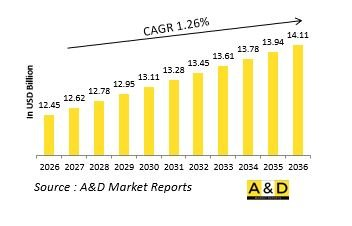
全球国防飞机推进系统市场预计将从2026年的124.5亿美元成长到2036年的141.1亿美元,2026年至2036年的复合年增长率(CAGR)为1.26%。
国防飞机推进系统市场简介
全球国防飞机推进系统市场涵盖为军用飞机(包括战斗机、轰炸机、运输机、加油机、侦察机、教练机、直升机和无人系统)提供推力的发动机及相关系统。推进系统不仅仅是零件;它们是决定飞机性能的根本因素,包括速度、高度、航程、有效载荷、机动性和生存能力。现代军用推进系统融合了先进材料、数位控制和精密的空气动力学技术,在严格的尺寸和重量限制下提供卓越的动力,同时满足严苛的可靠性和可维护性要求。市场涵盖了用于高速飞机的传统涡轮扇涡轮喷气发动机、用于低速平台的涡流螺旋桨涡轴发动机,以及自适应循环发动机、混合动力系统和高超音速推进等新兴技术。随着飞机任务的演变和作战环境的日益复杂,推进系统的创新仍然是维持所有军事行动中空中优势的关键。
国防飞机推进市场的技术影响:
国防推进技术的进步主要集中在效率、动力和热管理方面。自适应循环引擎能够转换多种气流,从而优化从亚音速巡航到超音速加速等不同飞行状态下的性能。陶瓷基复合材料和积层製造技术能够实现更高的涡轮进口温度和轻量化结构,从而提高效率。先进的冷却技术能够应对高性能运作所带来的极端热负荷。具备预测性维护功能的数位化引擎控制系统能够在优化性能的同时,预先判断维护需求。整合动力系统能够直接从引擎核心为飞机系统供电。隐身优化的排气设计能够降低红外线和雷达特征。混合动力和分散式推进概念有望为下一代平台带来突破性的效率提升。这些创新技术能够满足不同飞机任务中对更高性能、更低油耗、更长续航时间和更低营运成本的相互衝突的需求。
国防飞机推进系统市场的主要驱动因素:
为了确保在对抗日益复杂的对手时保持空中优势,推进系统性能指标(例如推重比、比油耗和作战灵活性)需要不断改进。侦察和攻击任务对航程和续航时间的需求促使人们选择能够最大限度延长任务时间的高燃油效率引擎。生存能力提升措施包括降低红外线特征、增强对异物损伤的耐受性以及在战斗损伤后继续运作。降低全寿命週期成本的需求推动了引擎研发,这些引擎具有更长的检修週期、更便捷的维护和更低的油耗。无人系统的激增催生了对紧凑、高效且针对特定任务优化的推进解决方案的需求。此外,环境法规正日益影响军用推进技术的发展,推动永续航空燃料和低排放燃烧器设计的研究。由于这些多样化的需求,推进技术仍然是全球国防生态系统中研发投入庞大且竞争激烈的关键技术领域。
各地区国防飞机推进市场趋势:
各地区的推进能力反映了不同的产业策略、平台组合和策略自主目标。北美在所有推进类别中都拥有全面的能力,从大型运输发动机到高性能战斗机发动机。欧洲的研发工作由多国联盟进行,参与国之间分担研发成本和产业投入。亚太地区各国采取了不同的策略,一些国家致力于自主研发发动机以实现战略自主,而另一些国家则继续依赖进口推进系统。俄罗斯虽然拥有完整的军用飞机发动机生态系统,但其孤立程度日益加剧。中东国家在采购推进系统时,越来越要求技术转移和本地维护能力。全球供应链日益复杂,促使各国重新思考采购策略,一些地区开始投资发展关键推进零件的国内生产能力,而这些零件以往通常需要透过国际合作采购。 本报告对全球国防飞机推进系统市场进行了深入分析,内容涵盖市场背景、影响因素、市场规模趋势和预测,以及按不同细分市场和地区进行的详细分析。
目录
国防飞机推进系统市场:报告定义
国防飞机推进系统市场:细分
按引擎类型
按地区
依飞机类型
未来十年国防飞机推进系统市场分析
市场成长、趋势变化、技术应用概况及整体市场吸引力
国防飞机推进系统市场:技术
十大技术及其对整体市场的影响
全球国防飞机推进系统市场:预测评估
国防飞机推进系统市场:区域趋势及预测
市场趋势、驱动因素、限制因素、挑战、PEST 分析、区域市场预测、情境分析、主要参与者概况、供应商格局和公司标竿分析
北美
驱动因素、限制因素与挑战
PEST 分析
市场预测与情境分析
主要参与者
供应商层级格局
公司标竿分析
欧洲
中东
亚太地区
南美洲
国防飞机推进系统市场:国家分析
主要国防项目、最新资讯、专利、国家/地区十年预测与情境分析
美国
国防项目
最新消息
专利
当前市场技术成熟度
市场预测与情境分析
加拿大
义大利
法国
德国
荷兰
比利时
西班牙
瑞典
希腊
澳洲
南非
印度
中国
俄罗斯
南非
韩国
日本
马来西亚
新加坡
巴西
国防飞机推进系统市场:机会矩阵
国防飞机推进系统市场:专家报告解读
结论
关于航空与国防市场报告
The Global Defense Aircraft Propulsion market is estimated at USD 12.45 billion in 2026, projected to grow to USD 14.11 billion by 2036 at a Compound Annual Growth Rate (CAGR) of 1.26% over the forecast period 2026-2036.
Introduction to Defense Aircraft Propulsion Market
The Global Defense Aircraft Propulsion Market encompasses the engines and associated systems that provide thrust for military aircraft, including fighters, bombers, transports, tankers, reconnaissance platforms, trainers, helicopters, and unmanned systems. Propulsion represents not merely a component but a fundamental determinant of aircraft performance, influencing speed, altitude, range, payload, maneuverability, and survivability. Modern military propulsion integrates advanced materials, digital controls, and sophisticated aerodynamics to deliver exceptional power within strict size and weight constraints while meeting demanding reliability and maintainability requirements. The market spans traditional turbofan and turbojet engines for high-speed aircraft, turboprop and turboshaft engines for slower platforms, and emerging technologies including adaptive cycle engines, hybrid-electric systems, and hypersonic propulsion. As aircraft missions evolve and operational environments become more contested, propulsion innovation remains central to maintaining air superiority across the full spectrum of military operations.
Technology Impact in Defense Aircraft Propulsion Market:
Technological advancement in defense propulsion focuses on efficiency, power, and thermal management. Adaptive cycle engines vary airflow between multiple streams to optimize performance across different flight regimes from subsonic cruise to supersonic dash. Ceramic matrix composites and additive manufacturing enable higher turbine inlet temperatures and lighter weight structures for increased efficiency. Advanced cooling techniques manage extreme heat loads from high-performance operation. Digital engine controls with prognostics and health monitoring capabilities optimize performance while predicting maintenance needs. Integrated power systems generate electricity for aircraft systems directly from the engine core. Stealth considerations influence exhaust design for reduced infrared and radar signatures. Hybrid-electric and distributed propulsion concepts promise revolutionary efficiency gains for next-generation platforms. These innovations address the competing demands for greater capability, reduced fuel consumption, enhanced durability, and lower operational costs across diverse aircraft missions.
Key Drivers in Defense Aircraft Propulsion Market:
The pursuit of air dominance against increasingly capable adversaries drives continuous improvement in propulsion performance metrics including thrust-to-weight ratio, specific fuel consumption, and operational flexibility. Extended range and persistence requirements for surveillance and strike missions favor more fuel-efficient engines that maximize time on station. Survivability enhancements include reduced infrared signatures, improved resistance to foreign object damage, and continued operation after combat damage. Lifecycle cost reduction imperatives push for engines with longer intervals between overhauls, easier maintenance access, and lower fuel consumption. Unmanned system proliferation creates demand for smaller, more efficient propulsion solutions optimized for specific mission profiles. Additionally, environmental regulations increasingly influence military propulsion development, driving research into sustainable aviation fuels and lower-emission combustor designs. These diverse requirements ensure propulsion remains a critical technology area with substantial research investment and competitive development across global defense ecosystems.
Regional Trends in Defense Aircraft Propulsion Market:
Regional propulsion capabilities reflect differing industrial strategies, platform portfolios, and strategic autonomy objectives. North America maintains comprehensive capabilities across all propulsion categories, with industrial capacity for both large transport engines and high-performance combat aircraft engines. European development occurs through multinational consortia that share development costs and industrial workshares across participating nations. The Asia-Pacific region shows diverging approaches, with some countries pursuing indigenous engine development for strategic autonomy while others continue relying on imported propulsion systems. Russian industry maintains complete though increasingly isolated engine ecosystems for its military aircraft. Middle Eastern nations increasingly demand technology transfer and localized maintenance capabilities as part of propulsion system procurement. Global supply chain complexities have prompted reevaluation of sourcing strategies, with some regions investing in sovereign capabilities for critical propulsion components previously obtained through international partnerships.
Key Defense Aircraft Propulsion Program:
The U.S. Department of Defense has awarded Boeing a major fighter aircraft contract with a potential value of up to $8.6 billion for the supply of 25 F-15IA combat aircraft to Israel. The agreement also includes options for an additional 25 aircraft based on the F-15EX configuration, providing flexibility for future fleet expansion. The procurement reinforces long-standing defense cooperation between the United States and Israel and supports the modernization of Israel's air combat capabilities with advanced multirole fighter platforms.
Separately, Spain has formalized a contract valued at approximately $3 billion for the acquisition of 30 combat aircraft through a joint venture between Airbus and Turkish Aerospace Industries. The agreement, signed on December 28, represents a significant investment in Spain's air force modernization and reflects continued European collaboration in advanced aerospace manufacturing. The program is expected to enhance operational capability while supporting industrial participation across partner nations.
Together, these contracts highlight sustained global demand for advanced fighter aircraft amid evolving security requirements. They also underscore the role of multinational defense partnerships and large-scale procurement programs in strengthening air power, supporting domestic aerospace industries, and ensuring long-term operational readiness for allied air forces across different regions.
Table of Contents
Defense Aircraft Propulsion Market Report Definition
Defense Aircraft Propulsion Market Segmentation
By Engine
By Region
By Aircraft Type
Defense Aircraft Propulsion Market Analysis for next 10 Years
The 10-year defense aircraft propulsion market analysis would give a detailed overview of defense aircraft propulsion market growth, changing dynamics, technology adoption overviews and the overall market attractiveness is covered in this chapter.
Market Technologies of Defense Aircraft Propulsion Market
This segment covers the top 10 technologies that is expected to impact this market and the possible implications these technologies would have on the overall market.
Global Defense Aircraft Propulsion Market Forecast
The 10-year defense aircraft propulsion market forecast of this market is covered in detailed across the segments which are mentioned above.
Regional Defense Aircraft Propulsion Market Trends & Forecast
The regional defense aircraft propulsion market trends, drivers, restraints and Challenges of this market, the Political, Economic, Social and Technology aspects are covered in this segment. The market forecast and scenario analysis across regions are also covered in detailed in this segment. The last part of the regional analysis includes profiling of the key companies, supplier landscape and company benchmarking. The current market size is estimated based on the normal scenario.
North America
Drivers, Restraints and Challenges
PEST
Market Forecast & Scenario Analysis
Key Companies
Supplier Tier Landscape
Company Benchmarking
Europe
Middle East
APAC
South America
Country Analysis of Defense Aircraft Propulsion Market
This chapter deals with the key defense programs in this market, it also covers the latest news and patents which have been filed in this market. Country level 10 year market forecast and scenario analysis are also covered in this chapter.
US
Defense Programs
Latest News
Patents
Current levels of technology maturation in this market
Market Forecast & Scenario Analysis
Canada
Italy
France
Germany
Netherlands
Belgium
Spain
Sweden
Greece
Australia
South Africa
India
China
Russia
South Korea
Japan
Malaysia
Singapore
Brazil
Opportunity Matrix for Defense Aircraft Propulsion Market
The opportunity matrix helps the readers understand the high opportunity segments in this market.
Expert Opinions on Defense Aircraft Propulsion Market Report
Hear from our experts their opinion of the possible analysis for this market.
Conclusions
About Aviation and Defense Market Reports
List of Tables
- Table 1: 10 Year Market Outlook, 2025-2035
- Table 2: Drivers, Impact Analysis, North America
- Table 3: Restraints, Impact Analysis, North America
- Table 4: Challenges, Impact Analysis, North America
- Table 5: Drivers, Impact Analysis, Europe
- Table 6: Restraints, Impact Analysis, Europe
- Table 7: Challenges, Impact Analysis, Europe
- Table 8: Drivers, Impact Analysis, Middle East
- Table 9: Restraints, Impact Analysis, Middle East
- Table 10: Challenges, Impact Analysis, Middle East
- Table 11: Drivers, Impact Analysis, APAC
- Table 12: Restraints, Impact Analysis, APAC
- Table 13: Challenges, Impact Analysis, APAC
- Table 14: Drivers, Impact Analysis, South America
- Table 15: Restraints, Impact Analysis, South America
- Table 16: Challenges, Impact Analysis, South America
- Table 17: Scenario Analysis, Scenario 1, By Region, 2025-2035
- Table 18: Scenario Analysis, Scenario 1, By Engine, 2025-2035
- Table 19: Scenario Analysis, Scenario 1, By Aircraft Type, 2025-2035
- Table 20: Scenario Analysis, Scenario 2, By Region, 2025-2035
- Table 21: Scenario Analysis, Scenario 2, By Engine, 2025-2035
- Table 22: Scenario Analysis, Scenario 2, By Aircraft Type, 2025-2035
List of Figures
- Figure 1: Global Defense Aircraft Propulsion Market Forecast, 2025-2035
- Figure 2: Global Defense Aircraft Propulsion Market Forecast, By Region, 2025-2035
- Figure 3: Global Defense Aircraft Propulsion Market Forecast, By Engine, 2025-2035
- Figure 4: Global Defense Aircraft Propulsion Market Forecast, By Aircraft Type, 2025-2035
- Figure 5: North America, Defense Aircraft Propulsion Market, Market Forecast, 2025-2035
- Figure 6: Europe, Defense Aircraft Propulsion Market, Market Forecast, 2025-2035
- Figure 7: Middle East, Defense Aircraft Propulsion Market, Market Forecast, 2025-2035
- Figure 8: APAC, Defense Aircraft Propulsion Market, Market Forecast, 2025-2035
- Figure 9: South America, Defense Aircraft Propulsion Market, Market Forecast, 2025-2035
- Figure 10: United States, Defense Aircraft Propulsion Market, Technology Maturation, 2025-2035
- Figure 11: United States, Defense Aircraft Propulsion Market, Market Forecast, 2025-2035
- Figure 12: Canada, Defense Aircraft Propulsion Market, Technology Maturation, 2025-2035
- Figure 13: Canada, Defense Aircraft Propulsion Market, Market Forecast, 2025-2035
- Figure 14: Italy, Defense Aircraft Propulsion Market, Technology Maturation, 2025-2035
- Figure 15: Italy, Defense Aircraft Propulsion Market, Market Forecast, 2025-2035
- Figure 16: France, Defense Aircraft Propulsion Market, Technology Maturation, 2025-2035
- Figure 17: France, Defense Aircraft Propulsion Market, Market Forecast, 2025-2035
- Figure 18: Germany, Defense Aircraft Propulsion Market, Technology Maturation, 2025-2035
- Figure 19: Germany, Defense Aircraft Propulsion Market, Market Forecast, 2025-2035
- Figure 20: Netherland, Defense Aircraft Propulsion Market, Technology Maturation, 2025-2035
- Figure 21: Netherland, Defense Aircraft Propulsion Market, Market Forecast, 2025-2035
- Figure 22: Belgium, Defense Aircraft Propulsion Market, Technology Maturation, 2025-2035
- Figure 23: Belgium, Defense Aircraft Propulsion Market, Market Forecast, 2025-2035
- Figure 24: Spain, Defense Aircraft Propulsion Market, Technology Maturation, 2025-2035
- Figure 25: Spain, Defense Aircraft Propulsion Market, Market Forecast, 2025-2035
- Figure 26: Sweden, Defense Aircraft Propulsion Market, Technology Maturation, 2025-2035
- Figure 27: Sweden, Defense Aircraft Propulsion Market, Market Forecast, 2025-2035
- Figure 28: Brazil, Defense Aircraft Propulsion Market, Technology Maturation, 2025-2035
- Figure 29: Brazil, Defense Aircraft Propulsion Market, Market Forecast, 2025-2035
- Figure 30: Australia, Defense Aircraft Propulsion Market, Technology Maturation, 2025-2035
- Figure 31: Australia, Defense Aircraft Propulsion Market, Market Forecast, 2025-2035
- Figure 32: India, Defense Aircraft Propulsion Market, Technology Maturation, 2025-2035
- Figure 33: India, Defense Aircraft Propulsion Market, Market Forecast, 2025-2035
- Figure 34: China, Defense Aircraft Propulsion Market, Technology Maturation, 2025-2035
- Figure 35: China, Defense Aircraft Propulsion Market, Market Forecast, 2025-2035
- Figure 36: Saudi Arabia, Defense Aircraft Propulsion Market, Technology Maturation, 2025-2035
- Figure 37: Saudi Arabia, Defense Aircraft Propulsion Market, Market Forecast, 2025-2035
- Figure 38: South Korea, Defense Aircraft Propulsion Market, Technology Maturation, 2025-2035
- Figure 39: South Korea, Defense Aircraft Propulsion Market, Market Forecast, 2025-2035
- Figure 40: Japan, Defense Aircraft Propulsion Market, Technology Maturation, 2025-2035
- Figure 41: Japan, Defense Aircraft Propulsion Market, Market Forecast, 2025-2035
- Figure 42: Malaysia, Defense Aircraft Propulsion Market, Technology Maturation, 2025-2035
- Figure 43: Malaysia, Defense Aircraft Propulsion Market, Market Forecast, 2025-2035
- Figure 44: Singapore, Defense Aircraft Propulsion Market, Technology Maturation, 2025-2035
- Figure 45: Singapore, Defense Aircraft Propulsion Market, Market Forecast, 2025-2035
- Figure 46: United Kingdom, Defense Aircraft Propulsion Market, Technology Maturation, 2025-2035
- Figure 47: United Kingdom, Defense Aircraft Propulsion Market, Market Forecast, 2025-2035
- Figure 48: Opportunity Analysis, Defense Aircraft Propulsion Market, By Region (Cumulative Market), 2025-2035
- Figure 49: Opportunity Analysis, Defense Aircraft Propulsion Market, By Region (CAGR), 2025-2035
- Figure 50: Opportunity Analysis, Defense Aircraft Propulsion Market, By Engine (Cumulative Market), 2025-2035
- Figure 51: Opportunity Analysis, Defense Aircraft Propulsion Market, By Engine (CAGR), 2025-2035
- Figure 52: Opportunity Analysis, Defense Aircraft Propulsion Market, By Aircraft Type (Cumulative Market), 2025-2035
- Figure 53: Opportunity Analysis, Defense Aircraft Propulsion Market, By Aircraft Type (CAGR), 2025-2035
- Figure 54: Scenario Analysis, Defense Aircraft Propulsion Market, Cumulative Market, 2025-2035
- Figure 55: Scenario Analysis, Defense Aircraft Propulsion Market, Global Market, 2025-2035
- Figure 56: Scenario 1, Defense Aircraft Propulsion Market, Total Market, 2025-2035
- Figure 57: Scenario 1, Defense Aircraft Propulsion Market, By Region, 2025-2035
- Figure 58: Scenario 1, Defense Aircraft Propulsion Market, By Engine, 2025-2035
- Figure 59: Scenario 1, Defense Aircraft Propulsion Market, By Aircraft Type, 2025-2035
- Figure 60: Scenario 2, Defense Aircraft Propulsion Market, Total Market, 2025-2035
- Figure 61: Scenario 2, Defense Aircraft Propulsion Market, By Region, 2025-2035
- Figure 62: Scenario 2, Defense Aircraft Propulsion Market, By Engine, 2025-2035
- Figure 63: Scenario 2, Defense Aircraft Propulsion Market, By Aircraft Type, 2025-2035
- Figure 64: Company Benchmark, Defense Aircraft Propulsion Market, 2025-2035


