


 |
市场调查报告书
商品编码
1927656
全球国防3D列印市场(2026-2036)Global Defense 3D Printing Market 2026-2036 |
||||||

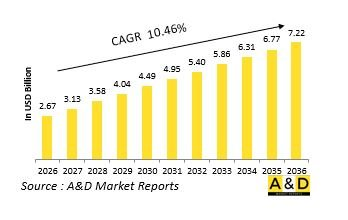
据估计,2026年全球国防3D列印市场规模为26.7亿美元,预计到2036年将达到72.2亿美元,2026年至2036年的复合年增长率(CAGR)为10.46%。
全球国防3D列印简介
全球国防3D列印正在成为一种新兴的製造方法,它正在改变军事零件的设计、製造和维护方式。 与传统生产方法不同,积层製造逐层建造零件,能够实现使用传统技术难以或不切实际的复杂几何形状。在国防领域,这项技术支援快速原型製作、客製化零件生产以及在作战环境中按需製造。国防机构越来越重视将 3D 列印作为提高战备水准和减少对冗长供应链依赖的战略工具。该技术加速了设计迭代,实现了组件测试和改进,同时缩短了开发週期。它还支援轻量化结构的生产,从而在不牺牲强度的前提下提昇平台性能。在空中、陆地和海上领域,3D 列印技术透过实现备件和关键作战组件的本地化生产,为资产维护做出了贡献。其日益普及反映了向灵活、反应迅速的製造模式的转变,这种转变符合现代国防对速度、适应性和作战韧性的要求。
科技对全球国防领域 3D 列印的影响
技术进步正在扩大 3D 列印在国防应用领域的范围和可靠性。 金属积层製造技术的进步使得高强度零件的生产成为可能,这些零件可用于结构和承重应用。列印精度的提高提升了尺寸精度和表面质量,满足了严格的国防规范。材料科学的创新催生了专为严苛运作环境设计的特殊合金和复合材料。整合式数位设计工具实现了从建模到生产的无缝过渡,并支援快速修復。诸如製程监控等品质保证技术提高了一致性并降低了缺陷风险。安全的数位化工作流程保护了分散式製造中的敏感设计资料。这些发展使得3D列印从原型製作工具演变为支援作战部署的生产技术。如今,它在提升性能、减少材料浪费以及快速响应国防平台不断变化的作战需求方面发挥着重要作用。
全球国防领域3D列印的关键驱动因素
国防领域采用3D列印技术的主要驱动因素是作战弹性、供应链韧性和成本效益。军事机构需要快速取得替换零件,以最大限度地减少设备停机时间。 现场或附近製造减少了对集中式供应商和长途物流路线的依赖。平台现代化专案促进了先进製造技术的应用,这些技术支援轻量化和最佳化设计。预算效率目标推动了减少模具需求和材料浪费的技术发展。小批量、复杂零件的生产能力与国防采购模式高度契合。劳动力技能发展和数位转型措施进一步支持了积层製造技术融入国防生态系统。这些驱动因素体现了国防製造对敏捷性、永续性和应变能力的战略关注。 本报告探索并分析了全球国防3D列印市场,提供了影响该市场的技术资讯、未来十年的预测以及区域趋势。
目录
国防3D列印市场报告定义
国防3D列印市场区隔
按应用
按地区
按元件
未来十年国防3D列印市场分析
国防3D列印市场技术
全球国防3D列印市场预测
区域国防3D列印市场趋势及预测
北美
驱动因素、限制因素与挑战
PEST分析
市场预测及情境分析
主要公司
供应商层级概览
公司基准分析
欧洲
中东
亚太地区
南美洲
国防3D列印市场国家分析
美国
国防项目
最新资讯
专利
当前市场技术成熟度
市场预测及情境分析
加拿大
义大利
法国
德国
荷兰
比利时
西班牙
瑞典
希腊
澳洲
南非
印度
中国
俄罗斯
韩国
日本
马来西亚
新加坡
巴西
国防3D列印市场机会矩阵
专家对国防3D列印市场的看法
结论
关于航空和国防市场报告
The Global Defense 3D Printing market is estimated at USD 2.67 billion in 2026, projected to grow to USD 7.22 billion by 2036 at a Compound Annual Growth Rate (CAGR) of 10.46% over the forecast period 2026-2036.

Introduction to Global Defense 3D Printing
Global defense three dimensional printing has emerged as a transformative manufacturing approach that reshapes how military components are designed, produced, and sustained. Unlike conventional fabrication methods, additive manufacturing builds parts layer by layer, enabling complex geometries that are difficult or impractical to achieve through traditional techniques. In defense applications, this capability supports rapid prototyping, customized part production, and on-demand manufacturing in operational environments. Defense organizations increasingly view three dimensional printing as a strategic tool for improving readiness and reducing dependency on extended supply chains. The technology enables faster design iteration, allowing engineers to test and refine components with shorter development cycles. It also supports production of lightweight structures that enhance platform performance without compromising strength. Across air, land, and naval domains, three dimensional printing contributes to equipment sustainment by enabling localized manufacturing of spares and mission-critical components. Its growing adoption reflects a shift toward flexible, responsive manufacturing models that align with modern defense requirements for speed, adaptability, and operational resilience.
Technology Impact in Global Defense 3D Printing
Technological progress has expanded the scope and reliability of three dimensional printing within defense applications. Advances in metal additive manufacturing enable production of high-strength components suitable for structural and load-bearing roles. Improved printing precision enhances dimensional accuracy and surface quality, meeting stringent defense specifications. Material science innovation has introduced specialized alloys and composites designed for extreme operating conditions. Integrated digital design tools allow seamless transition from modeling to production while supporting rapid modification. Quality assurance technologies such as in-process monitoring improve consistency and reduce defect risk. Secure digital workflows protect sensitive design data during distributed manufacturing. These developments collectively elevate three dimensional printing from a prototyping tool to a production-capable technology that supports operational deployment. The technology now plays a role in improving performance, reducing material waste, and enabling faster response to evolving mission needs across defense platforms.
Key Drivers in Global Defense 3D Printing
The adoption of three dimensional printing in defense is driven by operational flexibility, supply chain resilience, and cost efficiency objectives. Military organizations seek faster access to replacement parts to minimize equipment downtime. On-site or near-site manufacturing reduces dependence on centralized suppliers and long logistics routes. Platform modernization programs encourage use of advanced manufacturing methods that support lightweight and optimized designs. Budget efficiency goals promote technologies that reduce tooling requirements and material waste. The ability to produce low-volume, high-complexity components aligns well with defense procurement patterns. Workforce skill development and digital transformation initiatives further support integration of additive manufacturing into defense ecosystems. These drivers reflect a strategic emphasis on agility, sustainability, and responsiveness in defense manufacturing.
Regional Trends in Global Defense 3D Printing
Regional trends in defense three dimensional printing reflect differences in industrial maturity and operational focus. Technologically advanced regions invest in large-scale metal printing and qualification standards for mission-critical components. Regions emphasizing expeditionary operations explore deployable printing units for field sustainment. Emerging defense markets adopt three dimensional printing to support indigenous production and reduce import reliance. Collaborative research initiatives between defense agencies and industry are common in regions prioritizing innovation. Naval regions focus on corrosion-resistant materials, while aerospace-oriented regions prioritize weight reduction and performance optimization. These regional patterns demonstrate how additive manufacturing adoption adapts to localized defense strategies while supporting global trends toward flexible production and operational independence.
Key Defense 3D Printing Program:
To overcome manufacturing constraints that have restricted output for a critical U.S. defense weapon system, Velo3D has signed an Other Transaction Agreement with the U.S. Department of War's Defense Innovation Unit. Valued at $32.6 million, the agreement supports an established program under DIU's Foundry for Operational Readiness and Global Effects initiative, referred to as Project FORGE. Project FORGE focuses on identifying and implementing solutions to long-standing production challenges across the U.S. defense industrial base. These challenges, largely stemming from conventional manufacturing processes and legacy platforms, have constrained production capacity and hindered the rapid scaling of a vital Department of War weapon system. Under this agreement, Velo3D will work alongside DIU, the U.S. Navy, and a leading defense prime contractor to develop, test, and qualify additively manufactured components aimed at eliminating these bottlenecks and increasing overall production throughput.
Table of Contents
Defense 3D Printing Market - Table of Contents
Defense 3D Printing Market Report Definition
Defense 3D Printing Market Segmentation
By Application
By Region
By Components
Defense 3D Printing Market Analysis for next 10 Years
The 10-year Defense 3D Printing Market analysis would give a detailed overview of Defense 3D Printing Market growth, changing dynamics, technology adoption overviews and the overall market attractiveness is covered in this chapter.
Market Technologies of Defense 3D Printing Market
This segment covers the top 10 technologies that is expected to impact this market and the possible implications these technologies would have on the overall market.
Global Defense 3D Printing Market Forecast
The 10-year Defense 3D Printing Market forecast of this market is covered in detailed across the segments which are mentioned above.
Regional Defense 3D Printing Market Trends & Forecast
The regional Defense 3D Printing Market trends, drivers, restraints and Challenges of this market, the Political, Economic, Social and Technology aspects are covered in this segment. The market forecast and scenario analysis across regions are also covered in detailed in this segment. The last part of the regional analysis includes profiling of the key companies, supplier landscape and company benchmarking. The current market size is estimated based on the normal scenario.
North America
Drivers, Restraints and Challenges
PEST
Market Forecast & Scenario Analysis
Key Companies
Supplier Tier Landscape
Company Benchmarking
Europe
Middle East
APAC
South America
Country Analysis of Defense 3D Printing Market
This chapter deals with the key defense programs in this market, it also covers the latest news and patents which have been filed in this market. Country level 10 year market forecast and scenario analysis are also covered in this chapter.
US
Defense Programs
Latest News
Patents
Current levels of technology maturation in this market
Market Forecast & Scenario Analysis
Canada
Italy
France
Germany
Netherlands
Belgium
Spain
Sweden
Greece
Australia
South Africa
India
China
Russia
South Korea
Japan
Malaysia
Singapore
Brazil
Opportunity Matrix for Defense 3D Printing Market
The opportunity matrix helps the readers understand the high opportunity segments in this market.
Expert Opinions on Defense 3D Printing Market Report
Hear from our experts their opinion of the possible analysis for this market.
Conclusions
About Aviation and Defense Market Reports
List of Tables
- Table 1: 10 Year Market Outlook, 2026-2036
- Table 2: Drivers, Impact Analysis, North America
- Table 3: Restraints, Impact Analysis, North America
- Table 4: Challenges, Impact Analysis, North America
- Table 5: Drivers, Impact Analysis, Europe
- Table 6: Restraints, Impact Analysis, Europe
- Table 7: Challenges, Impact Analysis, Europe
- Table 8: Drivers, Impact Analysis, Middle East
- Table 9: Restraints, Impact Analysis, Middle East
- Table 10: Challenges, Impact Analysis, Middle East
- Table 11: Drivers, Impact Analysis, APAC
- Table 12: Restraints, Impact Analysis, APAC
- Table 13: Challenges, Impact Analysis, APAC
- Table 14: Drivers, Impact Analysis, South America
- Table 15: Restraints, Impact Analysis, South America
- Table 16: Challenges, Impact Analysis, South America
- Table 17: Scenario Analysis, Scenario 1, By Region, 2026-2036
- Table 18: Scenario Analysis, Scenario 1, By Application, 2026-2036
- Table 19: Scenario Analysis, Scenario 1, By Components, 2026-2036
- Table 20: Scenario Analysis, Scenario 2, By Region, 2026-2036
- Table 21: Scenario Analysis, Scenario 2, By Application, 2026-2036
- Table 22: Scenario Analysis, Scenario 2, By Components, 2026-2036
List of Figures
- Figure 1: Global Defense 3D Printing Market Forecast, 2026-2036
- Figure 2: Global Defense 3D Printing Market Forecast, By Region, 2026-2036
- Figure 3: Global Defense 3D Printing Market Forecast, By Application, 2026-2036
- Figure 4: Global Defense 3D Printing Market Forecast, By Components, 2026-2036
- Figure 5: North America, Defense 3D Printing Market, Market Forecast, 2026-2036
- Figure 6: Europe, Defense 3D Printing Market, Market Forecast, 2026-2036
- Figure 7: Middle East, Defense 3D Printing Market, Market Forecast, 2026-2036
- Figure 8: APAC, Defense 3D Printing Market, Market Forecast, 2026-2036
- Figure 9: South America, Defense 3D Printing Market, Market Forecast, 2026-2036
- Figure 10: United States, Defense 3D Printing Market, Technology Maturation, 2026-2036
- Figure 11: United States, Defense 3D Printing Market, Market Forecast, 2026-2036
- Figure 12: Canada, Defense 3D Printing Market, Technology Maturation, 2026-2036
- Figure 13: Canada, Defense 3D Printing Market, Market Forecast, 2026-2036
- Figure 14: Italy, Defense 3D Printing Market, Technology Maturation, 2026-2036
- Figure 15: Italy, Defense 3D Printing Market, Market Forecast, 2026-2036
- Figure 16: France, Defense 3D Printing Market, Technology Maturation, 2026-2036
- Figure 17: France, Defense 3D Printing Market, Market Forecast, 2026-2036
- Figure 18: Germany, Defense 3D Printing Market, Technology Maturation, 2026-2036
- Figure 19: Germany, Defense 3D Printing Market, Market Forecast, 2026-2036
- Figure 20: Netherlands, Defense 3D Printing Market, Technology Maturation, 2026-2036
- Figure 21: Netherlands, Defense 3D Printing Market, Market Forecast, 2026-2036
- Figure 22: Belgium, Defense 3D Printing Market, Technology Maturation, 2026-2036
- Figure 23: Belgium, Defense 3D Printing Market, Market Forecast, 2026-2036
- Figure 24: Spain, Defense 3D Printing Market, Technology Maturation, 2026-2036
- Figure 25: Spain, Defense 3D Printing Market, Market Forecast, 2026-2036
- Figure 26: Sweden, Defense 3D Printing Market, Technology Maturation, 2026-2036
- Figure 27: Sweden, Defense 3D Printing Market, Market Forecast, 2026-2036
- Figure 28: Brazil, Defense 3D Printing Market, Technology Maturation, 2026-2036
- Figure 29: Brazil, Defense 3D Printing Market, Market Forecast, 2026-2036
- Figure 30: Australia, Defense 3D Printing Market, Technology Maturation, 2026-2036
- Figure 31: Australia, Defense 3D Printing Market, Market Forecast, 2026-2036
- Figure 32: India, Defense 3D Printing Market, Technology Maturation, 2026-2036
- Figure 33: India, Defense 3D Printing Market, Market Forecast, 2026-2036
- Figure 34: China, Defense 3D Printing Market, Technology Maturation, 2026-2036
- Figure 35: China, Defense 3D Printing Market, Market Forecast, 2026-2036
- Figure 36: Saudi Arabia, Defense 3D Printing Market, Technology Maturation, 2026-2036
- Figure 37: Saudi Arabia, Defense 3D Printing Market, Market Forecast, 2026-2036
- Figure 38: South Korea, Defense 3D Printing Market, Technology Maturation, 2026-2036
- Figure 39: South Korea, Defense 3D Printing Market, Market Forecast, 2026-2036
- Figure 40: Japan, Defense 3D Printing Market, Technology Maturation, 2026-2036
- Figure 41: Japan, Defense 3D Printing Market, Market Forecast, 2026-2036
- Figure 42: Malaysia, Defense 3D Printing Market, Technology Maturation, 2026-2036
- Figure 43: Malaysia, Defense 3D Printing Market, Market Forecast, 2026-2036
- Figure 44: Singapore, Defense 3D Printing Market, Technology Maturation, 2026-2036
- Figure 45: Singapore, Defense 3D Printing Market, Market Forecast, 2026-2036
- Figure 46: United Kingdom, Defense 3D Printing Market, Technology Maturation, 2026-2036
- Figure 47: United Kingdom, Defense 3D Printing Market, Market Forecast, 2026-2036
- Figure 48: Opportunity Analysis, Defense 3D Printing Market, By Region (Cumulative Market), 2026-2036
- Figure 49: Opportunity Analysis, Defense 3D Printing Market, By Region (CAGR), 2026-2036
- Figure 50: Opportunity Analysis, Defense 3D Printing Market, By Application (Cumulative Market), 2026-2036
- Figure 51: Opportunity Analysis, Defense 3D Printing Market, By Application (CAGR), 2026-2036
- Figure 52: Opportunity Analysis, Defense 3D Printing Market, By Components (Cumulative Market), 2026-2036
- Figure 53: Opportunity Analysis, Defense 3D Printing Market, By Components (CAGR), 2026-2036
- Figure 54: Scenario Analysis, Defense 3D Printing Market, Cumulative Market, 2026-2036
- Figure 55: Scenario Analysis, Defense 3D Printing Market, Global Market, 2026-2036
- Figure 56: Scenario 1, Defense 3D Printing Market, Total Market, 2026-2036
- Figure 57: Scenario 1, Defense 3D Printing Market, By Region, 2026-2036
- Figure 58: Scenario 1, Defense 3D Printing Market, By Application, 2026-2036
- Figure 59: Scenario 1, Defense 3D Printing Market, By Components, 2026-2036
- Figure 60: Scenario 2, Defense 3D Printing Market, Total Market, 2026-2036
- Figure 61: Scenario 2, Defense 3D Printing Market, By Region, 2026-2036
- Figure 62: Scenario 2, Defense 3D Printing Market, By Application, 2026-2036
- Figure 63: Scenario 2, Defense 3D Printing Market, By Components, 2026-2036
- Figure 64: Company Benchmark, Defense 3D Printing Market, 2026-2036

 航太3D列印市场:依印表机类型、材料、技术、应用和最终用途产业划分-2026-2032年全球市场预测
 2026年全球航太3D列印市场报告
 航太领域3D列印市场规模、份额、成长率及全球产业分析:按类型、应用和地区分類的洞察,2026-2034年预测航太3D列印市场规模、份额、趋势和成长分析报告(2026-2034年)
 航太领域3D列印-全球产业规模、份额、趋势、机会及预测(按应用、材料、印表机技术、地区和竞争格局划分,2021-2031年)
 航太3D列印市场规模、份额和成长分析(按产品、技术、平台、最终产品、最终用户、应用和地区划分)-产业预测(2026-2033年)
 不銹钢填充聚合物长丝市场规模、份额和趋势分析报告:按类型、应用、地区和细分市场预测(2025-2033 年)金属填充聚合物长丝市场规模、份额和趋势分析报告 - 按金属、最终用途、地区和细分市场预测:2025-2033年
 建筑规模 3D 列印聚合物长丝市场机会、成长动力、产业趋势分析及 2025 - 2034 年预测航太和国防领域的 3D 列印:全球预测(2025-2030 年)