


 |
市场调查报告书
商品编码
1885805
老年营养蛋白水解物市场机会、成长驱动因素、产业趋势分析及预测(2025-2034年)Geriatric Nutrition Protein Hydrolysates Market Opportunity, Growth Drivers, Industry Trend Analysis, and Forecast 2025 - 2034 |
||||||

2024 年全球老年营养蛋白水解物市场价值为 4.002 亿美元,预计到 2034 年将以 7.9% 的复合年增长率增长至 8.504 亿美元。
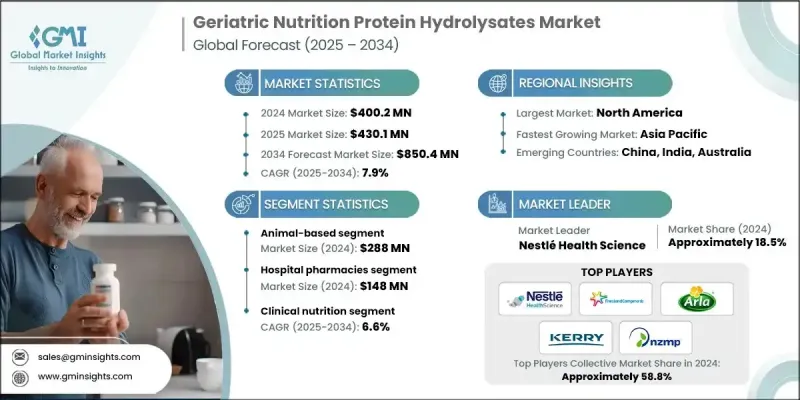
随着全球65岁及以上人口比例的不断增长,市场持续扩张,对客製化营养解决方案的需求也日益旺盛。在成熟经济体和新兴经济体,随着老龄人口的增长,对能够维持肌肉、活动能力和整体活力的蛋白质来源的需求变得愈发迫切。食慾下降、慢性疾病和生理机能衰退导致的营养不良和肌少症病例不断增加,进一步凸显了对专业饮食介入的依赖。与完整蛋白质相比,水解蛋白具有吸收快速、消化率高的优势,因此逐渐成为老年营养的基础。老年人通常面临消化功能减弱、酵素活性降低和营养吸收速度减慢等问题,导致传统蛋白质形式难以耐受。因此,水解蛋白在预防肌肉流失、促进恢復和帮助老年人保持功能独立性方面发挥着至关重要的作用,这也确保了对先进治疗配方的持续需求。
| 市场范围 | |
|---|---|
| 起始年份 | 2024 |
| 预测年份 | 2025-2034 |
| 起始值 | 4.002亿美元 |
| 预测值 | 8.504亿美元 |
| 复合年增长率 | 7.9% |
2024年,动物性食品市场规模达到2.88亿美元,预计2034年将以7.3%的复合年增长率成长。动物源性水解物因其丰富的氨基酸组成和高消化率而继续占据主导地位,这对于老年人营养至关重要。它们在临床环境、老年护理营养计划以及旨在保护肌肉和支持代谢的特殊治疗製剂中仍然广泛应用。水解效率和风味开发的不断改进正在提升其在老年消费者中的接受度。
2024年,医院药局业务创造了1.48亿美元的收入,预计2025年至2034年将以5.7%的复合年增长率成长。医院药局在为老年患者提供水解蛋白类临床营养方面发挥持续作用,这些患者由于医疗限制需要加强营养支持、加速康復或使用易于消化的配方。这些产品被纳入慢性病管理、术后营养策略和住院患者餵食计画中,随着医疗保健系统适应人口老化,为患者提供可靠的、经医疗监督的营养配方。
2024年,北美老年营养蛋白水解物市场规模达1.44亿美元。该地区的成长保持稳定,这主要得益于老年人口的不断增长、完善的临床营养基础设施以及大量的医疗保健支出。水解蛋白广泛应用于老年护理和医疗机构,用于控制与年龄相关的肌肉流失、改善復健效果以及减少营养不良。随着消费者越来越重视健康老化,对粉状、饮料型和老年人专用营养产品的需求持续增长,同时配方技术的进步和居家营养护理的普及也推动了这些产品的广泛应用。
全球老年营养蛋白水解物市场的主要企业包括Arla Foods Ingredients、Kerry Group、Fonterra Co-operative Group、Nestle Health Science、Royal FrieslandCampina NV等。为了巩固市场地位,各企业正致力于研发针对老年人消化和代谢需求的专用配方,强调高生物利用度和良好的耐受性。许多企业正在加大临床研究投入,以验证水解物在预防肌肉流失和促进復原方面的功效,从而推动医疗机构的采纳和监管审批。拓展与医院、养老机构和营养诊所的合作关係,有助于品牌获得稳定的需求管道。此外,各企业也正在改进产品配方,例如采用更简洁的标籤、更佳的口味以及更便捷的包装形式(如即饮型),以提高老年人的接受度。
目录
第一章:方法论
- 市场范围和定义
- 研究设计
- 研究方法
- 资料收集方法
- 资料探勘来源
- 全球的
- 地区/国家
- 基准估算和计算
- 基准年计算
- 市场估算的关键趋势
- 初步研究和验证
- 原始资料
- 预测模型
- 研究假设和局限性
第二章:执行概要
第三章:行业洞察
- 产业生态系分析
- 供应商格局
- 利润率
- 每个阶段的价值增加
- 影响价值链的因素
- 中断
- 产业影响因素
- 成长驱动因素
- 产业陷阱与挑战
- 市场机会
- 成长潜力分析
- 监管环境
- 北美洲
- 欧洲
- 亚太地区
- 拉丁美洲
- 中东和非洲
- 波特的分析
- PESTEL 分析
- 价格趋势
- 按地区
- 副产品
- 未来市场趋势
- 技术与创新格局
- 当前技术趋势
- 新兴技术
- 专利格局
- 贸易统计(註:仅提供重点国家的贸易统计)
- 主要进口国
- 主要出口国
- 永续性和环境方面
- 永续实践
- 减少废弃物策略
- 生产中的能源效率
- 环保倡议
- 碳足迹考量
第四章:竞争格局
- 介绍
- 公司市占率分析
- 按地区
- 北美洲
- 欧洲
- 亚太地区
- 拉丁美洲
- MEA
- 按地区
- 公司矩阵分析
- 主要市场参与者的竞争分析
- 竞争定位矩阵
- 关键进展
- 併购
- 合作伙伴关係与合作
- 新产品发布
- 扩张计划
第五章:市场估算与预测:依来源划分,2021-2034年
- 主要趋势
- 动物性
- 乳蛋白水解物(酪蛋白、乳清蛋白)
- 蛋清蛋白水解物
- 肉类蛋白水解物
- 鱼蛋白水解物
- 植物性
- 大豆蛋白水解物
- 豌豆蛋白水解物
- 米蛋白水解物
- 其他植物来源(例如小麦、玉米)
第六章:市场估算与预测:依配销通路划分,2021-2034年
- 主要趋势
- 医院药房
- 零售药局
- 线上商店
- 专卖店
第七章:市场估计与预测:依应用领域划分,2021-2034年
- 主要趋势
- 临床营养
- 医院营养
- 管饲配方
- 功能性食品和饮料
- 营养饮料
- 强化食品
- 膳食补充剂
- 胶囊
- 片剂
- 小袋
- 其他的
第八章:市场估算与预测:依地区划分,2021-2034年
- 主要趋势
- 北美洲
- 我们
- 加拿大
- 欧洲
- 德国
- 英国
- 法国
- 义大利
- 西班牙
- 欧洲其他地区
- 亚太地区
- 中国
- 印度
- 日本
- 澳洲
- 韩国
- 亚太其他地区
- 拉丁美洲
- 巴西
- 墨西哥
- 阿根廷
- 拉丁美洲其他地区
- 中东和非洲
- 沙乌地阿拉伯
- 南非
- 阿联酋
- 中东和非洲其他地区
第九章:公司简介
- Arla Foods Ingredients
- Mead Johnson Nutrition
- Merck KGaA
- Fonterra Co-operative Group
- Agropur Cooperative
- Milk Specialties Global
- Tatua Co-operative Dairy Company
- Royal FrieslandCampina NV
- Hilmar Cheese Company
- Kerry Group
- DuPont (Danisco)
- Nestle Health Science
- Rousselot
- Gelita AG
- Evonik Industries
The Global Geriatric Nutrition Protein Hydrolysates Market was valued at USD 400.2 million in 2024 and is estimated to grow at a CAGR of 7.9% to reach USD 850.4 million by 2034.
The market continues to expand as the share of individuals aged 65 and above increases worldwide, establishing a lasting demand for tailored nutritional solutions. As aging populations grow across both mature and emerging economies, the need for protein sources that support muscle maintenance, mobility, and overall vitality becomes more pressing. Rising cases of malnutrition and sarcopenia-driven by reduced appetite, chronic health conditions, and physiological decline-are reinforcing reliance on specialized dietary interventions. Protein hydrolysates are becoming foundational in geriatric nutrition due to their rapid absorption and superior digestibility compared with intact proteins. Older adults often face weaker digestive function, diminished enzymatic activity, and slower nutrient assimilation, making traditional protein formats difficult to tolerate. Hydrolyzed proteins, therefore, play a vital role in preventing muscle loss, supporting recovery, and helping older individuals maintain functional independence, which ensures sustained demand for advanced therapeutic formulations.
| Market Scope | |
|---|---|
| Start Year | 2024 |
| Forecast Year | 2025-2034 |
| Start Value | $400.2 Million |
| Forecast Value | $850.4 Million |
| CAGR | 7.9% |
The animal-based segment generated USD 288 million in 2024 and is expected to grow at a CAGR of 7.3% through 2034. Animal-derived hydrolysates continue to hold a dominant position because of their strong amino acid composition and high digestibility, which are essential in elderly-focused nutrition. Their use remains widespread in clinical environments, eldercare nutrition programs, and specialized therapeutic preparations aimed at muscle preservation and metabolic support. Ongoing improvements in hydrolysis efficiency and flavor development are contributing to greater acceptance among older consumers.
The hospital pharmacies segment generated USD 148 million in 2024 and is projected to grow at a CAGR of 5.7% from 2025 to 2034. Hospital pharmacies maintain a consistent role in distributing hydrolysate-based clinical nutrition for aging patients who require enhanced dietary support, faster recovery, or easily digestible formulations due to medical limitations. These products are integrated into chronic care management, postoperative nutrition strategies, and inpatient feeding programs, providing reliable access to medically supervised formulations as healthcare systems adapt to aging populations.
North America Geriatric Nutrition Protein Hydrolysates Market held USD 144 million in 2024. Growth in the region remains steady due to the expanding older population, strong clinical nutrition infrastructure, and substantial healthcare spending. Hydrolyzed proteins are widely utilized in managing age-related muscle loss, improving recovery outcomes, and reducing malnutrition in eldercare and medical facilities. Demand for powdered, beverage-based, and senior-targeted nutritional products continues to rise as consumers prioritize healthy aging, while advances in formulation technologies and home-based nutritional care broaden the adoption of these products.
Key companies in the Global Geriatric Nutrition Protein Hydrolysates Market include Arla Foods Ingredients, Kerry Group, Fonterra Co-operative Group, Nestle Health Science, Royal FrieslandCampina N.V., and others. To strengthen their presence, companies are focusing on specialized formulation development tailored to older adults' digestive and metabolic needs, emphasizing high bioavailability and improved tolerability. Many are increasing investments in clinical research to validate the efficacy of hydrolysates in preventing muscle loss and enhancing recovery outcomes, which supports medical adoption and regulatory credibility. Expansion of partnerships with hospitals, eldercare networks, and nutritional clinics is helping brands secure consistent demand channels. Companies are also reformulating products with cleaner labels, enhanced flavor profiles, and user-friendly formats such as ready-to-drink options to improve acceptance among seniors.
Table of Contents
Chapter 1 Methodology
- 1.1 Market scope and definition
- 1.2 Research design
- 1.2.1 Research approach
- 1.2.2 Data collection methods
- 1.3 Data mining sources
- 1.3.1 Global
- 1.3.2 Regional/Country
- 1.4 Base estimates and calculations
- 1.4.1 Base year calculation
- 1.4.2 Key trends for market estimation
- 1.5 Primary research and validation
- 1.5.1 Primary sources
- 1.6 Forecast model
- 1.7 Research assumptions and limitations
Chapter 2 Executive Summary
- 2.1 Industry 360° synopsis
- 2.2 Key market trends
- 2.2.1 Regional
- 2.2.2 Source
- 2.2.3 Distribution Channel
- 2.2.4 Application
- 2.3 TAM Analysis, 2025-2034
- 2.4 CXO perspectives: Strategic imperatives
- 2.4.1 Executive decision points
- 2.4.2 Critical success factors
- 2.5 Future Outlook and Strategic Recommendations
Chapter 3 Industry Insights
- 3.1 Industry ecosystem analysis
- 3.1.1 Supplier Landscape
- 3.1.2 Profit Margin
- 3.1.3 Value addition at each stage
- 3.1.4 Factor affecting the value chain
- 3.1.5 Disruptions
- 3.2 Industry impact forces
- 3.2.1 Growth drivers
- 3.2.2 Industry pitfalls and challenges
- 3.2.3 Market opportunities
- 3.3 Growth potential analysis
- 3.4 Regulatory landscape
- 3.4.1 North America
- 3.4.2 Europe
- 3.4.3 Asia Pacific
- 3.4.4 Latin America
- 3.4.5 Middle East & Africa
- 3.5 Porter's analysis
- 3.6 PESTEL analysis
- 3.7 Price trends
- 3.7.1 By region
- 3.7.2 By product
- 3.8 Future market trends
- 3.9 Technology and Innovation landscape
- 3.9.1 Current technological trends
- 3.9.2 Emerging technologies
- 3.10 Patent Landscape
- 3.11 Trade statistics (Note: the trade statistics will be provided for key countries only)
- 3.11.1 Major importing countries
- 3.11.2 Major exporting countries
- 3.12 Sustainability and Environmental Aspects
- 3.12.1 Sustainable Practices
- 3.12.2 Waste Reduction Strategies
- 3.12.3 Energy Efficiency in Production
- 3.12.4 Eco-friendly Initiatives
- 3.13 Carbon Footprint Considerations
Chapter 4 Competitive Landscape, 2024
- 4.1 Introduction
- 4.2 Company market share analysis
- 4.2.1 By region
- 4.2.1.1 North America
- 4.2.1.2 Europe
- 4.2.1.3 Asia Pacific
- 4.2.1.4 LATAM
- 4.2.1.5 MEA
- 4.2.1 By region
- 4.3 Company matrix analysis
- 4.4 Competitive analysis of major market players
- 4.5 Competitive positioning matrix
- 4.6 Key developments
- 4.6.1 Mergers & acquisitions
- 4.6.2 Partnerships & collaborations
- 4.6.3 New Product Launches
- 4.6.4 Expansion Plans
Chapter 5 Market Estimates and Forecast, By Source, 2021 - 2034 (USD Million, Kilo Tons)
- 5.1 Key trends
- 5.2 Animal-based
- 5.2.1 Milk protein hydrolysates (casein, whey)
- 5.2.2 Egg protein hydrolysates
- 5.2.3 Meat protein hydrolysates
- 5.2.4 Fish protein hydrolysates
- 5.3 Plant-based
- 5.3.1 Soy protein hydrolysates
- 5.3.2 Pea protein hydrolysates
- 5.3.3 Rice protein hydrolysates
- 5.3.4 Other plant sources (e.g., wheat, corn)
Chapter 6 Market Estimates and Forecast, By Distribution Channel, 2021 - 2034 (USD Million, Kilo Tons)
- 6.1 Key trends
- 6.2 Hospital pharmacies
- 6.3 Retail pharmacies
- 6.4 Online stores
- 6.5 Specialty stores
Chapter 7 Market Estimates and Forecast, By Application, 2021 - 2034 (USD Million, Kilo Tons)
- 7.1 Key trends
- 7.2 Clinical nutrition
- 7.2.1 Hospital-based nutrition
- 7.2.2 Tube feeding formulations
- 7.3 Functional foods & beverages
- 7.3.1 Nutritional drinks
- 7.3.2 Fortified foods
- 7.4 Dietary supplements
- 7.4.1 Capsules
- 7.4.2 Tablets
- 7.4.3 Sachets
- 7.5 Others
Chapter 8 Market Estimates and Forecast, By Region, 2021 - 2034 (USD Million, Kilo Tons)
- 8.1 Key trends
- 8.2 North America
- 8.2.1 U.S.
- 8.2.2 Canada
- 8.3 Europe
- 8.3.1 Germany
- 8.3.2 UK
- 8.3.3 France
- 8.3.4 Italy
- 8.3.5 Spain
- 8.3.6 Rest of Europe
- 8.4 Asia Pacific
- 8.4.1 China
- 8.4.2 India
- 8.4.3 Japan
- 8.4.4 Australia
- 8.4.5 South Korea
- 8.4.6 Rest of Asia Pacific
- 8.5 Latin America
- 8.5.1 Brazil
- 8.5.2 Mexico
- 8.5.3 Argentina
- 8.5.4 Rest of Latin America
- 8.6 Middle East & Africa
- 8.6.1 Saudi Arabia
- 8.6.2 South Africa
- 8.6.3 UAE
- 8.6.4 Rest of Middle East & Africa
Chapter 9 Company Profiles
- 9.1 Arla Foods Ingredients
- 9.2 Mead Johnson Nutrition
- 9.3 Merck KGaA
- 9.4 Fonterra Co-operative Group
- 9.5 Agropur Cooperative
- 9.6 Milk Specialties Global
- 9.7 Tatua Co-operative Dairy Company
- 9.8 Royal FrieslandCampina N.V.
- 9.9 Hilmar Cheese Company
- 9.10 Kerry Group
- 9.11 DuPont (Danisco)
- 9.12 Nestle Health Science
- 9.13 Rousselot
- 9.14 Gelita AG
- 9.15 Evonik Industries

 蛋白质水解物市场规模、份额及成长分析(依产品类型、形态类型、应用类型及地区划分)-2026-2033年产业预测
 全球蛋白质水解物市场规模、份额、趋势和成长分析报告(2026-2034)
 有机蛋白水解物市场机会、成长驱动因素、产业趋势分析及预测(2025-2034年)单细胞蛋白水解物市场机会、成长驱动因素、产业趋势分析及预测(2025-2034年)精准发酵法製备蛋白水解物市场机会、成长驱动因素、产业趋势分析及预测(2025-2034年)下一代蛋白质水解物市场机会、成长驱动因素、产业趋势分析及预测(2025-2034)
 蛋白质水解物市场-全球产业规模、份额、趋势、机会和预测,按类型、来源、形态、製程、应用、地区和竞争格局划分,2020-2030年预测非基因改造蛋白水解物市场机会、成长驱动因素、产业趋势分析及预测(2025-2034年)食品废弃物衍生蛋白水解物市场机会、成长驱动因素、产业趋势分析及预测(2025-2034年)发酵蛋白水解物市场机会、成长驱动因素、产业趋势分析及预测(2025-2034年)